

What if the cooler weather outside could mean a warmer opportunity for your home search?
For many buyers, fall is more than the season of changing leaves and pumpkin-spiced everything—it can also be a strategic time to buy a home. As the year moves toward its final months, some sellers become more motivated, competition may shift, and buyers who are prepared can find opportunities that were harder to spot during the busy spring and summer markets.
If you’re thinking about buying a home before the end of the year, fall could be the season to make your move. From negotiating with motivated sellers to taking advantage of less competition, here’s how fall homebuyers can position themselves for a better deal.
Why Fall Can Be a Smart Time to Buy a Home
Spring and summer often bring plenty of homes onto the market—and plenty of buyers looking at them. By fall, the pace can change.
Some sellers who listed earlier in the year may be more willing to negotiate if their home hasn’t sold. Others may be motivated by a job relocation, a new home purchase, changing family plans, or simply wanting to close the sale before the holidays.
Think of it like shopping at the end of a season. The selection may be different, but sellers can become more flexible because they have a stronger reason to make a deal.
That doesn’t mean every fall listing is a bargain. It means prepared buyers may have more room to negotiate and less pressure to compete.

1. You May Face Less Competition
One of the biggest advantages of buying in the fall can be a smaller pool of active buyers.
Families with children may prefer to move during the summer, while other buyers may postpone their search until the following spring. With fewer people competing for certain properties, you may have more time to evaluate a home rather than feeling pressured to make an immediate decision.
Less competition can also strengthen your negotiating position when the circumstances are right.
2. Some Sellers May Be More Motivated
A seller who has been waiting several months for the right offer may have different priorities by October or November.
For example, imagine a homeowner who listed their property in June but hasn't received an offer they were willing to accept. As the holidays approach, they may be more open to discussing price, closing dates, repairs, or other terms.
Peter Klein, Team Leader of Tress Homes, explains:
“The best opportunity isn’t always the home with the lowest asking price. Buyers should look at the entire situation and understand what matters most to the seller. That can create opportunities for a stronger offer without simply offering more money.”
3. You Can See How a Home Performs in Cooler Weather
Fall house hunting offers something summer showings can't: a glimpse of how a property feels as temperatures drop.
Pay attention to heating, windows, insulation, drafts, lighting, and how much natural sunlight enters the home. You can also look closely at gutters, drainage, landscaping, and the condition of the roof.
These details may not determine whether you buy a home, but they can help you understand potential maintenance costs and negotiate intelligently.
4. You May Have More Negotiating Opportunities
Price isn't the only thing that can be negotiated in a real estate transaction.
Depending on the market and the seller's circumstances, buyers may be able to negotiate items such as:
Purchase price
Closing date
Seller-paid closing costs
Certain repairs
Included appliances or fixtures
Inspection-related requests
Other terms of the offer
A successful negotiation is less like winning an argument and more like solving a puzzle. The goal is to understand what both sides want and find terms that make sense for everyone.
Don't Assume Every Fall Listing Is a Deal
There is an important caution for buyers: don't confuse a lower price with a better value.
Some homes remain on the market because they're overpriced, need significant repairs, have location challenges, or simply haven't attracted the right buyer.
A home that is $20,000 below another property isn't necessarily the better deal if it needs $40,000 in repairs.
Before making an offer, consider the home's condition, recent comparable sales, location, potential maintenance expenses, and how long it has been on the market.
Your real estate agent can help you look beyond the listing price and evaluate the bigger picture.
Want to make the most of the fall housing market? Start with these steps:
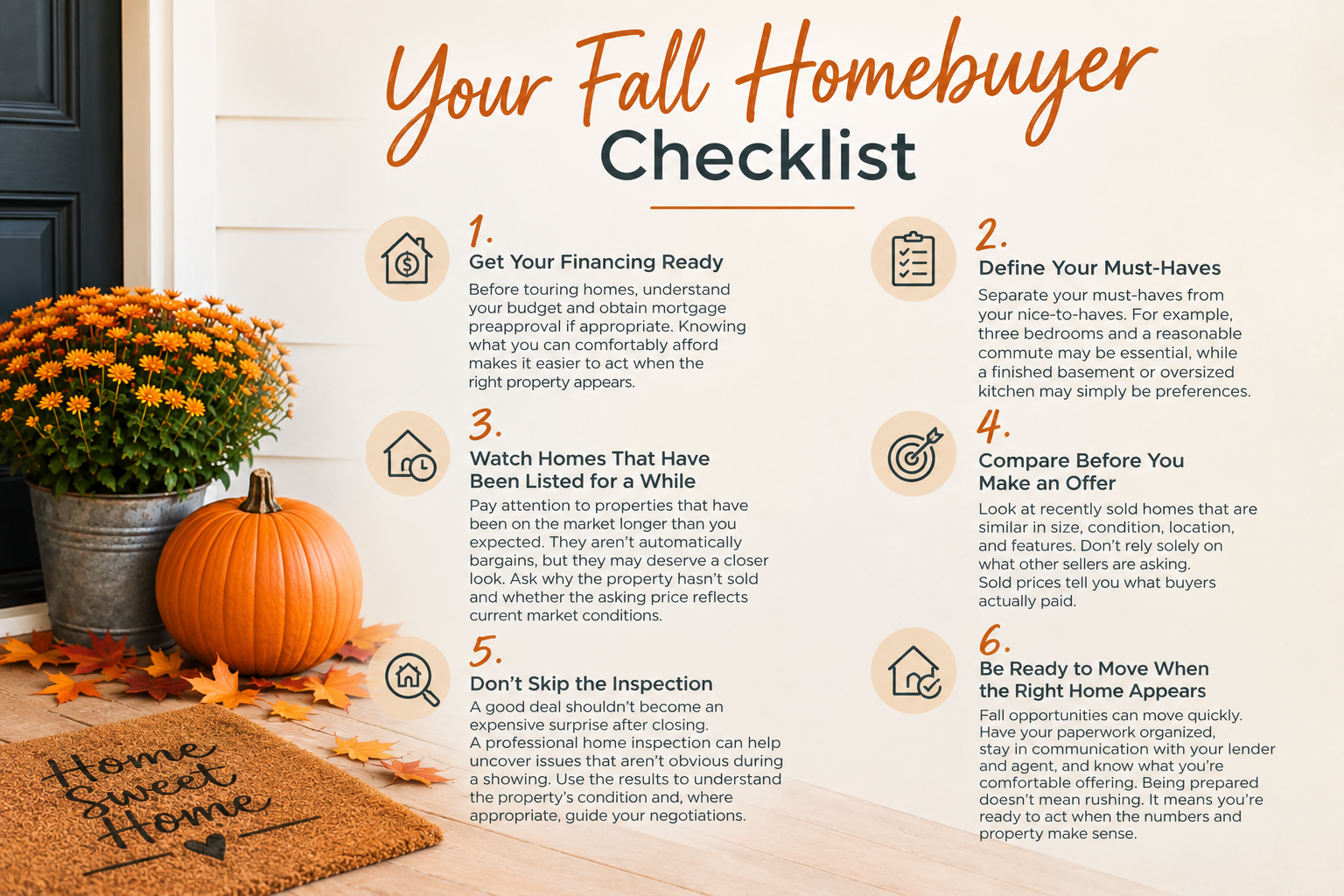
What About Waiting Until Winter?
Some buyers wonder whether they should simply wait for December or January to find an even better deal.
Waiting can sometimes bring additional opportunities, but it also comes with trade-offs. Inventory may become more limited, weather can make moving more difficult, and desirable homes may already have sold.
Instead of trying to perfectly time the market, focus on finding the right home at a price and terms that fit your situation.
Make Fall Your Season to Shop Smarter
Buying a home in the fall isn't about chasing a bargain simply because the calendar says October or November. It's about recognizing how seasonal changes can affect buyer competition, seller motivation, inventory, and negotiations.
With the right preparation, fall homebuyers may benefit from less competition, motivated sellers, more negotiating opportunities, and a clearer understanding of a property's condition.
The key is to shop with a plan—not just a wish list.
If you're thinking about buying before the year ends, now is a great time to start exploring your options. Browse available properties at HomeOnward.com or email tresshomes@gmail.com with questions or for more information.