Have you ever turned on your heater during the first cold snap, only to discover it isn’t working properly? Or noticed a draft near your windows just when you want your home to feel warm and comfortable? These small surprises can quickly turn into expensive repairs if you don’t prepare ahead of time.
Fall is the perfect season to give your home some extra attention before colder weather arrives. A little preventative maintenance now can help protect your property, improve energy efficiency, and keep your family comfortable throughout the winter. Whether you’re a first-time homeowner or have owned your property for years, this fall home maintenance checklist will help you get started.
Why Fall Home Maintenance Matters
Think of fall maintenance as giving your home a seasonal health checkup. Just as you prepare your wardrobe for cooler days, your home needs a few adjustments to handle changing temperatures and weather conditions.
Neglecting small maintenance tasks can lead to bigger problems, including water damage, heating issues, drafts, and costly emergency repairs. Taking action early helps you catch potential issues before they become major headaches.
According to Peter Klein, Team Leader of Tress Homes, “Preparing your home for colder weather is about more than comfort. It's about protecting your investment and preventing small maintenance issues from becoming expensive repairs.”
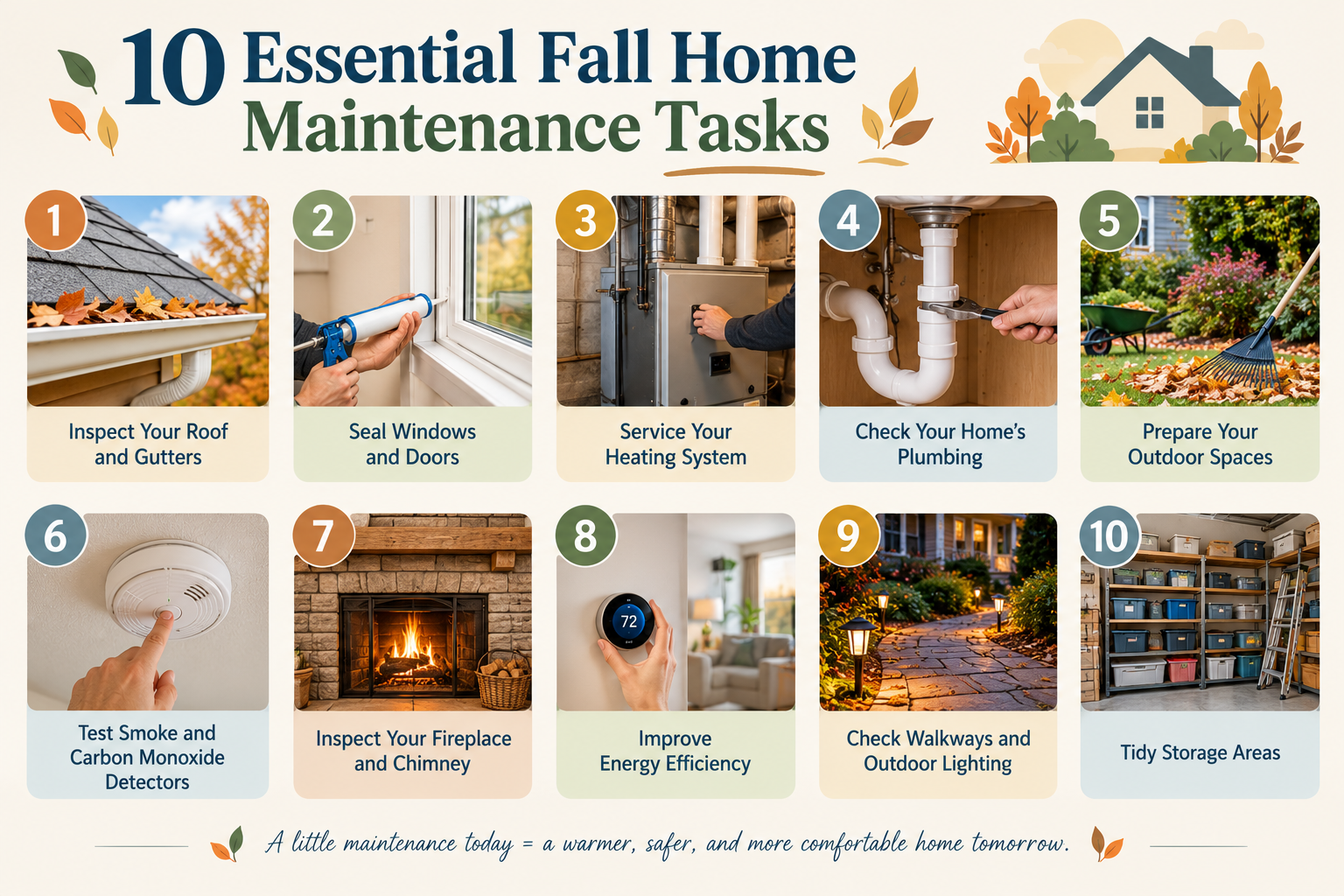
Use this practical checklist to prepare your home for the months ahead.
1. Inspect Your Roof and Gutters
Leaves, twigs, and debris can clog gutters and prevent rainwater from draining properly. When water backs up, it can damage your roof, siding, and foundation.
Remove leaves and debris from gutters and downspouts.
Check for loose shingles, damaged flashing, or visible roof damage.
Make sure downspouts direct water away from your home's foundation.
Tip: If your roof is steep or damaged, hire a professional rather than risking a fall.
2. Seal Windows and Doors
Small gaps around windows and doors can let cold air inside and warm air escape. This makes your home less comfortable and may increase heating costs.
Inspect weatherstripping around doors and windows.
Apply caulk to appropriate gaps around window frames.
Replace worn seals and repair damaged screens if needed.
3. Service Your Heating System
Don't wait until the temperature drops to discover your heating system needs attention.
Schedule a professional inspection of your furnace or heating system.
Replace or clean filters according to the manufacturer's instructions.
Test your thermostat and check that heating vents are unobstructed.
Regular maintenance helps your system operate efficiently and may reduce the risk of unexpected breakdowns.
4. Check Your Home's Plumbing
Freezing temperatures can cause exposed pipes to crack or burst, potentially resulting in costly water damage.
Insulate vulnerable pipes in unheated areas.
Disconnect and drain outdoor hoses where freezing conditions are expected.
Locate your main water shutoff valve in case of an emergency.
5. Prepare Your Outdoor Spaces
Your yard and exterior deserve attention, too.
Trim dead or overhanging branches near your roof.
Remove fallen leaves from walkways and outdoor drains.
Store outdoor furniture and garden equipment appropriately.
Inspect exterior paint, siding, and steps for damage.
6. Test Smoke and Carbon Monoxide Detectors
Heating equipment and fireplaces can increase certain household safety risks during colder months.
Test smoke and carbon monoxide alarms.
Replace batteries when needed and follow manufacturer recommendations.
Keep fireplaces and chimneys professionally inspected when applicable.
7. Inspect Your Fireplace and Chimney
If you use a fireplace, arrange for a professional inspection and cleaning when necessary. Remove combustible materials from nearby areas and ensure the damper works properly.
8. Improve Energy Efficiency
Simple upgrades can help keep your home comfortable without wasting energy.
Replace burned-out bulbs with efficient alternatives.
Use curtains or blinds to help manage heat loss.
Consider additional insulation if your home has persistently cold rooms.
9. Check Walkways and Outdoor Lighting
Shorter days and wet or icy surfaces can make outdoor areas hazardous. Repair loose steps, secure handrails, and ensure entrances and walkways are well-lit.
10. Tidy Storage Areas
Organize your garage, basement, and utility spaces. Keep essential equipment accessible, store chemicals safely, and avoid blocking electrical panels, heating equipment, or emergency exits.
Feeling overwhelmed? You don't have to complete everything in one weekend. Break the work into manageable steps:
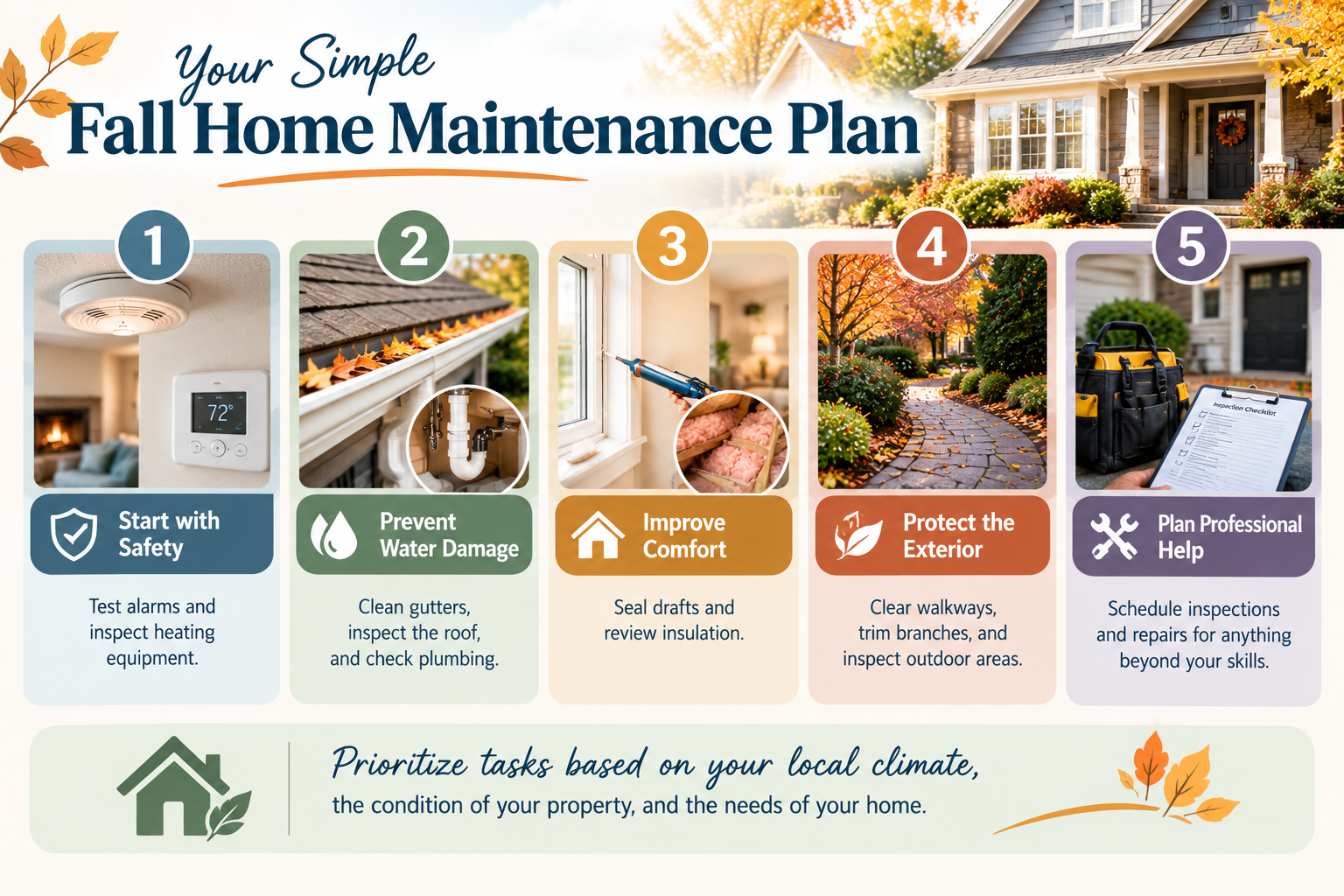
Protect Your Home Before Winter Arrives
Fall home maintenance doesn't have to be complicated or expensive. By addressing small issues early, you can help prevent costly repairs, improve energy efficiency, and enjoy greater peace of mind when colder weather arrives.
Whether you're maintaining your current property or preparing to buy a new home, understanding seasonal maintenance is an important part of protecting your real estate investment.
Need guidance on your next homeownership step? Visit HomeOnward.com or email tresshomes@gmail.com to connect with Tress Homes for personalized support and help beginning your home search. A little preparation today can make a big difference in your comfort and confidence tomorrow.