
What does Labor Day have to do with buying a home?
At first glance, the answer may seem simple: not much. Labor Day is a time to recognize the contributions of workers and enjoy the unofficial final stretch of summer. But there is a deeper connection worth considering.
For many people, homeownership represents what years of hard work can make possible. It can be a place to build memories, create stability, enjoy everyday life, and invest in the future.
This Labor Day, it may be worth asking yourself: What am I working toward, and could owning a home be part of that picture?
Whether you're a first-time homebuyer, a growing family, or someone thinking about making a move, understanding how to turn your hard work into a smart homeownership plan can be an important first step.
Why Labor Day Is a Natural Time to Think About Homeownership
Labor Day celebrates the value of work. Homeownership, meanwhile, is often one of the biggest financial goals people work toward.
But buying a home shouldn't be viewed simply as a reward for working hard. It's a significant financial decision that requires planning, realistic expectations, and a clear understanding of your long-term goals.
Think of it like building a house itself. You don't start with the roof. You start with a strong foundation.
For prospective buyers, that foundation may include:
Understanding your finances
Building savings
Improving your credit where possible
Getting mortgage pre-approved
Determining a comfortable monthly payment
Learning about the local real estate market
Peter Klein, Team Leader of Tress Homes, puts it simply:
“Homeownership should fit into your overall financial picture, not work against it. The goal is to find a home that supports the life you're building today while making sense for your future.”

1. Know What You Can Comfortably Afford
One of the biggest mistakes buyers can make is confusing what they qualify for with what they can comfortably afford.
A lender may approve you for a certain loan amount, but that doesn't mean you need to spend the maximum.
Consider your complete monthly housing costs, including:
Mortgage payment
Property taxes
Homeowners insurance
Utilities
Maintenance
HOA fees, if applicable
A comfortable payment can give you more financial breathing room after you move in.
2. Make Your Savings Work Toward Your Goal
Saving for a home can feel like watching a bucket fill one drop at a time. It may seem slow, but consistency matters.
Your savings may eventually help cover a down payment, closing costs, moving expenses, or unexpected expenses after you purchase.
Instead of thinking, “I need to save a huge amount before I can buy,” consider creating smaller milestones.
For example:
Goal → Monthly savings → Emergency fund → Home purchase fund
Breaking the process into manageable steps can make homeownership feel less overwhelming.
3. Get Pre-Approved Before You Fall in Love With a House
Imagine finding your dream home and then discovering you're not financially ready to make an offer.
Getting pre-approved early can help prevent that disappointment.
Mortgage pre-approval can give you a clearer idea of your potential purchasing range and help you move more confidently when you find a property you like.
It also shows sellers that you're taking the buying process seriously.
4. Focus on Value—Not Just Price
The cheapest home isn't necessarily the best deal.
A lower-priced property could require significant repairs, have higher taxes, or lack features that are important to your lifestyle.
Instead, think about total value.
Ask yourself:
Does the location work for me?
Is the home in reasonable condition?
What repairs might be needed?
Are the ongoing costs manageable?
Does the property meet my needs for the next several years?
Could the home retain reasonable appeal to future buyers?
The right home should make sense beyond the day you receive the keys.
5. Work With a Real Estate Professional Who Knows the Market
Buying a home involves more than opening a real estate app and scheduling showings.
A knowledgeable real estate professional can help you understand pricing, comparable sales, neighborhoods, negotiations, inspections, and other parts of the transaction.
The right professional should also be willing to tell you when a property may not be the right fit.
That's an important part of building trust.
“But I'm Not Ready to Buy Yet”
That's okay.
Not everyone needs to buy a home immediately. In fact, recognizing that you're not ready can be a smart financial decision.
If you're still preparing, use Labor Day as a checkpoint rather than a deadline.
Ask yourself:
Where am I today, and what would I need to accomplish to become a confident homebuyer?
Your next steps might include improving your credit, reducing debt, increasing savings, researching neighborhoods, or speaking with a mortgage professional.
You don't have to accomplish everything at once.
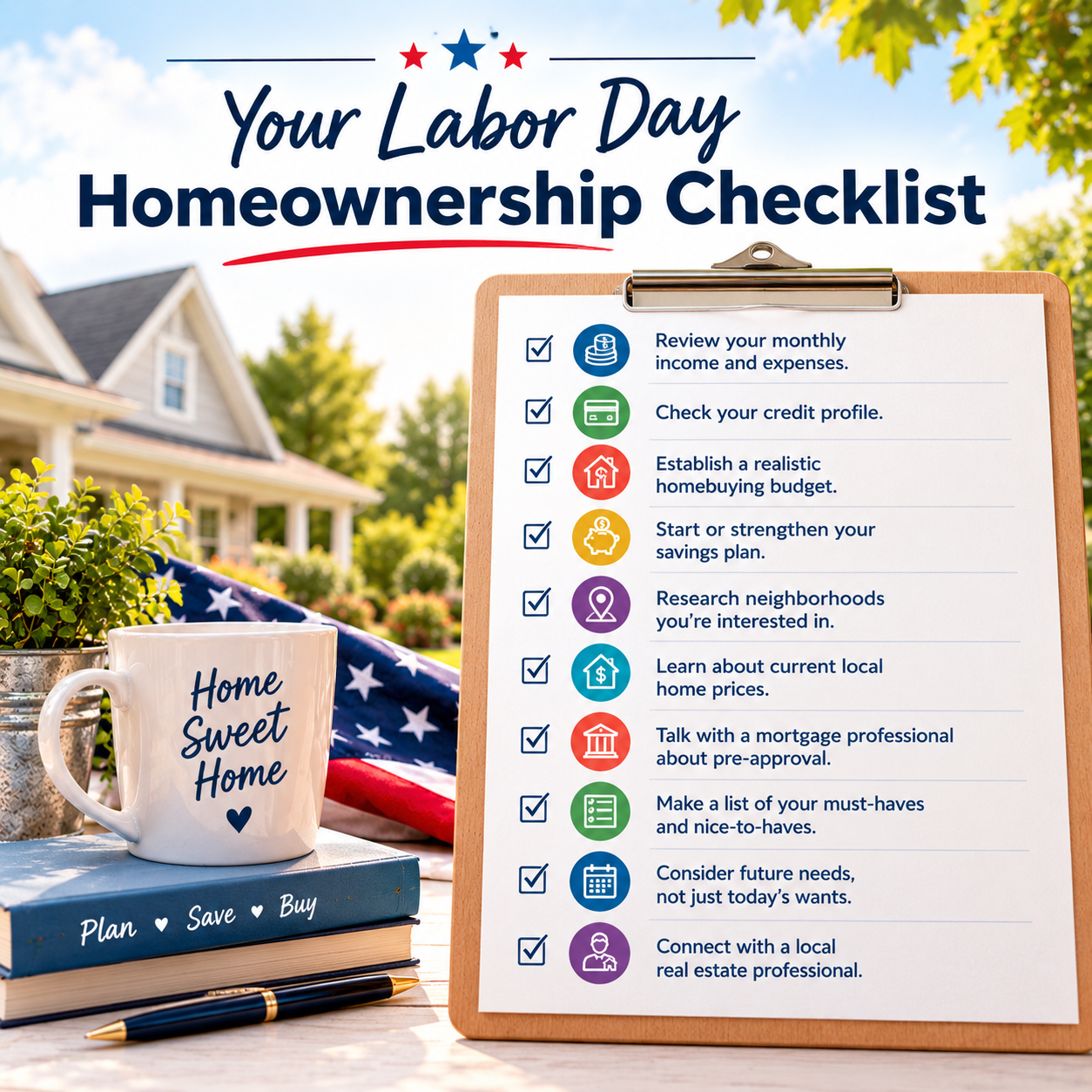
If owning a home is one of your goals, use this simple checklist to get started:
Your Hard Work Is About More Than a Paycheck
Labor Day is more than a long weekend. It's a reminder of the effort people put into building their careers, supporting their families, and creating better futures.
For many, a home can become part of that future.
Homeownership won't look the same for everyone, and buying a property isn't automatically the right financial choice for every person. But if owning a home is one of your goals, your hard work can become the foundation for a thoughtful plan.
As Peter Klein of Tress Homes explains:
“The homebuying journey doesn't have to happen all at once. Start with a plan, understand your options, and take the next step when you're ready.”
This Labor Day, take a moment to celebrate how far you've come—and think about where you want to go next.
Ready to explore your homeownership possibilities? Visit HomeOnward.com to explore available properties, or contact Tress Homes at tresshomes@gmail.com for guidance and information.
Your hard work built the foundation. The next chapter could be the place you call home.