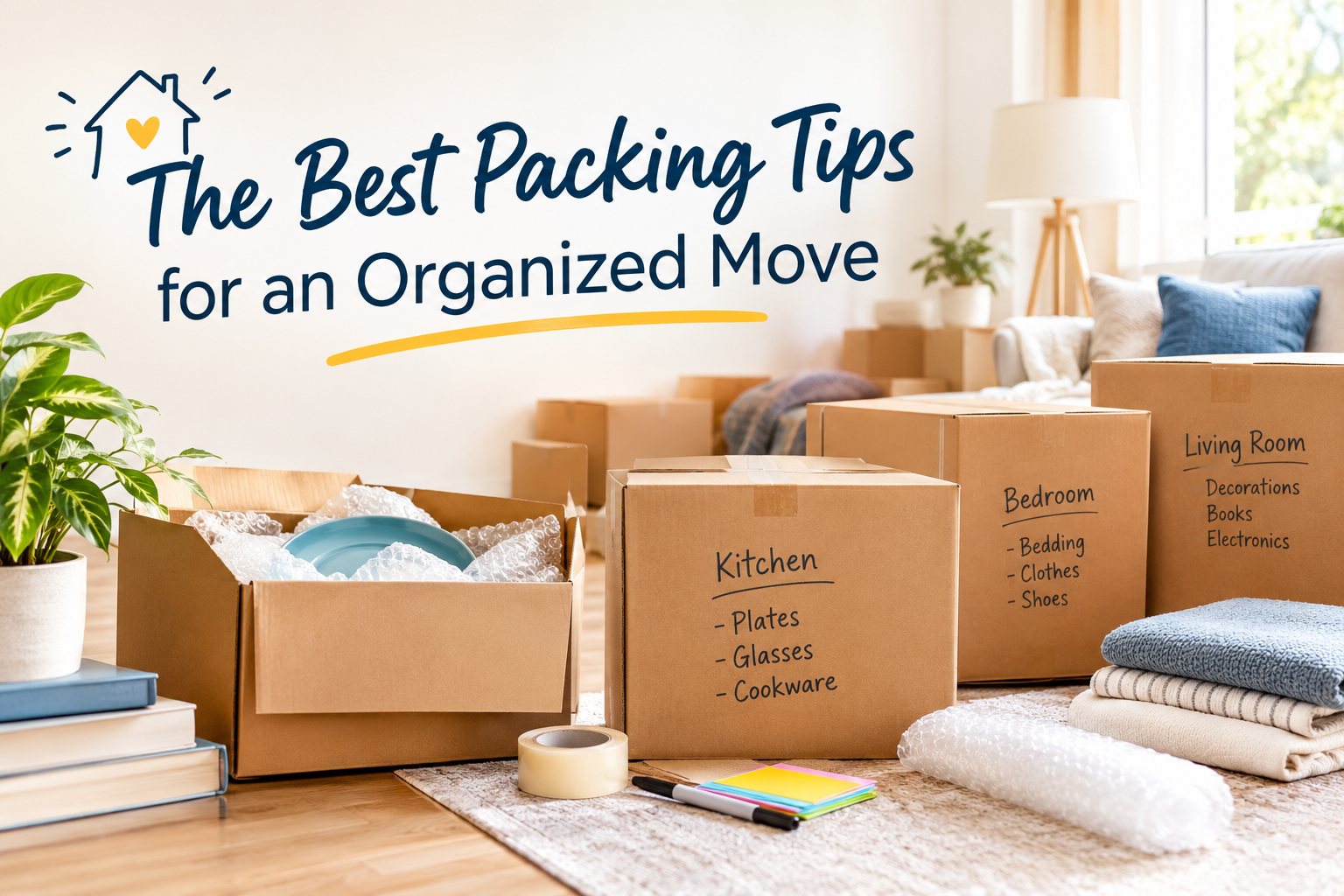
Moving into a new home is exciting. You get a fresh start, new spaces to decorate, and the opportunity to create new memories. But before you can enjoy your new surroundings, there is one big task to tackle: packing everything you own.
From deciding what to keep to figuring out which box holds your coffee maker, moving can quickly become overwhelming without a plan. The good news? An organized move doesn't require professional packing skills or weeks of hard work. With the right moving tips, a little preparation, and a practical system, you can make the transition smoother and spend less time searching through boxes.
Whether you're buying your first home, moving into a larger space, or downsizing, these packing tips will help you stay organized from the first box to the final unpacking.
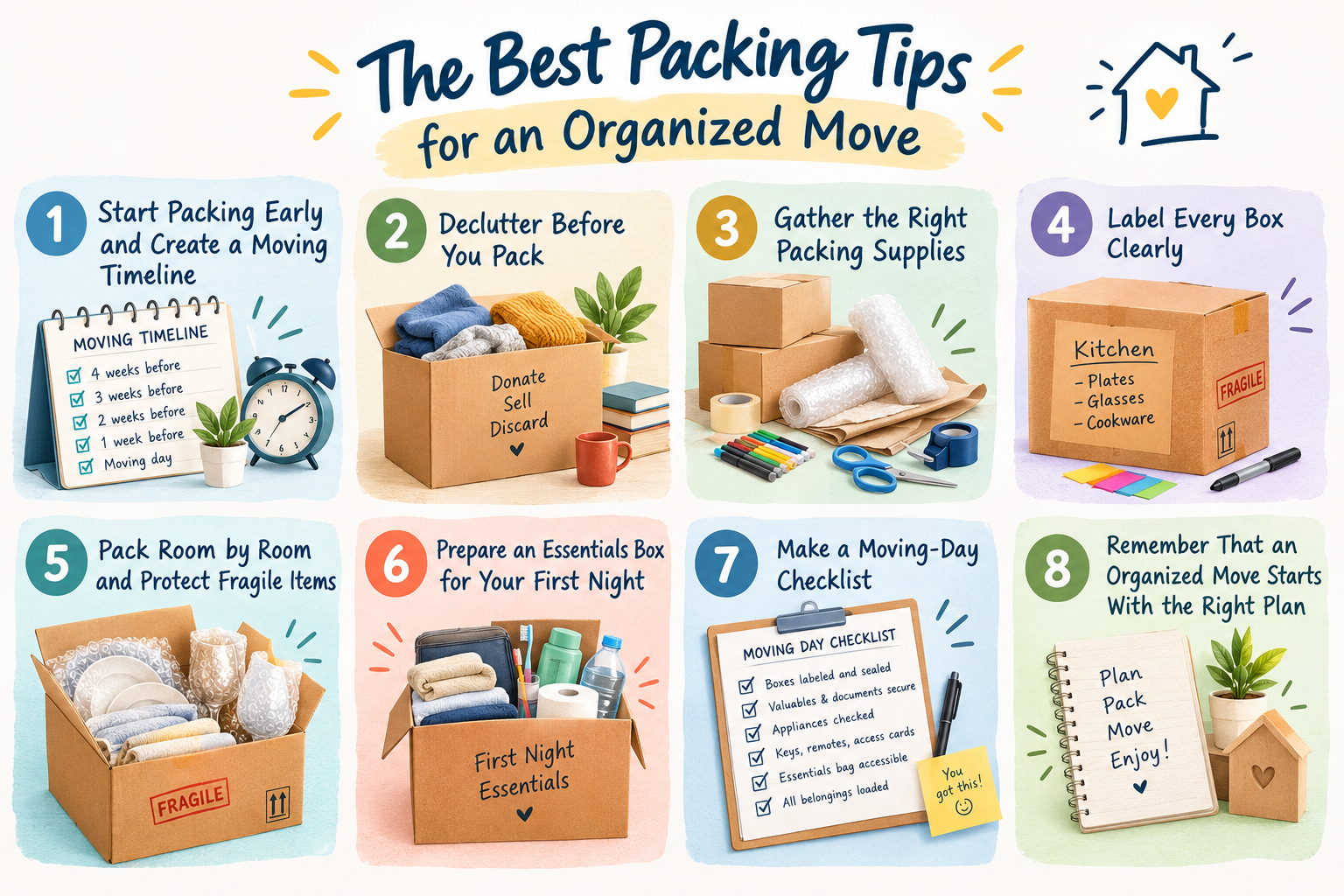
1. Start Packing Early and Create a Moving Timeline
One of the biggest moving mistakes is waiting until the last minute to pack. When you're racing against the clock, it's easy to throw belongings into boxes without sorting them first. That often leads to damaged items, unnecessary clutter, and extra stress on moving day.
Instead, start preparing two to four weeks before your move, if possible. Begin with items you don't use every day, such as seasonal decorations, extra linens, books, and rarely used kitchen equipment.
Create a simple moving timeline with weekly goals. For example:
Four weeks before moving: Declutter, gather packing supplies, and create an inventory.
Three weeks before moving: Pack decorations, books, seasonal clothing, and other nonessential items.
Two weeks before moving: Pack extra kitchenware, guest room supplies, and rarely used belongings.
One week before moving: Pack most remaining items, confirm moving arrangements, and prepare an essentials box.
Moving day: Keep important documents, valuables, medications, and daily necessities accessible.
Think of packing like preparing for a road trip. You wouldn't wait until you're backing out of the driveway to decide what to bring. A timeline gives every task a place and helps prevent last-minute chaos.
2. Declutter Before You Pack
Why spend time and money moving things you no longer need? Packing presents the perfect opportunity to decide which belongings deserve a place in your next home.
Go through each room and sort your items into four categories: keep, donate, sell, and discard. Be realistic about what you use and what fits your lifestyle.
For instance, if you're moving from a spacious house into a smaller condo, bulky furniture or rarely used kitchen appliances may take up valuable space. Selling or donating these items before moving can reduce the number of boxes, lower transportation costs, and make unpacking easier.
Here are a few places to start:
Clothes you haven't worn in a long time.
Expired pantry items and unused toiletries.
Duplicate kitchen tools and appliances.
Old paperwork that no longer needs to be kept.
Furniture that won't fit your new floor plan.
Pro tip: Declutter one small area at a time. Completing a single closet or drawer feels more manageable than trying to organize an entire house in one afternoon.
3. Gather the Right Packing Supplies
Having the right supplies on hand makes packing safer and more efficient. Running out of tape halfway through a room or realizing you have no padding for fragile dishes can interrupt your progress.
Before you begin, gather:
Sturdy moving boxes in several sizes.
Packing tape and a tape dispenser.
Permanent markers and color-coded labels.
Bubble wrap, packing paper, or clean towels.
Scissors and resealable bags for small hardware.
Stretch wrap for suitable furniture items.
A notebook or digital inventory for tracking boxes.
Choose smaller boxes for heavy items, such as books, and larger boxes for lighter belongings, such as bedding. This makes boxes easier to lift and reduces the risk of them breaking.
You can also save money by using towels, blankets, and clothing to cushion appropriate items. Just remember that fragile valuables may need more protective materials.
4. Label Every Box Clearly
Imagine arriving at your new home, feeling exhausted, and opening five boxes before finding your phone charger. Clear labels can save you from that frustrating experience.
Write the destination room and a brief description of the contents on at least two sides of each box. For example, use labels such as "Kitchen – Everyday Plates" or "Bedroom – Winter Clothing."
For an even more organized move, try these methods:
Use a color-coded system: Assign a different color to each room.
Number your boxes: Match each number to an entry in your inventory.
Mark fragile items: Clearly identify boxes containing glassware, artwork, or delicate decorations.
Indicate the correct position: Mark boxes that must remain upright.
If you're moving with family members or hiring movers, these labels help everyone understand where belongings should go without repeatedly asking you for directions.
A useful rule is to label boxes for the person unpacking them, not just the person packing them. "Bathroom – Towels and Toiletries" is far more helpful than "Miscellaneous."
5. Pack Room by Room and Protect Fragile Items
Packing one room at a time creates a clear sense of progress and helps keep similar belongings together. It also makes unpacking easier because you won't need to sort through unrelated items before putting things away.
Start with rooms or areas you use less frequently. As moving day approaches, work toward the spaces you use every day.
When packing fragile belongings, follow these precautions:
Wrap dishes individually and place them securely in sturdy boxes.
Cushion empty spaces so items don't shift during transportation.
Place heavier items at the bottom and lighter items on top.
Keep sharp objects safely covered and separated.
Avoid making boxes so heavy that they become difficult to carry.
Take extra care with electronics, mirrors, framed pictures, and sentimental items. If possible, use original packaging for valuable electronics.
Remember: A neatly packed box is not simply one that closes easily. It's one that protects its contents, can be carried safely, and is easy to identify later.
6. Prepare an Essentials Box for Your First Night
After a long moving day, the last thing you want is to search through a mountain of boxes for your toothbrush or bedsheets.
Pack a separate essentials box or overnight bag with everything you'll need during your first 24 hours in your new home.
Include items such as:
Toiletries, medications, and a change of clothes.
Phone chargers and basic electronics.
Toilet paper, paper towels, and hand soap.
Snacks, bottled water, and basic utensils.
Bedding, towels, and pajamas.
Cleaning supplies and a few basic tools.
Important documents and necessary keys.
Keep this box with you rather than loading it onto the moving truck. You'll have immediate access to your necessities while the rest of your belongings can wait until you're ready to unpack.
7. Make a Moving-Day Checklist
Even the best packing plan benefits from a final review. Before leaving your old home, walk through every room, closet, cabinet, garage, and storage area.
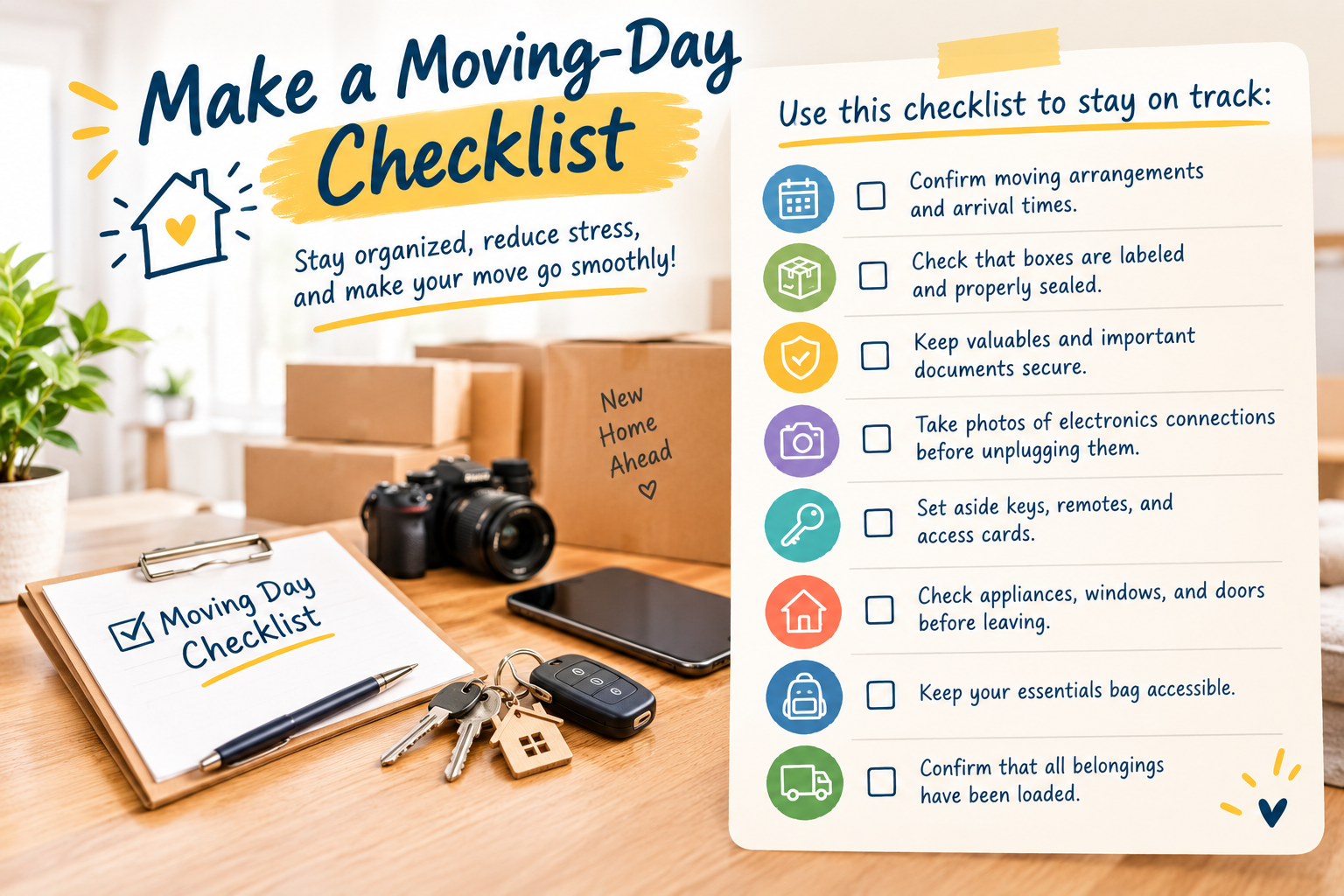
If possible, take photos of your old home's condition and meter readings when relevant. If you're renting, review your lease requirements and move-out instructions before handing over the property.
8. Remember That an Organized Move Starts With the Right Plan
Moving can feel like a huge project, but it becomes much easier when you break it into smaller, manageable steps. Start early, declutter before packing, use the right supplies, label boxes clearly, and keep everyday necessities close at hand.
As Peter Klein, Team Leader of Tress Homes, would emphasize, a successful move is about more than getting belongings from one address to another. It's about making the transition into your next chapter as smooth and comfortable as possible.
An important part of a successful move is preparing for the life you're moving into, not just packing up the life you're leaving behind.
With a thoughtful plan, you can spend less time managing moving-day stress and more time enjoying the possibilities of your new home.
Ready to Find Your Next Home?
Your next move could be the beginning of something wonderful. Whether you're searching for your first home, upgrading to more space, or exploring a new neighborhood, having the right real estate guidance can help you move forward with confidence.
Explore available properties at HomeOnward.com or email tresshomes@gmail.com to connect with Tress Homes for guidance and more information.
Here's to a well-organized move and an exciting new beginning!