

Buying your first home should feel exciting—but what happens when the excitement is followed by a leaking faucet, an unexpected repair, or a monthly bill you didn’t anticipate?
For many new homeowners, the first year can feel like a crash course in everything from home maintenance to budgeting. It’s completely normal to feel overwhelmed. The good news? You don’t have to figure everything out at once.
With a little preparation and the right mindset, your first year of homeownership can become less about worrying and more about enjoying the place you worked so hard to call home.
Why the First Year Can Feel Overwhelming
When you rent, many maintenance issues are someone else’s responsibility. As a homeowner, you’re now the decision-maker—and sometimes that means deciding what needs attention immediately and what can wait.
You may also be adjusting to a mortgage payment, property taxes, insurance, utility costs, and everyday maintenance expenses.
Think of your first year as learning the rhythm of your home. You don’t need to master everything on day one.
“The first year of owning a home is about more than settling into a new space. It’s about building confidence as a homeowner and learning what your property needs over time.” — Peter Klein, Team Leader, Tress Homes
5 Benefits of Taking a Less-Stress Approach
Reducing homeownership stress isn’t just about feeling better. It can also help you make smarter decisions.
Better financial control: Planning for expenses can help prevent unpleasant surprises.
Fewer rushed decisions: A calm approach makes it easier to determine which repairs are truly urgent.
Improved home maintenance: Regular attention can help prevent small problems from becoming expensive ones.
Greater confidence: Learning how your home works makes ownership feel less intimidating.
More enjoyment: Your home should be a place to relax—not a constant source of worry.

1. Create a First-Year Home Budget
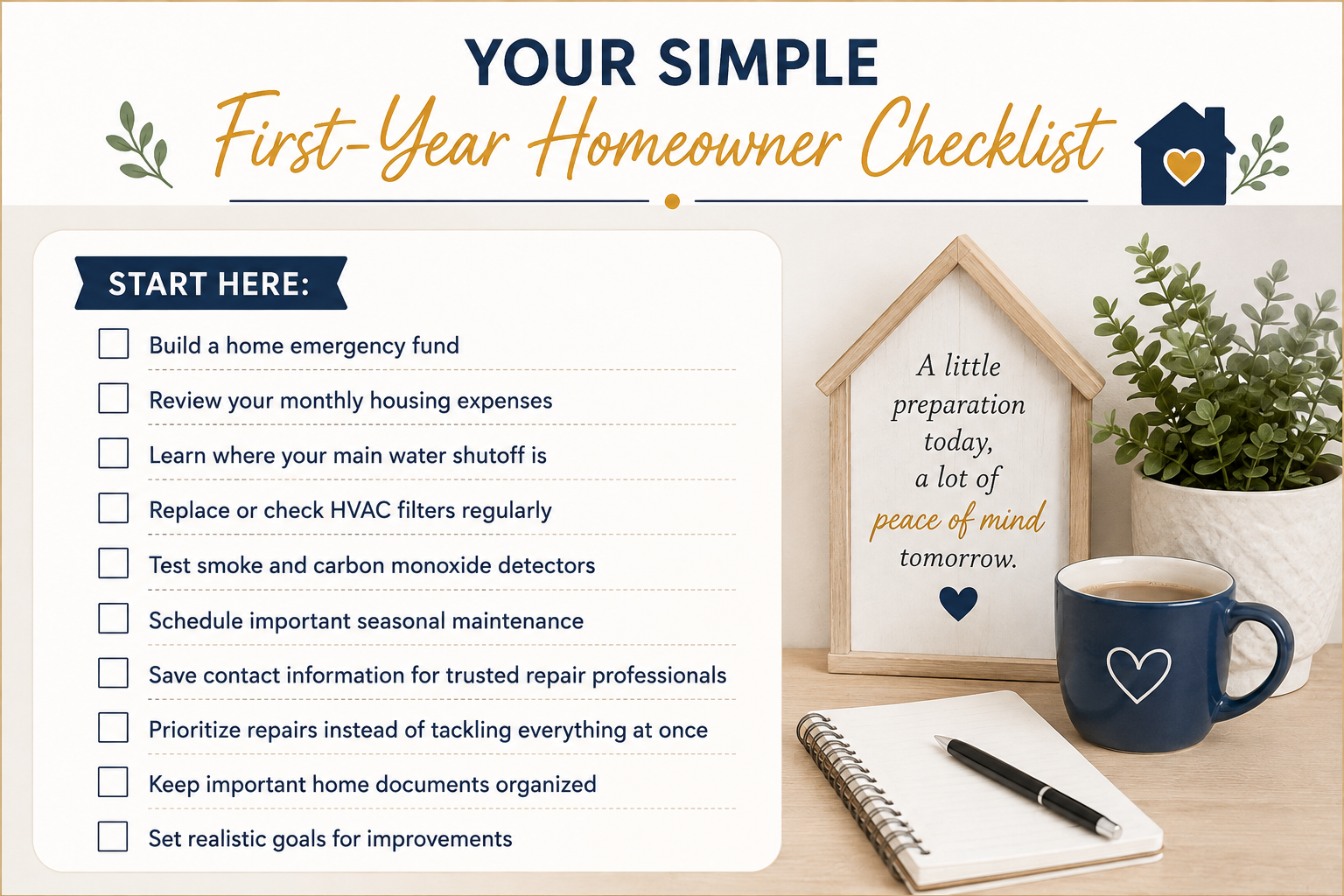
Your mortgage is only one piece of the financial picture. Set aside money for utilities, routine maintenance, seasonal expenses, and unexpected repairs.
A dedicated home emergency fund can provide peace of mind when something inevitably needs fixing.
Tip: You don’t have to complete every improvement project immediately. Prioritize safety and necessary repairs first, then tackle cosmetic upgrades when your budget allows.
2. Learn Your Home’s Maintenance Schedule
Your home has its own “to-do list.” Change filters, inspect important systems, clean gutters, check smoke detectors, and keep an eye out for signs of water damage or wear.
Create a simple monthly or seasonal checklist. A few minutes of preventive maintenance can save you from a much bigger headache later.
3. Build a Reliable Home-Repair Contact List
When something breaks, the last thing you want to do is spend hours searching for help.
Keep contact information for trusted professionals such as a plumber, electrician, HVAC technician, handyman, and other service providers you may need.
Ask friends, neighbors, or your real estate agent for recommendations when appropriate.
4. Resist the Urge to Do Everything at Once
It’s easy to move into a new home and immediately start imagining a remodeled kitchen, new flooring, fresh paint, and upgraded landscaping.
But trying to tackle everything at once can quickly become expensive and exhausting.
Instead, make three lists:
Must Do: Safety, urgent repairs, and essential maintenance
Should Do: Projects that improve comfort or efficiency
Would Like to Do: Cosmetic upgrades and wish-list items
Then work through them at a pace that fits your budget.
5. Give Yourself Time to Adjust
Your first home doesn’t have to be perfect.
Live in the space. Learn how sunlight moves through the rooms, where storage is lacking, which areas you actually use, and what changes would genuinely improve your daily life.
Sometimes the best renovation decision is waiting a few months before making one.
Callout: You Don’t Have to Know Everything
Being a homeowner doesn’t mean becoming a plumber, electrician, contractor, and financial expert overnight. Knowing when to ask for professional help is part of being a smart homeowner.
Make Your First Year Feel More Manageable
Homeownership is a major milestone, but it doesn’t have to come with constant stress. By planning your finances, staying ahead of maintenance, prioritizing projects, and giving yourself time to adjust, you can turn those first-year worries into confidence.
Most importantly, remember why you bought the home in the first place. It’s not simply an investment or a list of maintenance tasks—it’s a place where your life happens.
Ready to find a home that fits your goals and lifestyle? Visit HomeOnward.com or email tresshomes@gmail.com for personalized support and help getting started with your home search.