
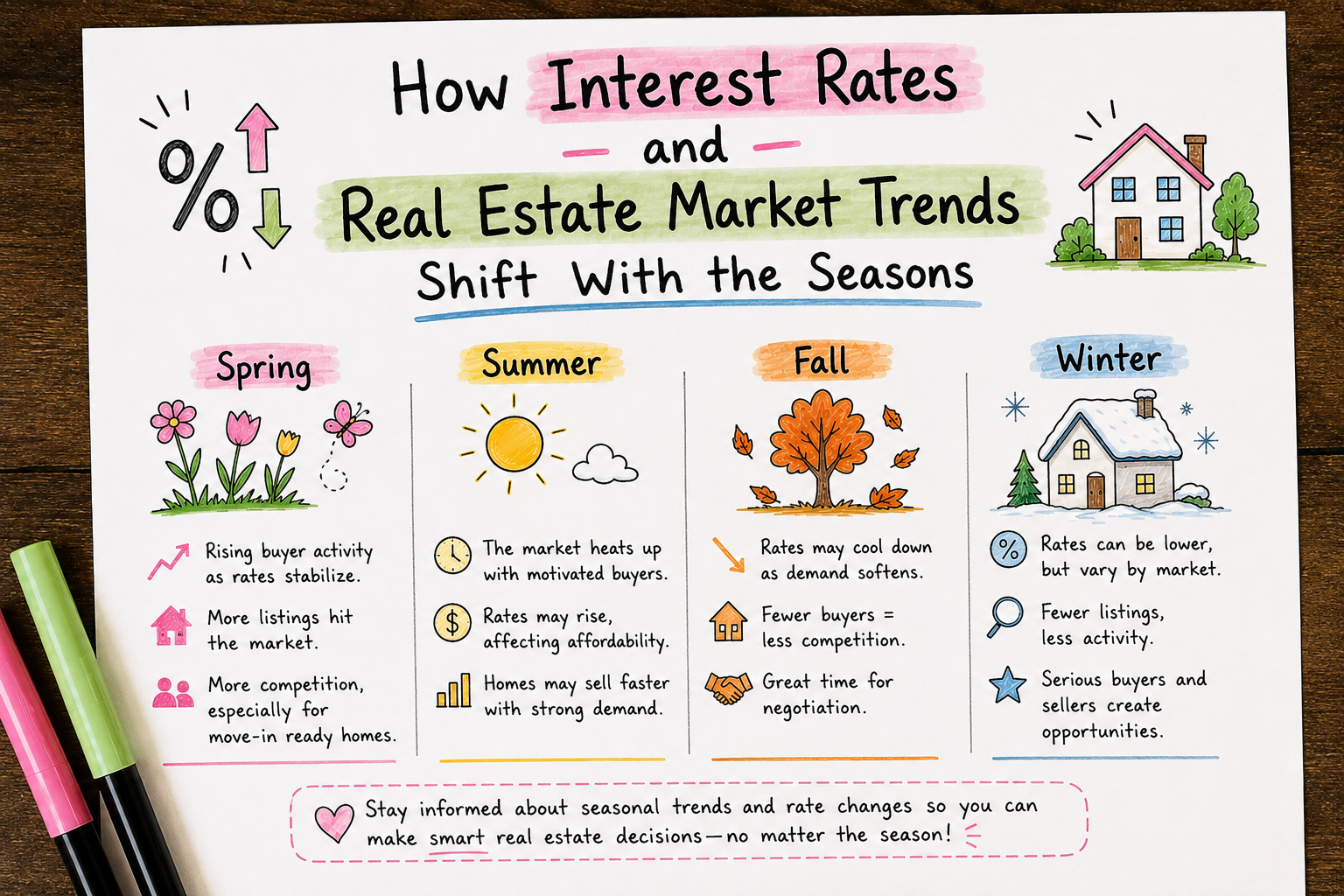
Is there really a “best” time of year to buy or sell a home?
The answer may surprise you: timing the real estate market isn’t just about watching mortgage rates or waiting for home prices to change. Seasonal patterns can influence buyer activity, inventory, competition, and even how quickly homes sell.
Think of the housing market like the weather. Some patterns are predictable, but conditions can change quickly. A smart buyer or seller doesn’t simply wait for the “perfect” forecast—they prepare for different conditions and know how to respond.
Here’s what you should know about seasonal real estate trends, interest rates, and the best strategies for navigating the housing market throughout the year.
Do Interest Rates Really Change With the Seasons?
Interest rates don't follow a fixed seasonal calendar. They are influenced by broader economic conditions, inflation, employment trends, financial markets, and decisions made by the Federal Reserve.
However, seasonal changes in real estate activity can make interest rates feel more important at certain times of the year.
For example, when more buyers enter the market during the spring and summer, even a small change in mortgage rates can affect affordability and competition. During slower periods, buyers may have more opportunities to negotiate, making the overall cost of financing just one piece of a larger decision.
Peter Klein, Team Leader of Tress Homes, puts it simply:
“The goal isn’t to predict the market perfectly. It’s to understand the current conditions and make a decision that fits your financial situation and long-term goals.”
That mindset can help buyers and sellers avoid getting caught up in headlines and short-term predictions.
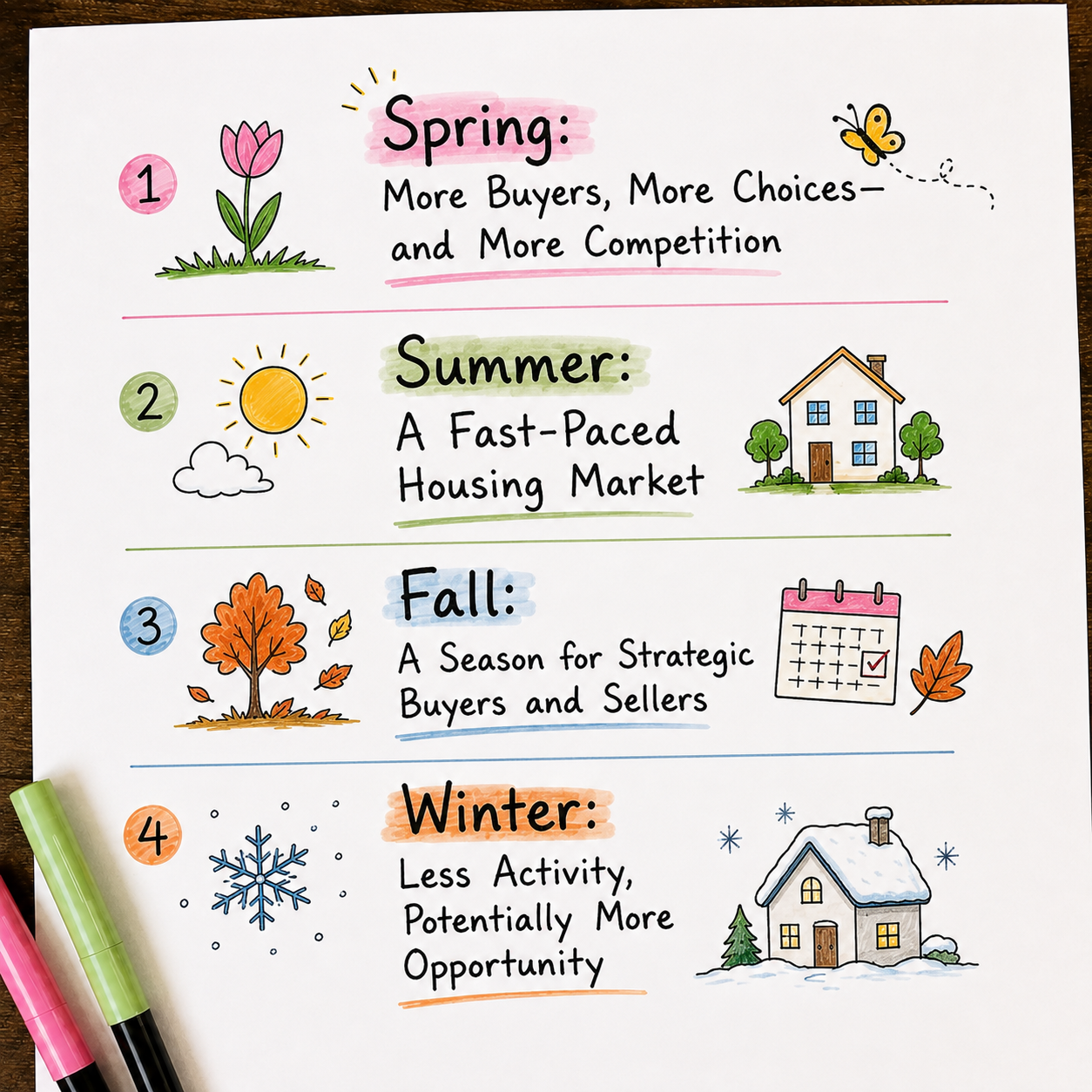
Spring: More Buyers, More Choices—and More Competition
Spring is traditionally one of the busiest seasons in real estate.
Warmer weather encourages homeowners to list their properties, while buyers who have been watching the market during the winter often become more active.
This can create a double-edged opportunity.
For sellers: More buyers can mean increased interest and potentially multiple offers if the home is priced and presented well.
For buyers: More listings can provide a wider selection, but desirable properties may attract significant competition.
Spring Strategy
If you're buying, get your financing in order before you start seriously touring homes. If you're selling, focus on curb appeal, professional presentation, and accurate pricing.
The goal is to be ready before the market gets crowded—not after.
Summer: A Fast-Paced Housing Market
Summer often brings plenty of real estate activity. Families may prefer to move while children are out of school, and longer days make it easier to attend open houses and showings.
But increased activity can also mean faster decisions.
For buyers, rising competition may make it tempting to stretch beyond a comfortable budget. That's where mortgage rates become especially important.
A seemingly small difference in your interest rate can affect your monthly payment and the total cost of your mortgage over time.
Pro tip: Don't evaluate a home based solely on its asking price. Consider the complete monthly cost, including your mortgage payment, property taxes, insurance, maintenance, and other expenses.
Fall: A Season for Strategic Buyers and Sellers
As summer winds down, the pace of the housing market may begin to cool.
That doesn't necessarily mean opportunities disappear.
In fact, fall can be an excellent time for buyers who want to avoid some of the intensity of the spring and summer markets. Sellers who remain on the market may also be highly motivated.
This creates an important distinction:
A slower market isn't automatically a bad market.
For some buyers, fewer competing offers can make negotiations more comfortable. For sellers, serious buyers who remain active may be more motivated to move forward.
Peter Klein recommends looking beyond the season itself:
“Market activity matters, but the right strategy depends on the individual property, the neighborhood, and the goals of the buyer or seller.”
Winter: Less Activity, Potentially More Opportunity
Winter is often considered the quietest season in real estate.
Fewer homeowners may choose to list, and some buyers postpone their search until spring. But that reduction in activity can create opportunities for people who are prepared.
A winter buyer may encounter less competition. A winter seller may benefit from attracting buyers who are serious enough to house-hunt despite colder weather or holiday schedules.
The Winter Advantage
Think of winter as a smaller room with fewer people in it. There may be fewer opportunities—but the people who are there may be more focused.
For buyers, this could mean:
Less competition for certain properties
More negotiating opportunities
More attention from real estate professionals
A chance to identify homes before the spring rush
For sellers, a well-priced and well-presented home can stand out because there may be fewer competing listings.
Understanding seasonal real estate trends can help you:
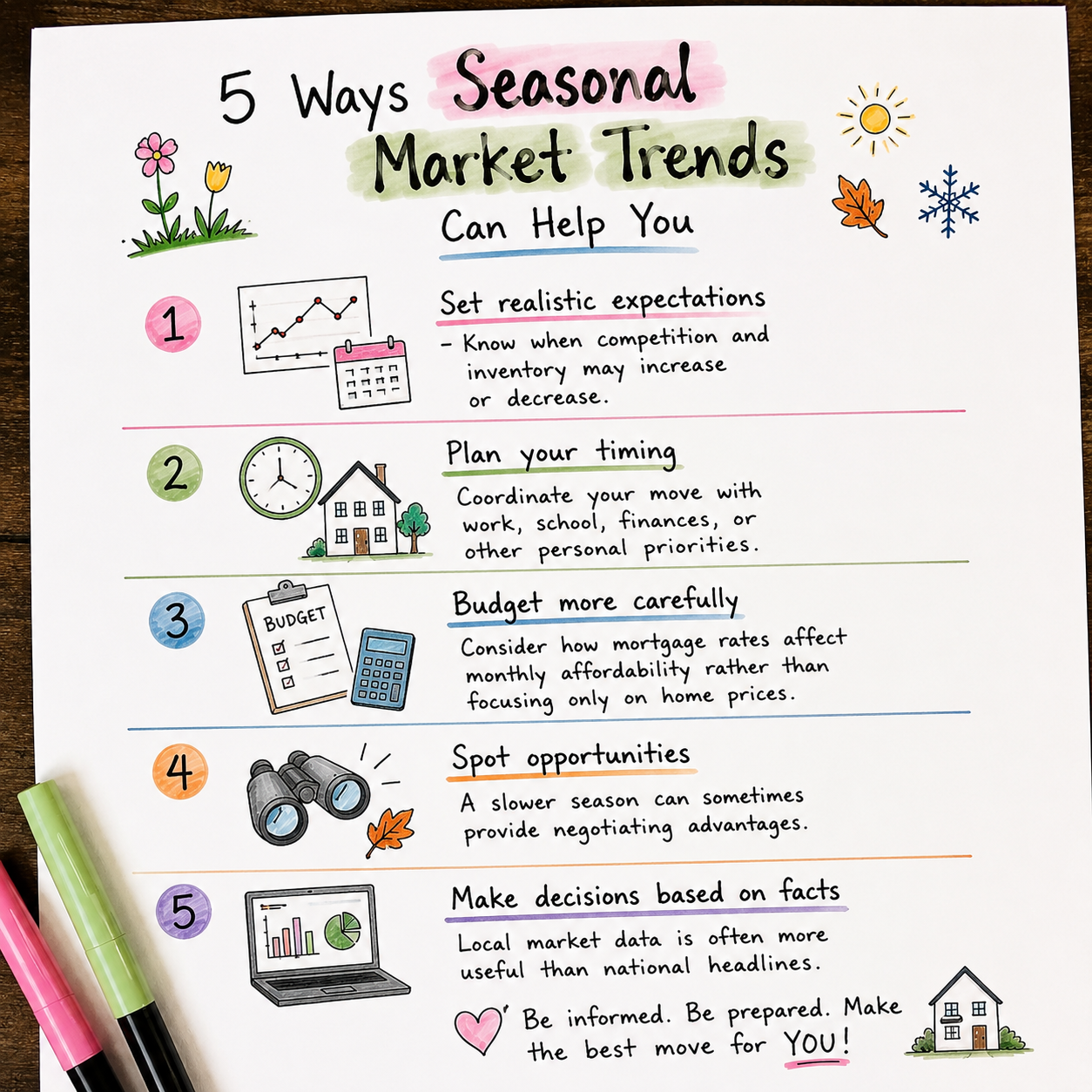
What If Interest Rates Rise While You're Shopping?
This is one of the biggest concerns buyers have.
You might find a home you love today, only to see mortgage rates move before you close. While nobody can guarantee where rates will go next, there are ways to prepare.

Most importantly, don't make a major financial decision based on trying to perfectly predict interest rates.
If the right home fits your budget and long-term plans, today's rate is only one part of the equation.
Should You Wait for the “Perfect” Season?
This is perhaps the biggest misconception about seasonal real estate trends.
There isn't one universally perfect month to buy or sell a home.
The best timing depends on your circumstances, the local housing market, available inventory, mortgage rates, and your financial readiness.
Waiting for the perfect combination of low rates, low prices, high inventory, and little competition could mean waiting indefinitely.
Instead, focus on what you can control.
Prepare early. Understand your numbers. Watch local trends. And have a strategy.
Your Next Step
The real estate market may change with the seasons, but your goals don't have to.
Whether you're considering buying your first home, moving into a larger property, downsizing, or preparing to sell, understanding interest rates and seasonal housing market trends can help you make more confident decisions.
At Tress Homes, the focus isn't on guessing what the market will do next. It's on helping clients understand what's happening now and how those conditions may affect their individual goals.
Ready to explore your options? Browse available properties at HomeOnward.com or reach out to tresshomes@gmail.com for guidance.
The market has seasons. Your real estate strategy should be ready for all of them.