

A new job can open the door to an exciting chapter—but what happens when that door is in another city?
Relocating for work can be exciting, stressful, and a little overwhelming all at once. Suddenly, you’re not just thinking about your new position. You’re figuring out where to live, what neighborhoods fit your lifestyle, how much you can afford, and how quickly you need to make a move.
The good news? You don’t have to figure it all out at once. With the right plan, relocating for a new job can feel less like a frantic race and more like a well-organized journey.
Start With Your New Location
Before you start scrolling through home listings, take time to understand the area where you’ll be working and living.
Consider your commute, nearby amenities, schools if applicable, shopping, restaurants, parks, and the overall feel of different neighborhoods. A home that looks perfect online may not be the right fit if getting to work takes an hour each way.
If possible, visit the area before making a major decision. Drive through neighborhoods at different times of day and pay attention to traffic, noise, parking, and how comfortable you feel there.
Think of it as trying on a pair of shoes. The home may look great, but the neighborhood needs to fit, too.
Know Your Relocation Budget
Moving for a new job comes with more expenses than simply purchasing or renting a home.
Your budget may need to account for:
Moving company or truck rental costs
Temporary housing
Travel to your new location
Security deposits or closing costs
Storage expenses
New furniture or household items
Changes in commuting and transportation costs
Possible overlap between your old and new housing payments
If your employer offers relocation assistance, find out exactly what is covered and whether there are deadlines for using those benefits.
It is also important to build some breathing room into your budget. Unexpected costs have a way of appearing during a move, much like that one extra box that somehow becomes ten.
One of the biggest questions when relocating for work is whether you should buy a home immediately or rent first.
There isn't one answer that works for everyone.
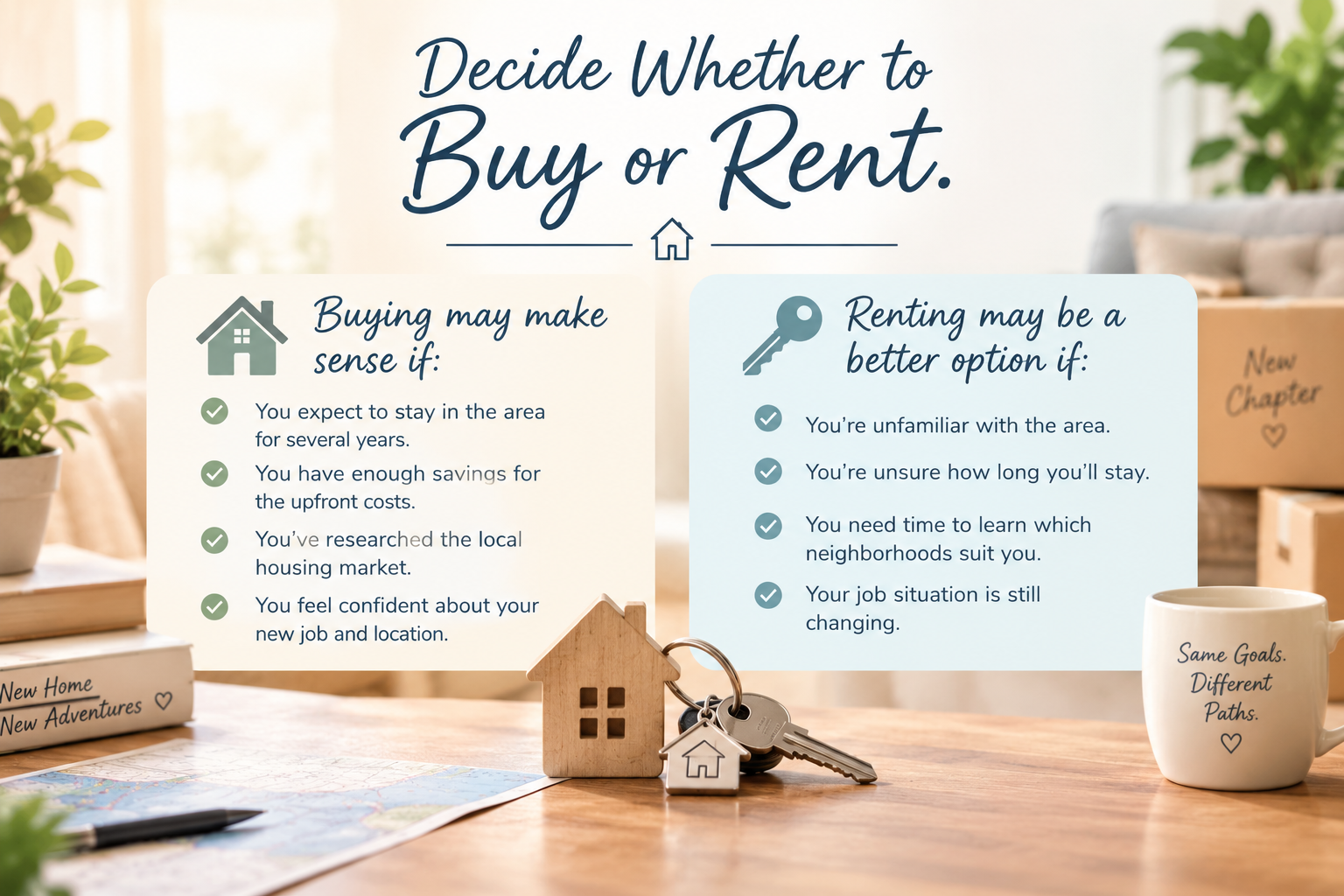
Peter Klein, Team Leader of Tress Homes, offers a simple reminder for relocating buyers: “When a job brings you to a new area, take the time to make sure the community works for you—not just the house.”
That perspective can help prevent the pressure of making a rushed home-buying decision.
Get Your Financing in Order Early
If buying a home is part of your relocation plan, start preparing your finances as early as possible.
Talk with a lender about your budget and get pre-approved before seriously shopping. This gives you a clearer idea of what you can afford and can make the home search more focused.
A new job can also create questions about employment history, income documentation, or timing. If your employment is changing at the same time you're applying for a mortgage, communicate with your lender early rather than waiting until you find a home.
Being prepared can turn a complicated process into a much smoother one.
Work With Someone Who Knows the Local Market
Relocating to an unfamiliar city can make real estate research feel like trying to assemble a puzzle without seeing the picture on the box.
A local real estate agent can help you understand neighborhoods, pricing, property types, commute considerations, and the buying process in the area.
An experienced agent can also help you narrow your search based on what actually matters to you—not simply what looks good in an online listing.
For example, tell your agent if you want:
A short commute
A quiet neighborhood
Access to restaurants and entertainment
More outdoor space
A particular school area
A home with room for a home office
Easy access to highways or public transportation
The more your agent understands about your daily life, the easier it is to identify homes that truly fit.
When everything is happening at once, a checklist can be your best friend.
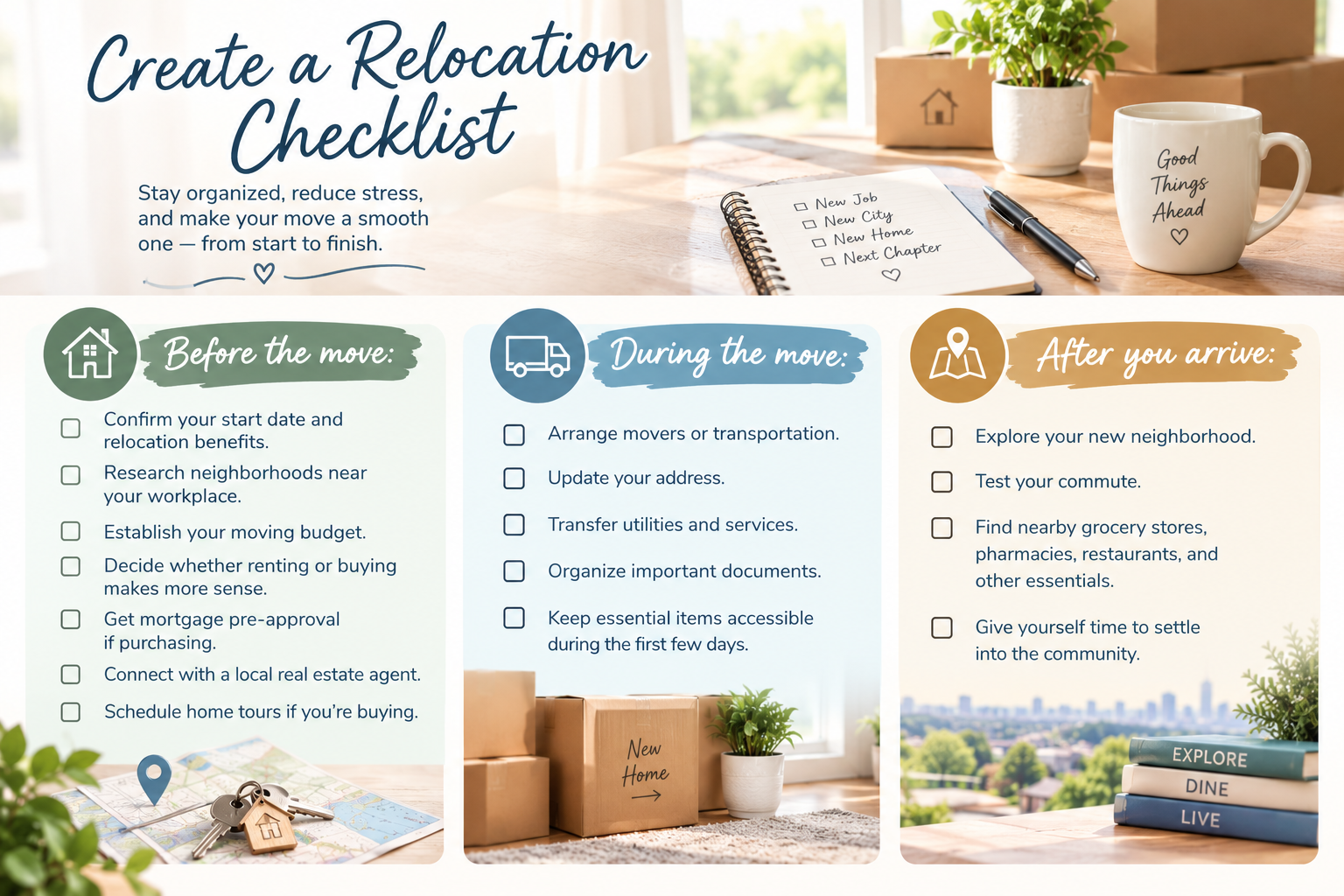
Don't Let the Deadline Make the Decision for You
One of the biggest challenges of relocating for a new job is time pressure. You may have only a few weeks between accepting the position and starting work.
That can make a fast decision feel necessary—but fast doesn't always mean smart.
If purchasing a home, focus on making a well-informed decision rather than simply finding the first property that checks a few boxes. If you need more time, renting temporarily can give you the opportunity to learn the area before committing to a long-term purchase.
Your new job may determine where you need to go. You still get to decide where—and how—you want to live.
Make Your Next Move With Confidence
Relocating for a new job can be a major transition, but it can also be an opportunity to find a home and community that better fit the next stage of your life.
Start by understanding your new area, creating a realistic relocation budget, deciding whether to rent or buy, preparing your finances, and working with professionals who understand the local real estate market.
Most importantly, remember that your move is about more than an address. It’s about building a comfortable starting point for your next chapter.
Ready to explore your options? Browse available properties at HomeOnward.com or reach out to Tress Homes at tresshomes@gmail.com for guidance as you plan your relocation and search for your next home.