

Selling a home can feel like preparing for a big performance. You want the property to make a great first impression, but you may also be wondering: How much should I spend before putting my home on the market?
Should you repair that leaky faucet? Replace the outdated flooring? Repaint the walls? Or should you simply sell the home as-is and let the next owner handle the updates?
There is no one-size-fits-all answer. The right decision depends on your home's condition, your budget, your timeline, and what buyers in your local real estate market are looking for.
The good news? You don't necessarily need to spend thousands of dollars turning your home into a showpiece. With the right strategy, you can focus your time and money on improvements that make a meaningful difference—and avoid repairs that may not pay off.
As Peter Klein, Team Leader of Tress Homes, puts it, "Selling a home isn't about fixing everything. It's about understanding which improvements will create the most value and making smart decisions based on your goals."
What Does "Selling As-Is" Really Mean?
Selling a home "as-is" generally means the seller is offering the property in its current condition and is not planning to make repairs or improvements before closing.
That doesn't mean you can ignore important disclosures or hide known problems. Sellers still need to follow applicable disclosure requirements and be transparent about known issues.
The main advantage of selling as-is is simplicity. You may be able to get your home on the market faster, avoid upfront renovation costs, and skip the hassle of coordinating contractors.
However, an as-is sale can also come with trade-offs. Buyers may expect a lower price, request concessions, or focus heavily on the property's flaws during negotiations.
Think of it like selling a used car. A buyer may happily purchase it with a few scratches, but they will probably factor those scratches—and any mechanical concerns—into the price they're willing to pay.

Selling as-is can be a smart choice in certain situations. Consider this option if:
1. You Need to Sell Quickly
If you're relocating, handling an estate, facing a major life change, or working with a tight deadline, spending months on renovations may not be practical.
An as-is sale can help you move forward without waiting for extensive repairs to be completed.
2. Your Home Needs Significant Work
If the property requires major repairs—such as a new roof, extensive plumbing work, or structural improvements—the cost may be too high to justify before selling.
In some cases, buyers who are comfortable with fixer-uppers may be willing to take on the project themselves.
3. You Don't Have the Budget for Renovations
Home repairs can add up quickly. If making improvements would require taking on debt or using money you don't have available, selling as-is may be the more financially responsible option.
The key is to price the home realistically and understand how its condition compares with other properties for sale.
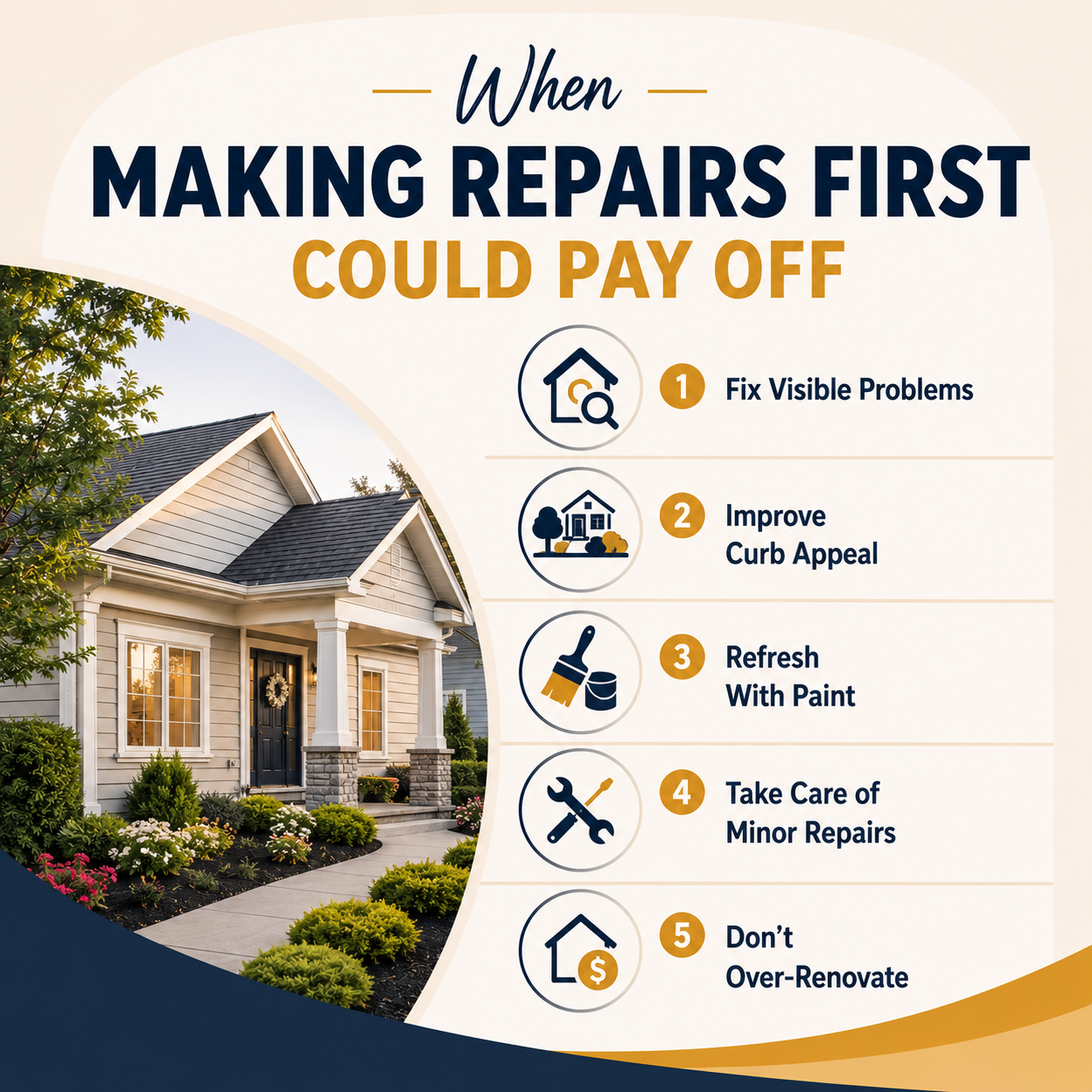
On the other hand, some repairs can make your home more attractive to buyers and potentially improve your selling price.
Before investing in improvements, consider these high-impact areas:
1. Fix Visible Problems
Small issues can make buyers wonder what bigger problems might be hiding underneath.
Repair dripping faucets, broken fixtures, damaged doors, loose railings, and other obvious defects. These relatively simple fixes can help your home feel better maintained.
2. Improve Curb Appeal
The outside of your home is the buyer's first impression—and first impressions matter.
Mow the lawn, trim overgrown landscaping, clean the entryway, pressure-wash exterior surfaces, and consider adding fresh mulch or simple seasonal plants.
You don't need to create a magazine-worthy yard. You simply want buyers to think, "This home looks cared for."
3. Refresh With Paint
A fresh coat of neutral paint can make rooms feel brighter, cleaner, and more spacious.
If your walls feature bold colors, scuffs, or outdated finishes, repainting may be one of the most cost-effective ways to refresh the appearance of your home.
4. Take Care of Minor Repairs
Loose cabinet handles, burned-out light bulbs, squeaky doors, and cracked caulking may seem insignificant, but a long list of small problems can create the impression that a home has been neglected.
Addressing these details can help buyers focus on the home's strengths instead of its flaws.
5. Don't Over-Renovate
One of the biggest mistakes sellers make is spending too much on improvements that buyers may not value equally.
A luxury kitchen renovation may look beautiful, but you may not recover the full cost when you sell. Before starting a major project, talk with a knowledgeable real estate professional about what buyers in your market actually want.
As Peter Klein explains, "The goal isn't to make your home perfect. The goal is to make it appealing, competitive, and easy for buyers to say yes to."
Before making a decision, ask yourself:

The Bottom Line: Let Your Goals Guide Your Decision
Selling your home as-is and making repairs before selling can both be smart strategies. The best choice depends on your unique circumstances.
If your priority is speed and convenience, an as-is sale may be the right path. If you have time and a reasonable budget, targeted repairs and updates could help your home attract more buyers and potentially achieve a stronger sale price.
The important thing is to avoid making emotional decisions based on the idea that you must fix everything before selling. Instead, think strategically. Your home doesn't need to be perfect—it needs to be positioned correctly for the market.
"Every home has a story, and every seller has a different goal," says Peter Klein. "The best selling strategy starts by understanding both."
s
Ready to explore your next real estate opportunity? Visit HomeOnward.com to explore available properties, or reach out to tresshomes@gmail.com for guidance and more information. Whether you're preparing to sell, searching for your next home, or simply exploring your options, the right advice can help you move forward with confidence.