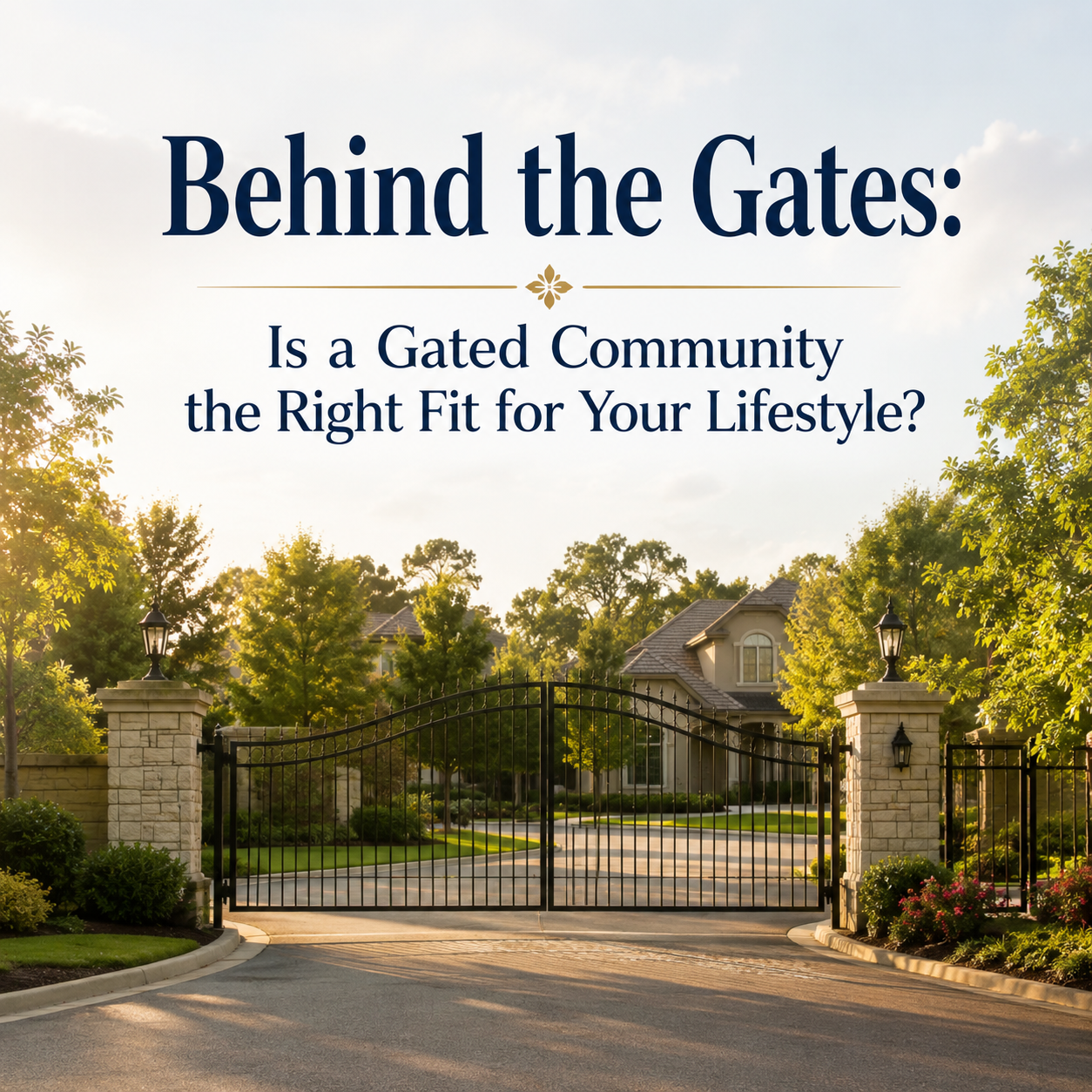
Have you ever driven past a gated neighborhood and wondered what life is really like on the other side of the entrance? For many homebuyers, a gated community feels like the real estate version of a members-only club—quiet streets, well-kept homes, and an added sense of privacy. But is it always the better choice?
As more buyers look for neighborhoods that offer safety, convenience, and a strong sense of community, gated communities have become increasingly popular. Yet they also come with trade-offs that are easy to overlook during an exciting home search.
In this article, we’ll break down the real pros and cons of living in a gated community, explain who tends to benefit most from this type of neighborhood, and give you practical questions to ask before making an offer.
Why Gated Communities Are So Popular
Think of a gated community like a neighborhood with a front door. Instead of anyone being able to drive through, access is usually controlled by a gate, keypad, guard, or resident approval system.
Buyers are often drawn to gated communities because they offer:
A greater sense of privacy
Reduced traffic
Consistent neighborhood appearance
Shared amenities such as pools, parks, or clubhouses
“Many buyers are looking for more than just a house—they’re looking for a lifestyle,” says Peter Klein, Team Leader of Tress Homes. “Gated communities can provide a feeling of comfort and predictability that appeals to families, retirees, and busy professionals alike.”

1. Added Privacy and Peace of Mind
One of the most common reasons people choose a gated neighborhood is the feeling of security. While no community can guarantee complete safety, controlled access can discourage unwanted visitors and reduce through-traffic.
Imagine the difference between living on a busy shortcut road and living on a street where most drivers are your neighbors. Many residents notice:
Fewer unfamiliar cars
Less noise from passing traffic
A more relaxed atmosphere for walking, biking, or letting children play outdoors
2. Well-Maintained Neighborhoods
Most gated communities have a homeowners association (HOA) that helps maintain common areas and enforce neighborhood standards.
That often means:
Landscaped entrances and streets
Consistent property upkeep
Cleaner shared spaces
For buyers who value curb appeal, this can be a major advantage. It’s similar to living in a neighborhood where everyone agrees to keep the “front yard presentation” looking good.
3. Access to Amenities
Many gated communities include amenities that would be expensive to maintain individually.
Common examples include:
Swimming pools
Fitness centers
Tennis or pickleball courts
Walking trails
Clubhouses
If you regularly use these features, the value can add up quickly.
4. Stronger Sense of Community
Because residents often share amenities and encounter each other more frequently, some gated neighborhoods develop a stronger community feel.
Neighborhood events, holiday gatherings, and social clubs are common in many developments.
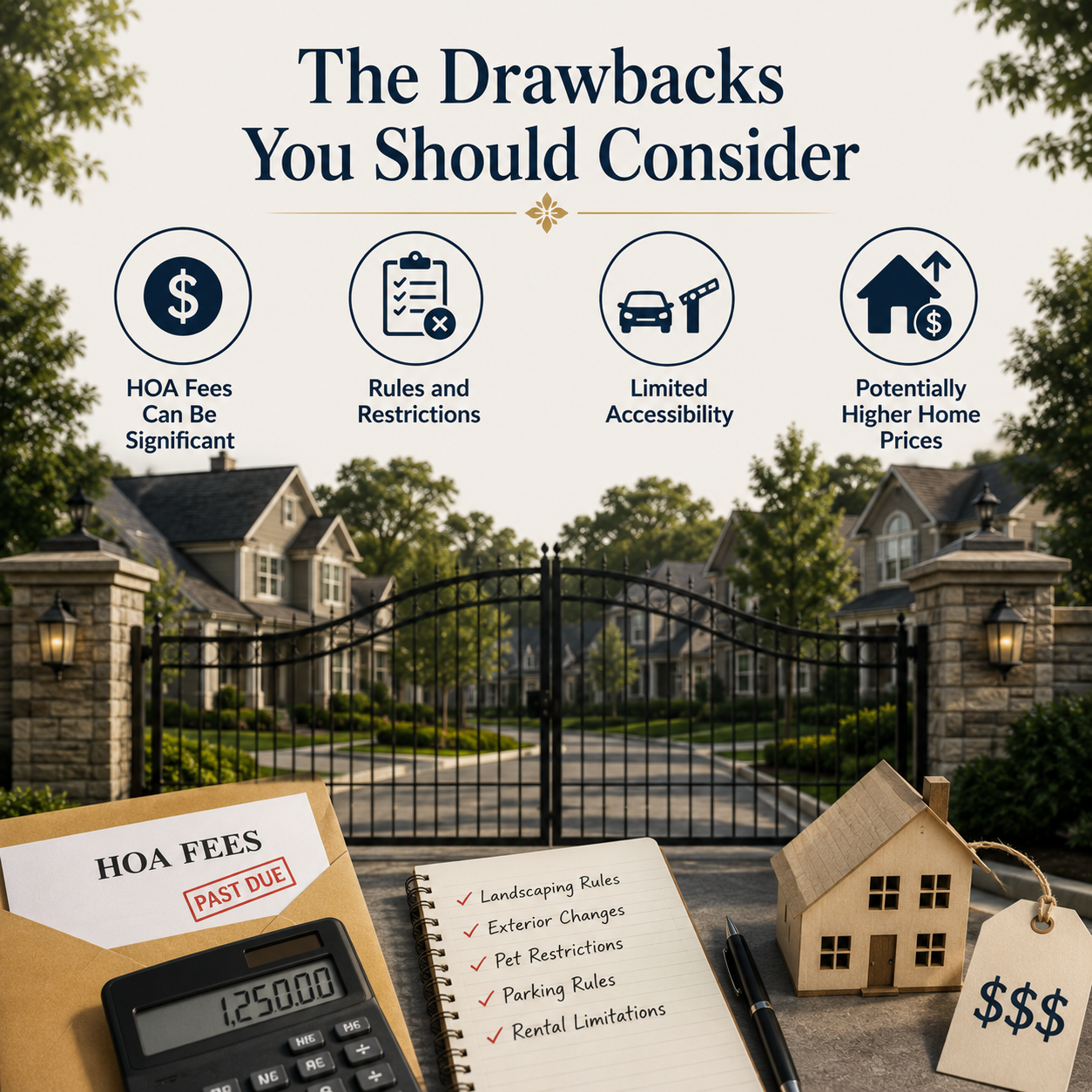
Gated communities aren’t perfect for everyone. Here are the most important downsides to weigh.
HOA Fees Can Be Significant
The same landscaping, security systems, and amenities that make a gated community attractive usually come with monthly or annual HOA fees.
These fees can range from modest to substantial depending on the neighborhood.
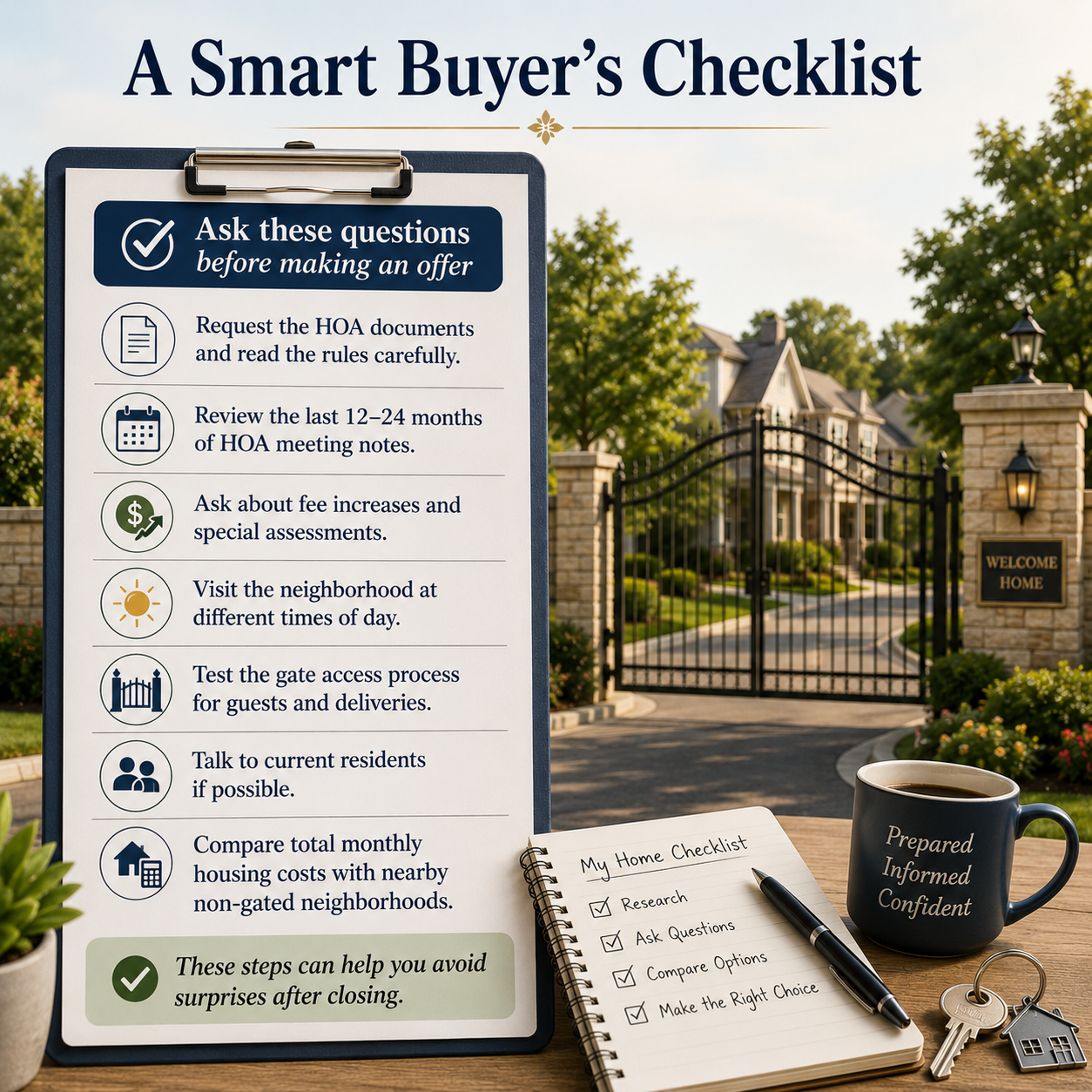
Before buying, ask:
What does the fee cover?
Has the fee increased recently?
Are there special assessments planned?
A beautiful pool loses some of its appeal if it pushes your housing payment beyond your comfort zone.
Rules and Restrictions
HOAs often have rules about:
Exterior paint colors
Landscaping
Parking
Fences
Holiday decorations
For some homeowners, this is reassuring. For others, it feels limiting.
“If you enjoy customizing your property freely, make sure you review the HOA rules before you fall in love with the home,” advises Peter Klein.
Limited Accessibility
Guests, delivery drivers, contractors, and service providers may need approval to enter.
While many communities have efficient systems, it can occasionally be inconvenient—especially if you frequently host visitors.
Potentially Higher Home Prices
Homes in gated communities often command a premium because of their location, amenities, and perceived exclusivity.
That doesn’t mean they’re overpriced, but it does mean you should compare:
Price per square foot
HOA costs
Nearby non-gated alternatives
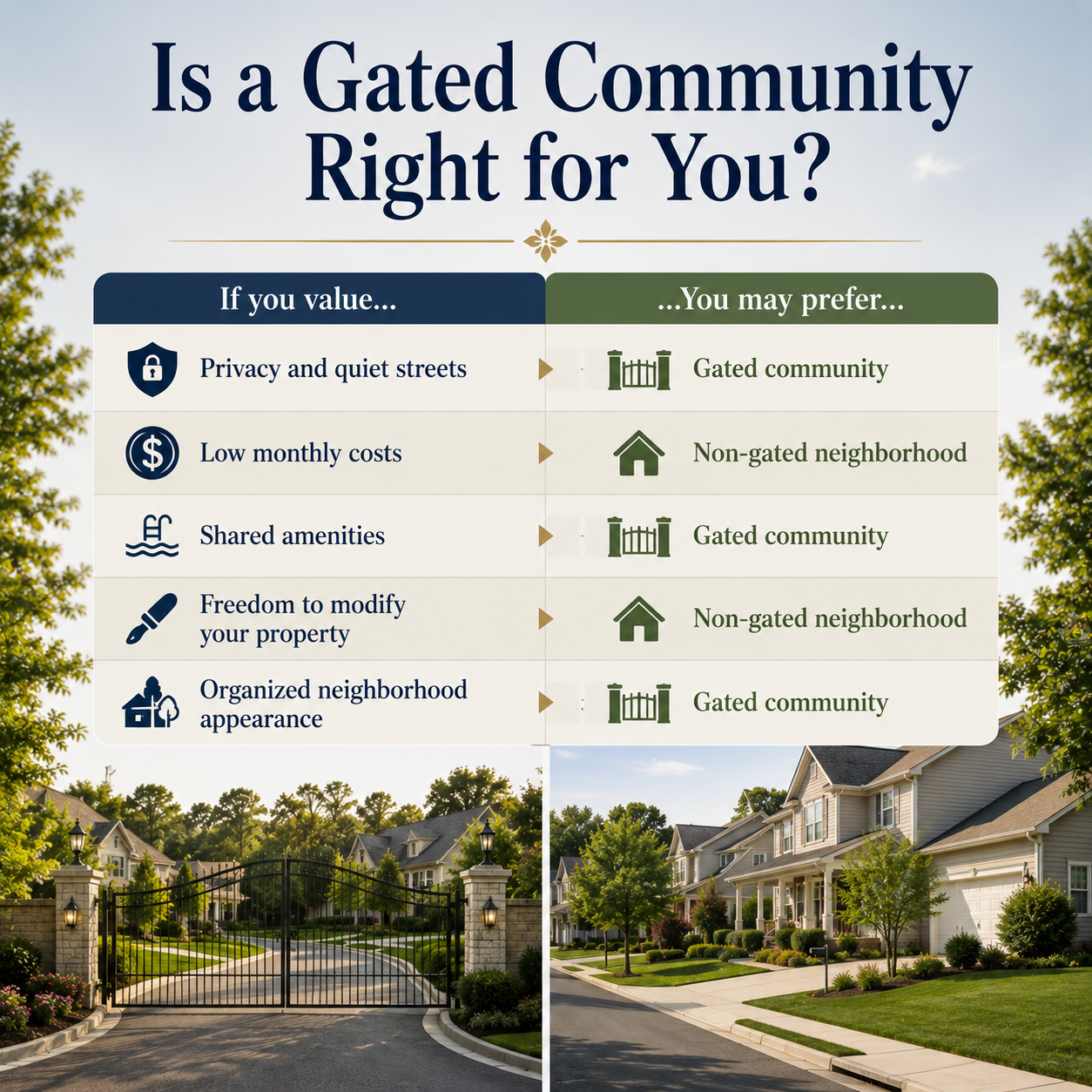
Here’s a quick comparison:
Before purchasing in a gated community, take these steps:
The Bottom Line
Living in a gated community can offer real advantages: quieter streets, added privacy, attractive amenities, and a well-maintained neighborhood. For many buyers, those benefits create a lifestyle that feels more relaxed and predictable.
However, HOA fees, community rules, and higher purchase prices are important factors that shouldn’t be ignored. The best choice depends on how you live day to day. A gated community is ideal for some homeowners and unnecessary for others.
As Peter Klein puts it, “The right neighborhood is the one that supports your lifestyle, not just your wish list.”
If you’re exploring gated communities or comparing them with other neighborhood options, start your search at homeonward.com or email tresshomes@gmail.com with any questions. The Tress Homes team is happy to help you find a neighborhood that feels like home—whether it’s behind a gate or not.