

If you're getting ready to sell your home, you've probably asked yourself one important question: Should I renovate before putting my house on the market?
It's a common dilemma. On one hand, you want your home to attract buyers and sell for the highest possible price. On the other, major renovations can be expensive, time-consuming, and stressful. So, how do you know what's worth doing—and what isn't?
The good news is that you don't always need a full-scale remodel to make a great impression. The key is understanding which improvements truly add value and which ones may not deliver the return you expect.
As Peter Klein, Team Leader of Tress Homes, often says:
"The goal isn't to create the most expensive house on the block—it's to create the home buyers can't stop thinking about."
Let's explore what really matters when deciding whether to renovate before selling.
Why Renovation Decisions Matter
Think of selling your home like preparing for an important job interview. You don't need a completely new wardrobe—you simply want to present yourself at your best. The same principle applies to your home.
Today's buyers often browse dozens of listings online before scheduling a showing. First impressions happen within seconds, making your home's appearance more important than ever. Strategic updates can help your property stand out while avoiding unnecessary expenses.
Making the right improvements can influence everything from buyer interest to the final sale price.

Not every project offers the same value. Before investing thousands of dollars, focus on improvements that buyers consistently appreciate.
1. Fresh Paint Makes a Big Difference
A fresh coat of neutral-colored paint is one of the most affordable ways to refresh your home.
Benefits include:
Brightens rooms and makes spaces feel larger.
Covers everyday wear and tear.
Appeals to a wider range of buyers.
Creates a clean, move-in-ready appearance.
Neutral colors also help buyers imagine their own furniture and décor in the space.
2. Improve Your Home's Curb Appeal
The exterior creates the first impression long before buyers step inside.
Simple upgrades include:
Mowing and edging the lawn.
Trimming shrubs and trees.
Planting colorful flowers.
Pressure washing walkways.
Painting or replacing the front door.
Updating house numbers and outdoor lighting.
These relatively inexpensive improvements can instantly make your property feel more inviting.
3. Update Kitchens and Bathrooms—Without Overdoing It
You don't always need a complete renovation.
Instead, consider:
Replacing outdated cabinet hardware.
Installing modern light fixtures.
Updating faucets.
Re-caulking sinks and tubs.
Refinishing cabinets instead of replacing them.
Replacing worn countertops if they're heavily damaged.
Small cosmetic updates often provide a fresh, modern appearance without the cost of a full remodel.
4. Complete Minor Repairs
Small problems can make buyers wonder about larger hidden issues.
Before listing, fix items such as:
Leaky faucets
Loose doorknobs
Cracked tiles
Running toilets
Squeaky doors
Broken light switches
Damaged screens
These repairs demonstrate that the home has been well maintained.
Renovations That May Not Be Worth the Cost
One of the biggest mistakes sellers make is assuming every renovation increases value.
Consider avoiding:
Luxury kitchen remodels in average-priced neighborhoods.
High-end custom finishes that match only personal tastes.
Expensive room additions right before selling.
Highly customized features that limit buyer appeal.
Peter Klein advises homeowners to remember:
"Buyers appreciate quality improvements, but they rarely pay dollar-for-dollar for luxury upgrades. Smart updates usually outperform expensive renovations."
The goal is to maximize return—not simply maximize spending.
Common Concerns Sellers Have
Many homeowners hesitate because they worry about making the wrong decision.
"What if I spend money and don't get it back?"
This is a valid concern. Before starting any project, compare the expected cost with your neighborhood's home values. Sometimes cleaning, staging, and basic repairs provide a stronger return than major renovations.
"My home feels outdated."
Not every buyer expects a brand-new home. Many buyers simply want a clean, functional, and well-maintained property. Focus first on cleanliness, maintenance, and presentation before considering expensive upgrades.
"Should I renovate everything?"
Usually, no.
Most buyers pay more attention to:
Overall condition
Cleanliness
Natural light
Functional layout
Maintenance history
These factors often influence buying decisions more than luxury finishes.
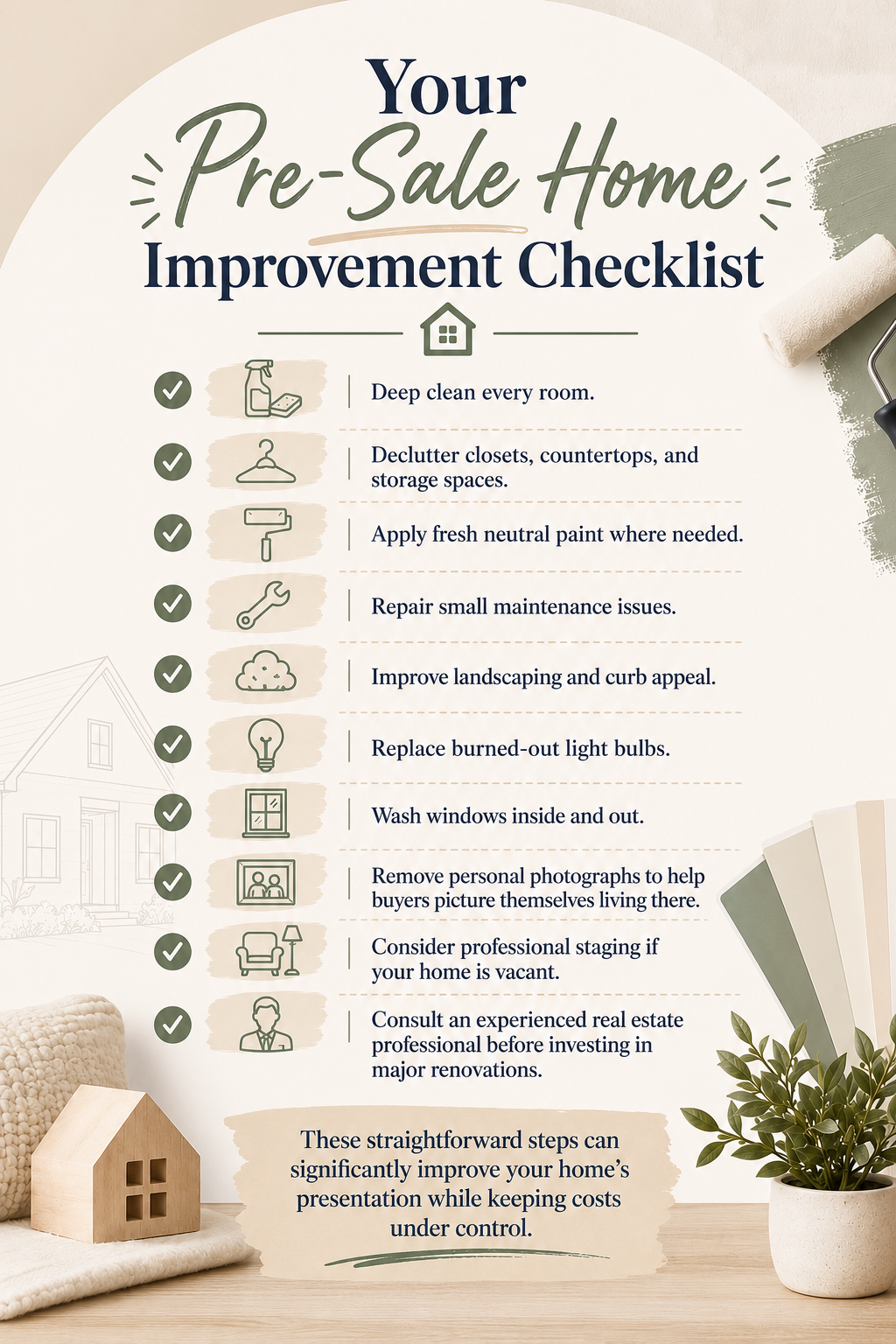
Before listing your property, work through this simple checklist:
The Bottom Line
Selling a home isn't about making it perfect—it's about making it appealing to the largest number of buyers.
Strategic improvements, thoughtful maintenance, and excellent presentation often deliver stronger results than expensive renovations. By focusing on projects that enhance your home's overall appearance and functionality, you'll increase buyer confidence while protecting your investment.
As Peter Klein puts it:
"The best home improvements aren't always the biggest ones—they're the ones that help buyers instantly feel at home."
If you're wondering which updates make the most sense for your property, professional guidance can save you both time and money.
Explore available homes, discover helpful real estate resources, and stay informed by visiting HomeOnward.com. If you'd like personalized advice about preparing your home for sale or buying your next property, reach out to tresshomes@gmail.com. Expert guidance can help you make confident decisions and maximize your home's potential in today's competitive real estate market.