
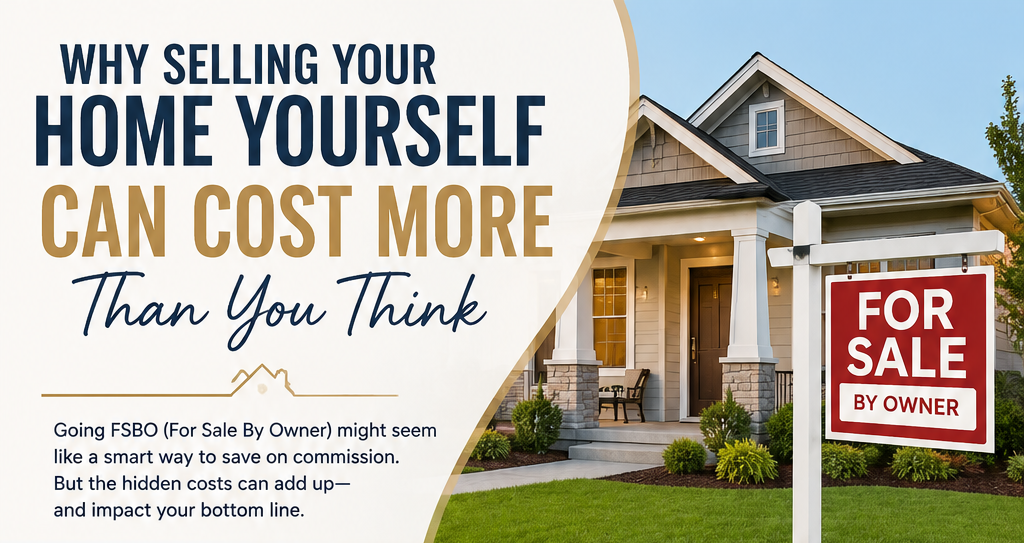
Thinking about selling your home without a real estate agent? You might save on commission—but could you actually be leaving money on the table?
For many homeowners, FSBO (For Sale By Owner) sounds like an appealing way to save money. The idea seems simple: Skip the real estate agent, list the home yourself, find a buyer, and keep more of the sale proceeds.
But selling a home is rarely as simple as putting a “For Sale” sign in the yard.
From pricing the property correctly and marketing it effectively to negotiating offers, managing paperwork, and getting through closing, homeowners can quickly discover that selling a home is a lot like running a small business for a few months. One mistake can potentially cost far more than the money you hoped to save.
That’s why it’s important to look beyond the commission and consider the true cost of selling a home FSBO.
What Does FSBO Really Mean?
FSBO stands for “For Sale By Owner.” Instead of hiring a real estate agent to manage the sale, the homeowner takes responsibility for the process.
That can include:
Determining the home's asking price
Creating the listing
Taking or arranging photos
Marketing the property
Scheduling showings
Communicating with potential buyers
Reviewing and negotiating offers
Coordinating inspections and appraisals
Managing deadlines and paperwork
Navigating the closing process
On paper, this may sound manageable. In reality, each step requires time, knowledge, and careful decision-making.
As Peter Klein, Team Leader of Tress Homes, explains, “Selling a home isn’t just about finding a buyer. It’s about positioning the property correctly, creating competition, and guiding the transaction from start to finish.”
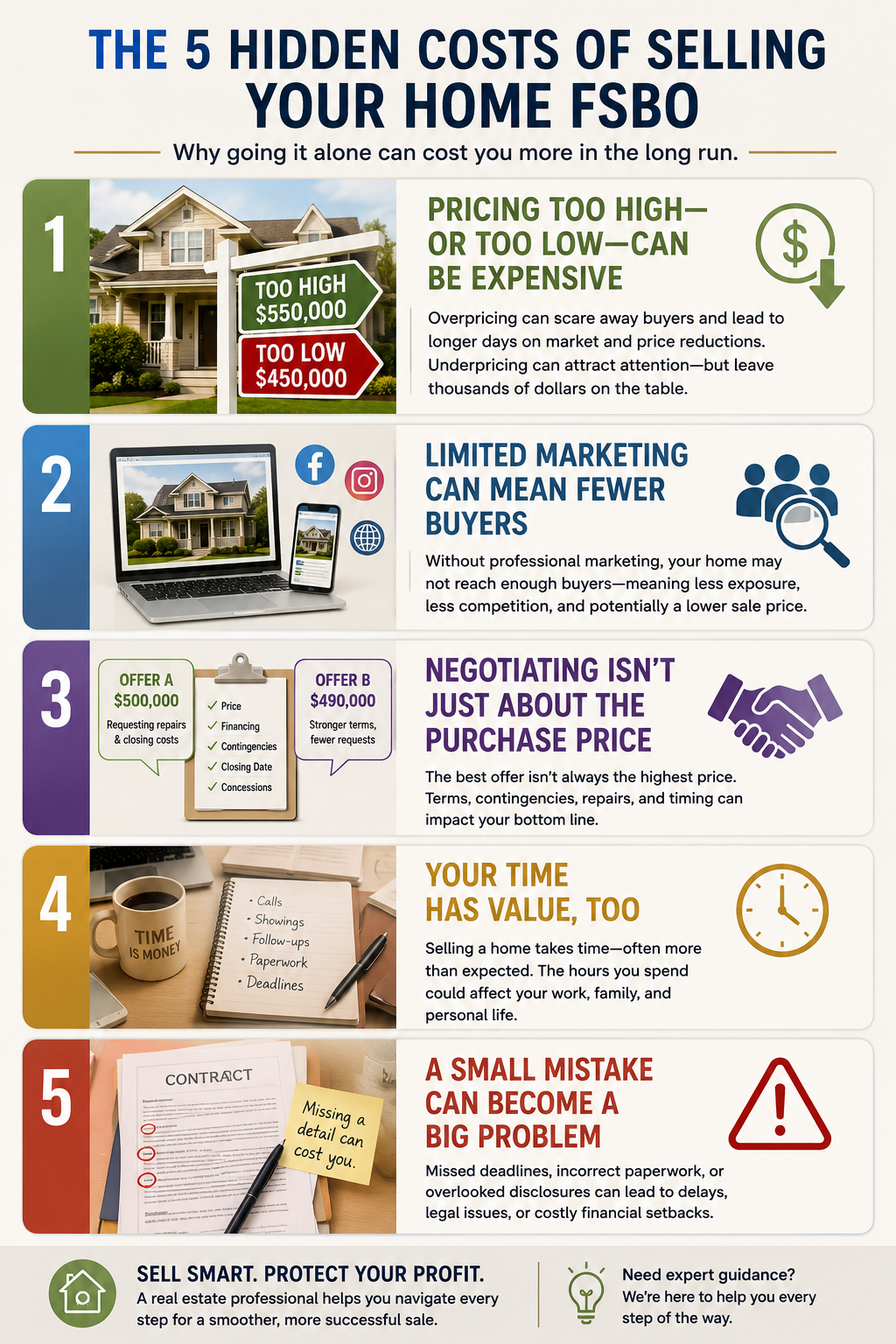
1. Pricing Too High—or Too Low—Can Be Expensive
One of the biggest challenges for FSBO sellers is determining the right asking price.
Homeowners naturally know their property better than anyone. They remember the renovations, family memories, upgrades, and money invested in the home. But buyers don't necessarily value a home based on those emotional factors.
A home priced too high may sit on the market, become less attractive to buyers, and eventually require a price reduction.
A home priced too low may attract attention quickly—but leave thousands of dollars on the table.
Think of pricing like selling a used car. You may know exactly how much you spent maintaining it, but buyers are primarily looking at what similar cars are selling for today.
The goal isn't simply to choose a number. It's to find the price that attracts serious buyers while protecting your potential return.
2. Limited Marketing Can Mean Fewer Buyers
Another potential FSBO disadvantage is limited exposure.
A professional real estate marketing strategy can involve photography, online listings, social media, open houses, buyer networks, and other promotional channels.
A homeowner might post the property online and wait for inquiries. But fewer eyes on the home can mean fewer potential buyers—and fewer potential buyers can mean less competition.
More competition can be valuable.
Imagine selling a concert ticket to one interested person versus having five people competing for it. The second situation gives you more leverage.
The same principle can apply to real estate.
3. Negotiating Isn't Just About the Purchase Price
When an offer arrives, it can be tempting to focus on the number at the top of the page.
But the highest offer isn't always the best offer.
Buyers may request:
Seller-paid closing costs
Repairs or credits
Inspection contingencies
Financing contingencies
Flexible closing dates
Personal property
Appraisal-related concessions
A $500,000 offer with significant concessions could ultimately be less attractive than a $490,000 offer with stronger terms.
For a homeowner who doesn't regularly negotiate real estate transactions, understanding these details can be challenging.
A real estate professional can help sellers look at the whole offer, not just the purchase price.
4. Your Time Has Value, Too
FSBO sellers often think, “I'll save the agent's commission.”
But what is your time worth?
Selling a home can involve answering calls, responding to messages, coordinating showings, preparing the property, following up with buyers, reviewing documents, negotiating terms, and keeping track of deadlines.
If you work full-time or have family responsibilities, the process can quickly become overwhelming.
It's similar to doing your own home renovation. You might save money by doing the work yourself—but if the project takes three times longer than expected, the savings may not feel quite as attractive.
5. A Small Mistake Can Become a Big Problem
Real estate transactions involve many moving parts. Missing a deadline, misunderstanding a contract term, overlooking an important disclosure, or mishandling a negotiation can create unnecessary stress—or potentially cost money.
This doesn't mean FSBO sellers can't successfully sell their homes. Many do.
The point is that selling a home involves more than marketing a property. It requires organization, communication, negotiation, and attention to detail throughout the transaction.
But Isn't FSBO Supposed to Save Money?
This is the most common argument for selling without an agent, and it's a fair question.
The potential savings can be real. However, sellers should compare the total financial outcome, rather than focusing on one expense.
Before choosing FSBO, ask:
What price can I realistically expect to receive?
How much will professional photography and marketing cost?
How will I reach qualified buyers?
How much time will I spend managing the sale?
Am I comfortable negotiating directly with buyers?
Who will help me understand the contracts and transaction deadlines?
What happens if an inspection reveals an unexpected issue?
The cheapest path isn't always the most profitable path.
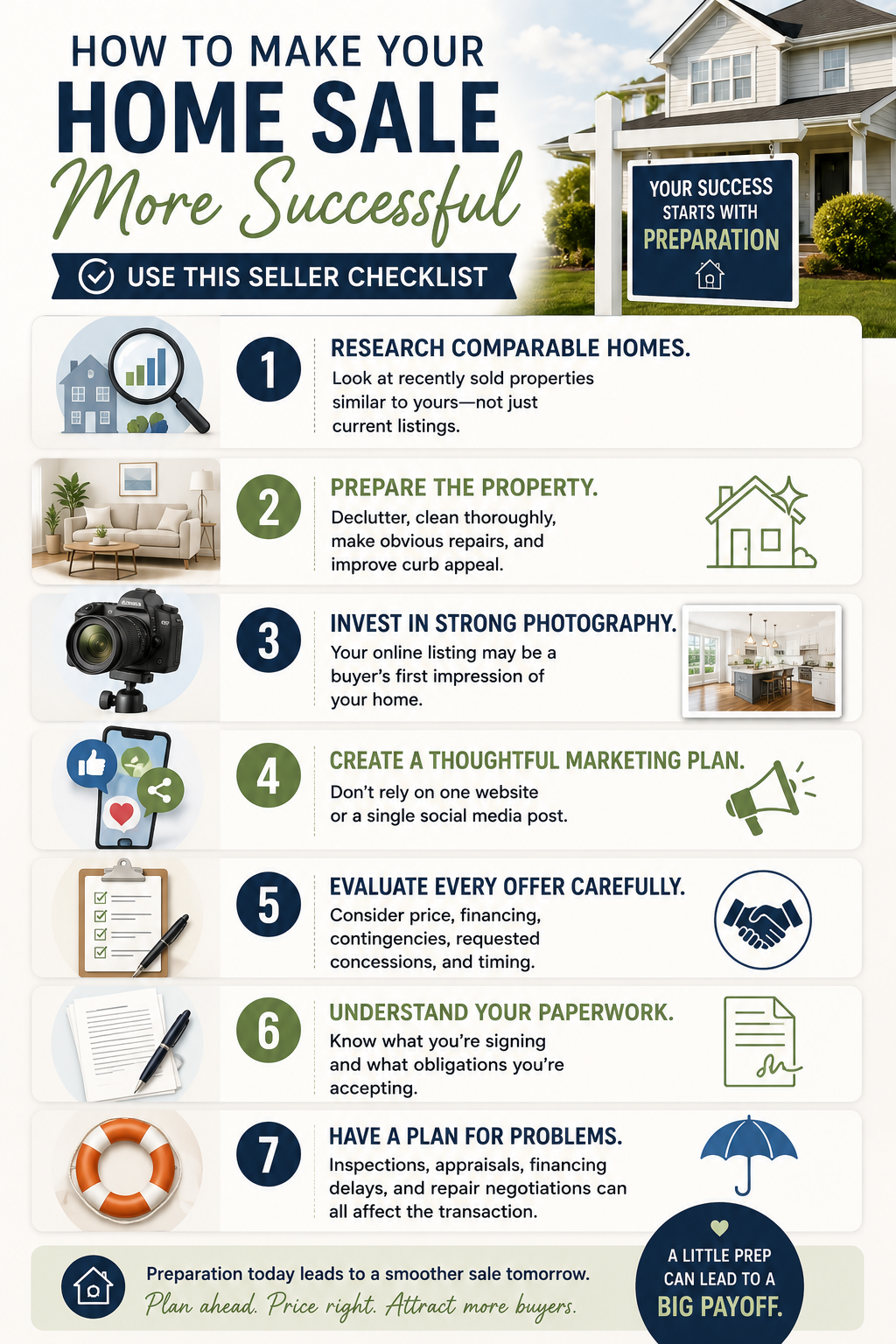
Whether you choose FSBO or work with a real estate professional, preparation matters.
The Bottom Line: Look Beyond the Commission
Selling your home yourself may appear to be a straightforward way to reduce costs. But the real question isn't, “How much can I save by not using an agent?”
It's “How much will I walk away with after everything is said and done?”
An incorrectly priced home, limited exposure, difficult negotiations, unexpected concessions, or costly mistakes can potentially outweigh the savings a homeowner hoped to achieve.
For many sellers, having an experienced real estate professional involved isn't simply about convenience. It's about having someone who can help develop a strategy, attract qualified buyers, negotiate effectively, and keep the transaction moving toward the finish line.
Your home is likely one of your biggest financial assets. Before deciding how to sell it, make sure you're looking at the entire picture—not just one line item on the closing statement.
Thinking about selling—or buying—a home? Start your property search at homeonward.com or email tresshomes@gmail.com with your questions or for more information. The right strategy can make a meaningful difference in your next move.


