
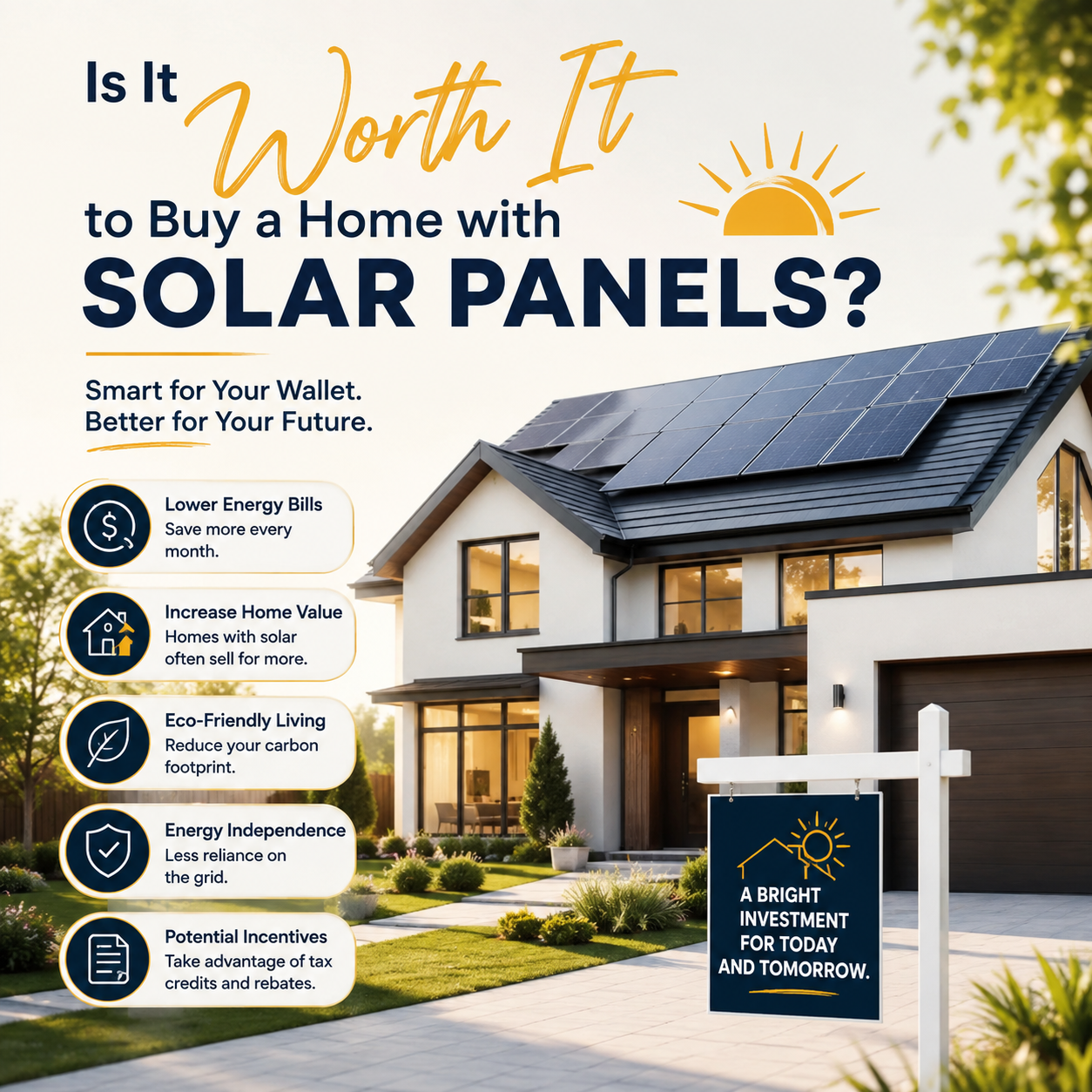
Imagine moving into your new home and opening your first electric bill—only to find that it is significantly lower than you expected. That is one of the biggest appeals of buying a home with solar panels.
But solar panels are more than something you see on the roof. When you buy a solar-powered home, you may also be taking on a solar loan, lease, power purchase agreement (PPA), or simply inheriting a fully paid-off system. That means the panels can be a valuable feature—or a financial complication—depending on the details.
So, is buying a home with solar panels worth it? Often, yes. But the answer depends on the system, the home's energy needs, and the financial agreement attached to the panels.
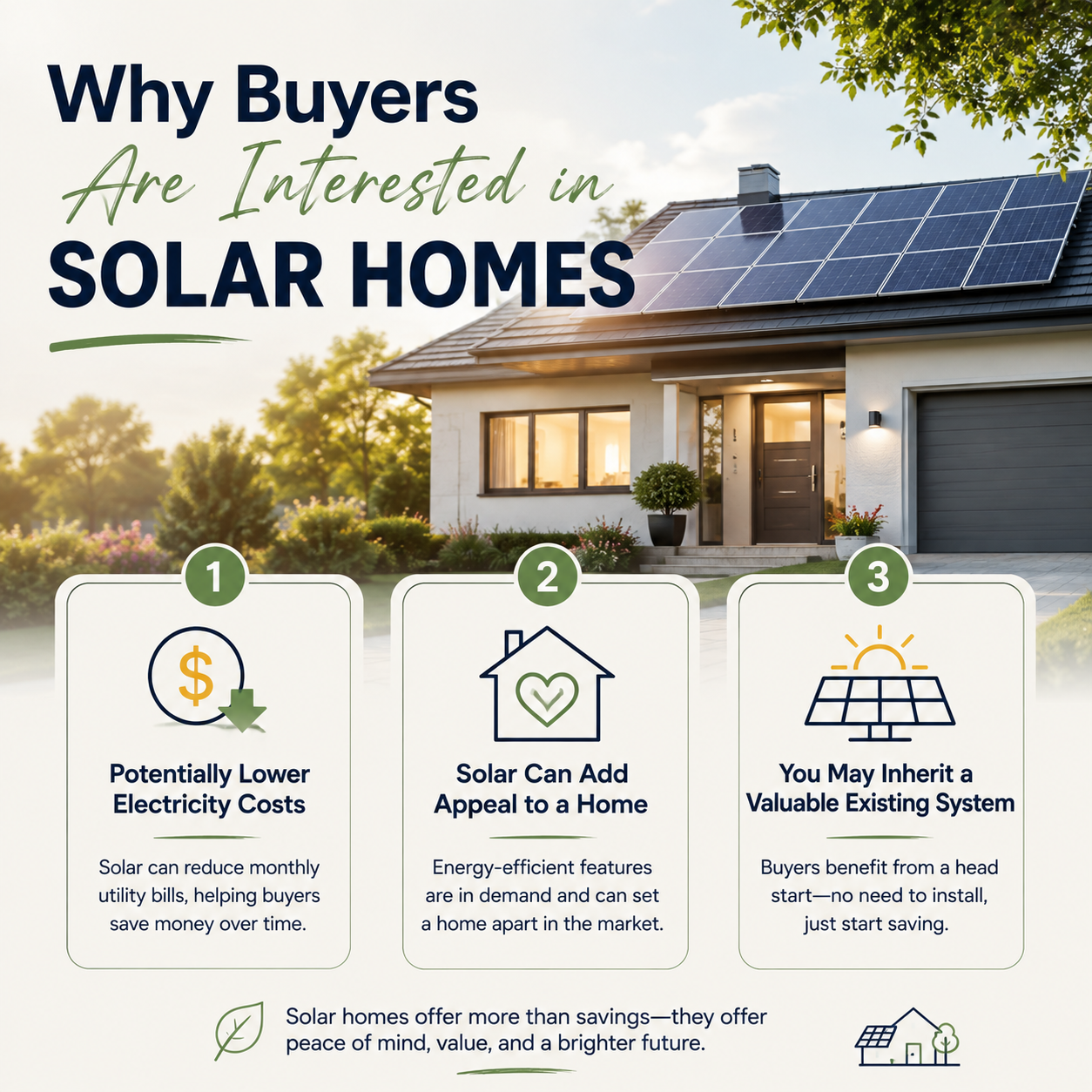
Solar energy has become increasingly attractive to homeowners looking for ways to manage energy costs and make their properties more energy efficient. For buyers, a home with solar panels can feel like getting an upgraded feature without having to install the system themselves.
Here are some of the biggest potential advantages.
1. Potentially Lower Electricity Costs
The most obvious benefit is the possibility of reducing your reliance on electricity from the utility company.
How much you actually save depends on factors such as the home's energy consumption, local electricity rates, system size, sunlight exposure, and whether the system includes battery storage.
Think of solar panels like a small power plant on your roof. Instead of buying all of your electricity from the grid, your home can generate some of its own.
Peter Klein, Team Leader of Tress Homes, says:
“Solar can be a great selling feature, but buyers should look beyond the panels themselves. The real value is in understanding how the system works and what financial obligations come with it.”
2. Solar Can Add Appeal to a Home
Energy-efficient features can make a property stand out, especially among buyers who want to reduce ongoing household expenses.
A well-maintained solar system may also give a home an edge when compared with similar properties that do not have solar.
However, buyers should avoid assuming that solar automatically adds the same dollar-for-dollar value to every property. The market value depends heavily on the local market and the quality and ownership of the system.
3. You May Inherit a Valuable Existing System
If the seller owns the solar system outright, you could be getting a major upgrade without paying the installation cost yourself.
Ask for documentation showing:
The installation date
System size and equipment details
Warranty information
Maintenance records
Recent utility bills
Production or performance information
Whether any financing remains
A system that is relatively new, paid off, and well maintained is generally much easier to evaluate than one tied to a complicated contract.
The Biggest Question: Who Owns the Solar Panels?
This is where buyers need to slow down.
Solar panels may be:
Owned outright by the seller
Financed through a solar loan
Leased from a solar company
Covered by a power purchase agreement (PPA)
These arrangements can have very different financial and transaction implications.
If the system is financed, find out the remaining balance, monthly payment, interest rate, and whether the loan must be paid off or can be transferred.
If the panels are leased or subject to a PPA, carefully review the contract. You need to understand the payment structure, contract length, rate increases, transfer requirements, and what happens if you eventually sell the home.
Pro tip from Peter Klein:
“Never treat solar panels as just another appliance. Treat the solar agreement like a separate part of the home purchase and review it before you commit.”
What About Repairs, Roofs, and Maintenance?
Here is another question buyers sometimes overlook: What happens when the roof needs work?
Solar panels typically have long useful lives, but roofs do not last forever. If the roof needs replacement, the panels may need to be removed and reinstalled.
Before closing, ask who is responsible for that work and whether the solar contract addresses panel removal and reinstallation.
Also ask about warranties for the panels, inverter, battery, and other equipment.
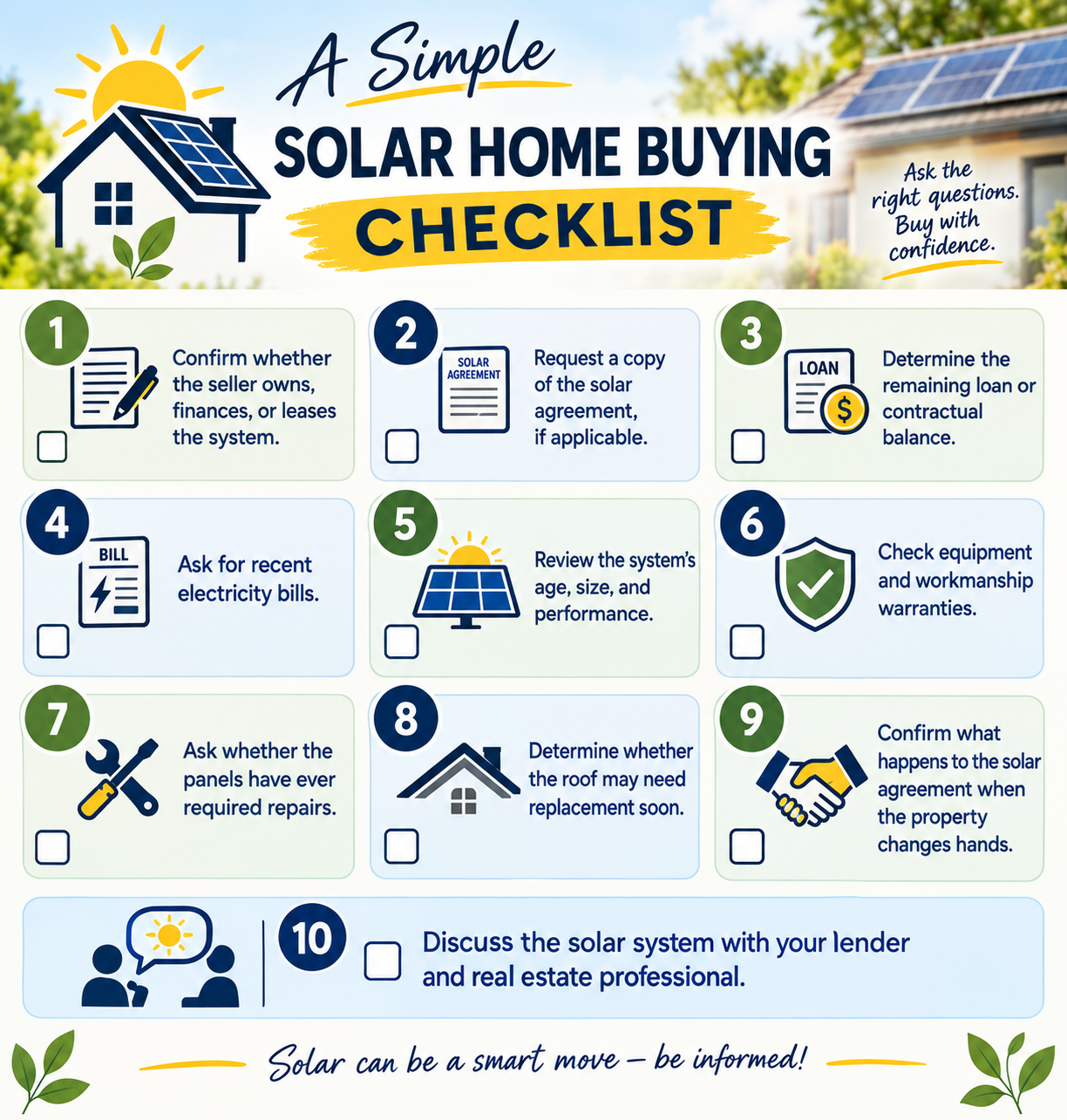
Before making an offer—or at least before closing—take these steps:
Don't Let the Panels Distract You From the Bigger Picture
Solar panels can be exciting, but they should not overshadow the rest of the property.
A home with solar still needs to make sense based on its purchase price, location, condition, financing, taxes, insurance, and your long-term plans.
For example, a house with a paid-off, newer solar system could be attractive. But a house with a large solar loan, an aging roof, and an unfavorable contract deserves more careful consideration.
The goal is not simply to buy a house with solar. The goal is to buy a home where the solar system makes financial and practical sense for you.
So, Is Buying a Home With Solar Panels Worth It?
It can be—but do your homework first.
Solar panels may offer lower energy costs, greater energy independence, and an appealing energy-efficient feature. At the same time, financing agreements, leases, PPAs, warranties, roof considerations, and transfer requirements can affect whether the system is truly an advantage.
As Peter Klein puts it:
“The best solar purchase is an informed purchase. Understand the numbers, understand the contract, and then decide whether the benefits fit your plans.”
A little research before signing can help turn a potentially confusing feature into a genuine long-term benefit.
If you're searching for a home and want to understand what a solar-powered property could mean for your purchase, explore available properties at HomeOnward.com or reach out to tresshomes@gmail.com for guidance. Your next home should not only look good on the outside—it should make sense for your future, too.


