
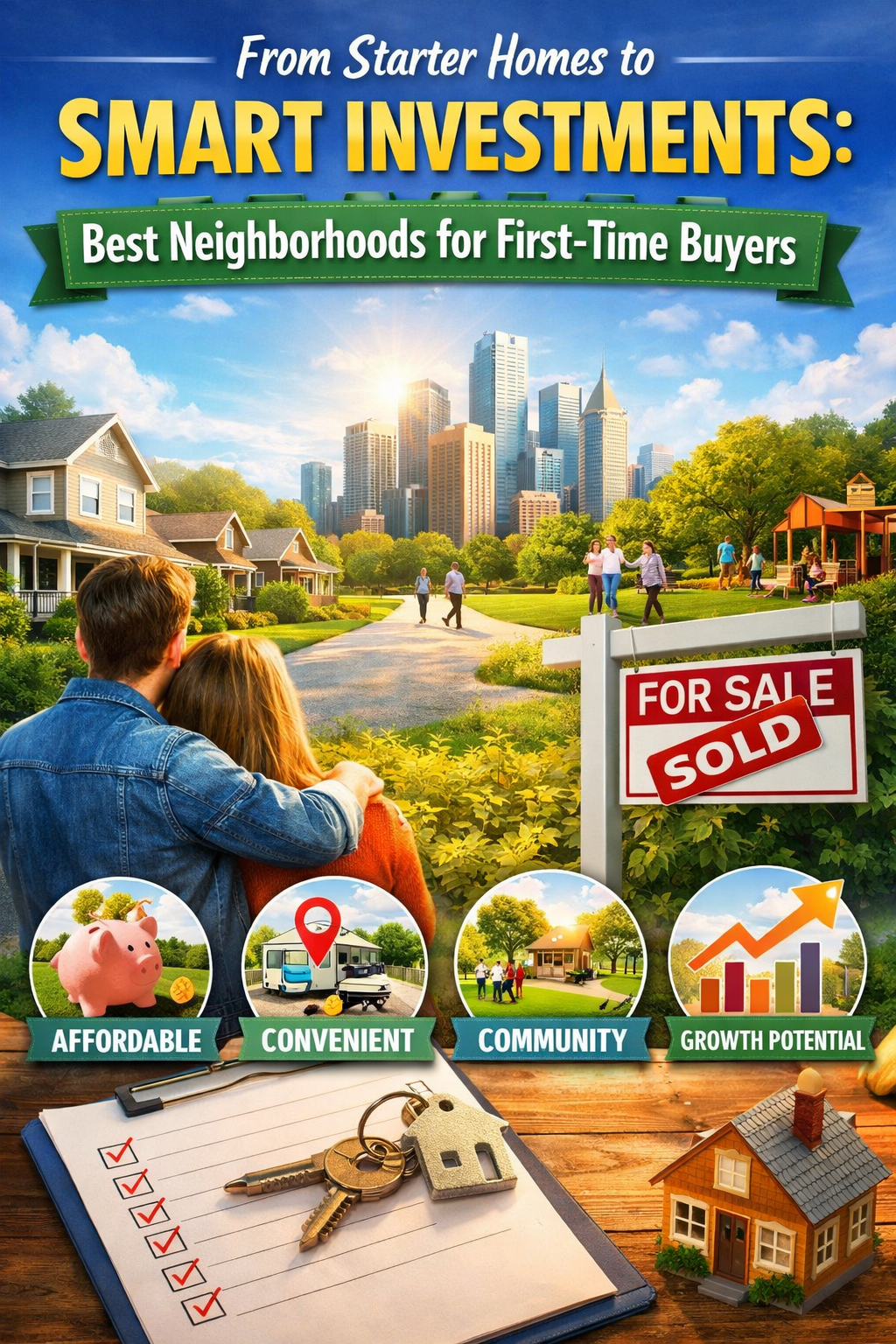
What if your first home didn’t just give you a place to live—but also set you up for long-term financial success?
For many first-time buyers, choosing the right neighborhood can feel like trying to predict the future. You’re not just buying a house—you’re investing in a lifestyle, a community, and your financial growth. With rising home prices and shifting market trends, picking the right area has never been more important.
In this guide, we’ll break down what makes a neighborhood ideal for first-time buyers, explore key benefits and challenges, and give you practical tips to help you make a confident decision. Whether you’re buying your first condo or a starter home, this is your roadmap to finding a place that truly feels like home—and a smart investment.
Why Neighborhood Choice Matters More Than Ever
Think of your home like a tree. The house itself is the trunk—but the neighborhood is the soil. Even the strongest tree won’t thrive in poor soil, and the same goes for real estate.
As Peter Klein explains:
“First-time buyers often focus on the home itself, but it’s the neighborhood that determines long-term value and quality of life.”
With today’s market conditions—fluctuating mortgage rates, evolving work-from-home trends, and growing suburban demand—buyers need to think beyond square footage. The right neighborhood can offer affordability now and appreciation later.
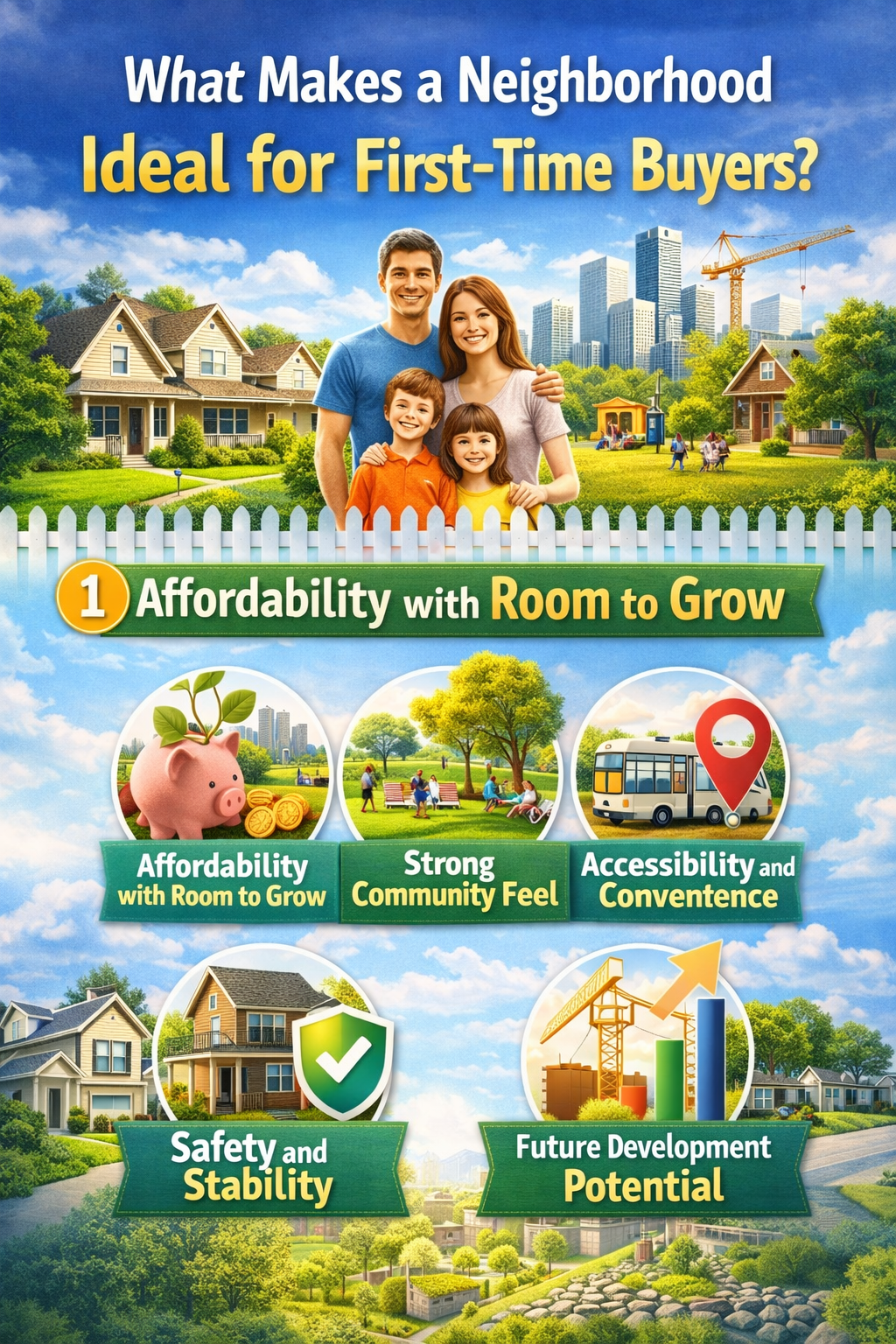
Here are the key factors that define a great starter neighborhood:
1. Affordability with Room to Grow
Look for areas where home prices are still within reach—but rising steadily. These “up-and-coming” neighborhoods often offer the best value.
2. Strong Community Feel
Neighborhoods with parks, schools, and local businesses tend to create a sense of belonging—something especially valuable for first-time homeowners.
3. Accessibility and Convenience
Proximity to work, public transportation, and essential services can save you time and money daily.
4. Safety and Stability
Low crime rates and consistent property values provide peace of mind and long-term security.
5. Future Development Potential
New infrastructure, commercial projects, or planned developments can boost property value over time.
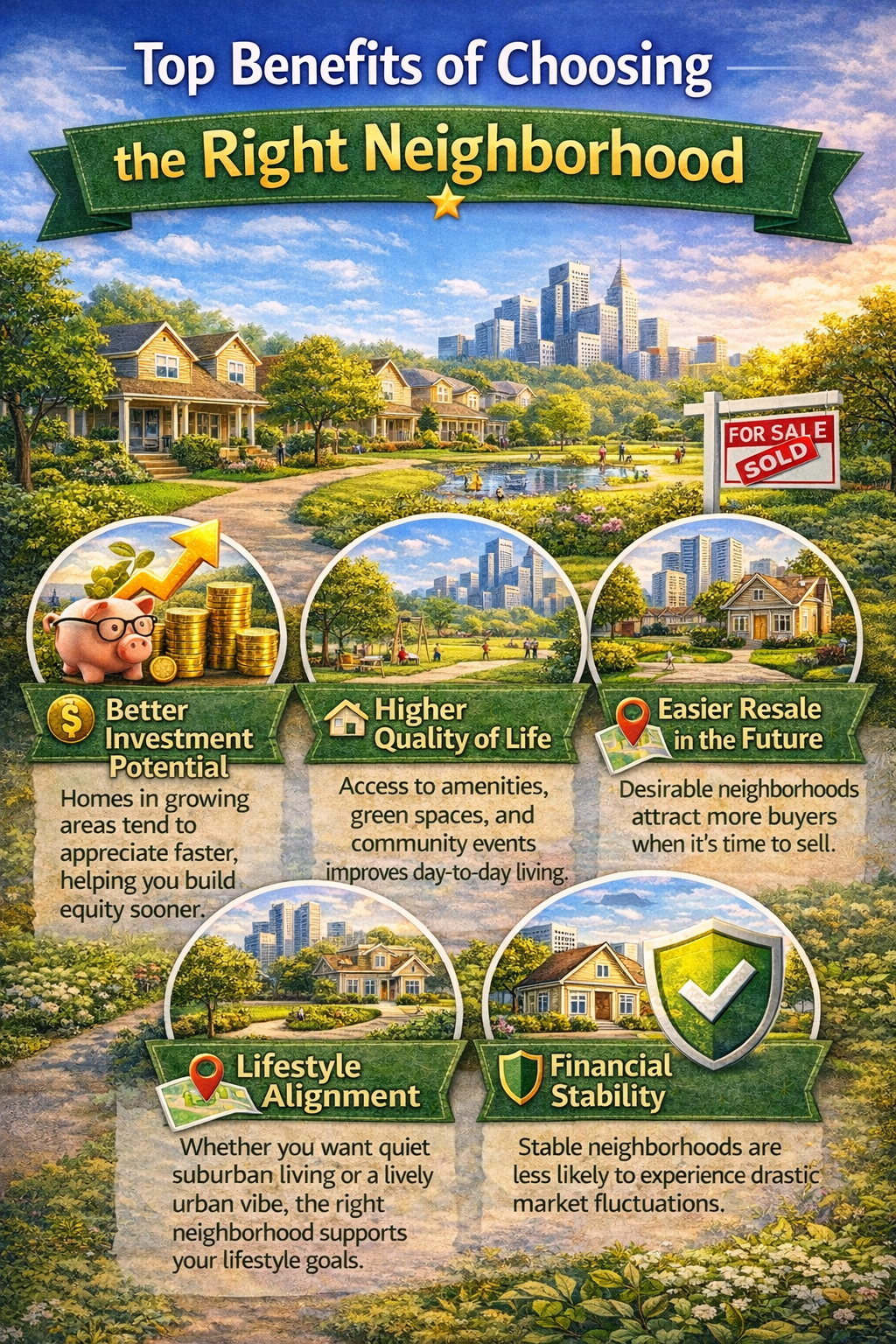
Selecting the right neighborhood isn’t just about comfort—it’s a strategic move. Here’s why:
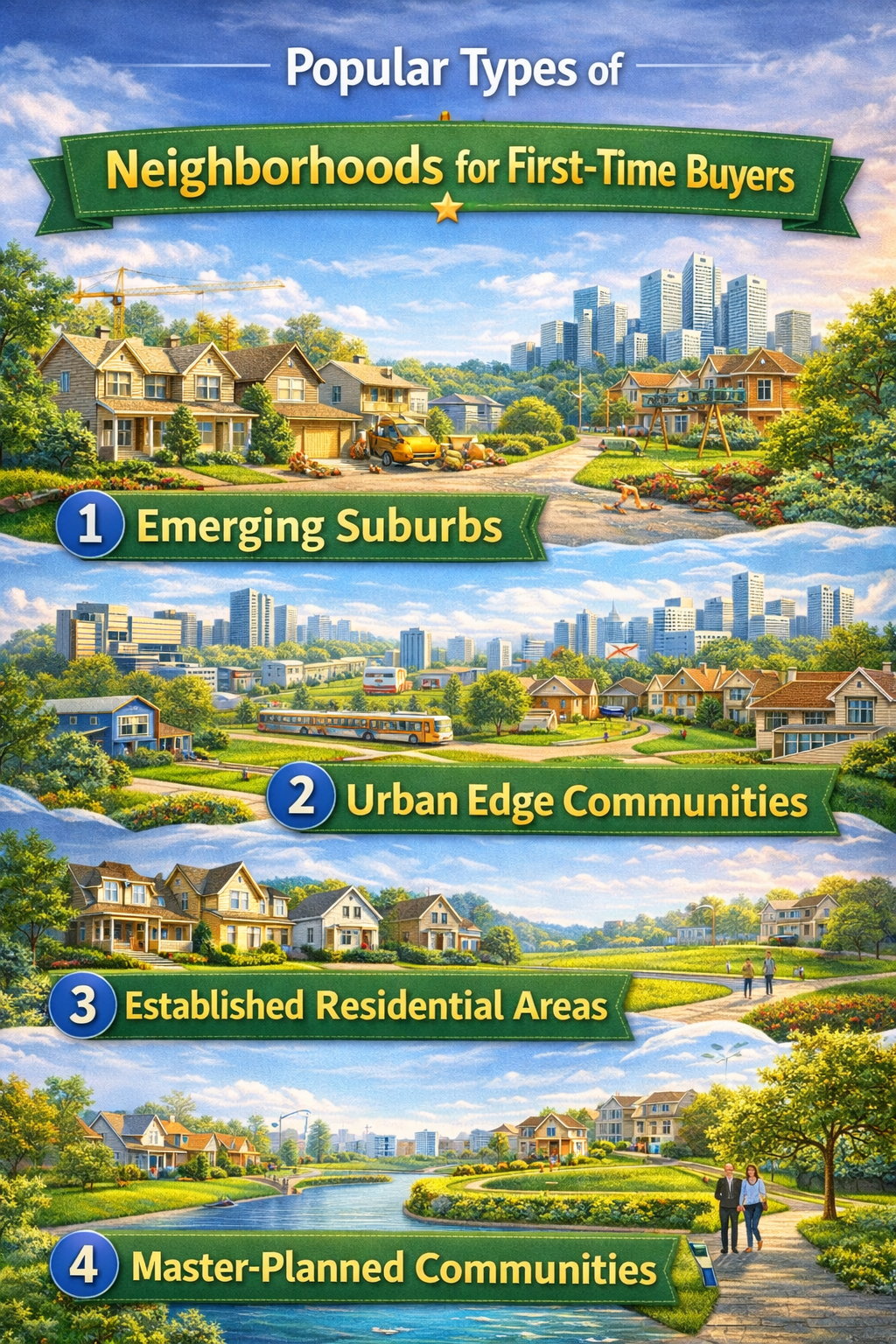
While every market is different, these categories are often ideal for beginners:
1. Emerging Suburbs
These areas offer lower prices than city centers but are rapidly developing. Think of them as “diamonds in the rough.”
2. Urban Edge Communities
Located just outside major city hubs, these neighborhoods balance affordability with accessibility.
3. Established Residential Areas
Older neighborhoods with consistent property values and strong community ties.
4. Master-Planned Communities
Designed with amenities like parks, schools, and shopping centers—perfect for convenience and lifestyle.
Challenges First-Time Buyers May Face (And How to Overcome Them)
No decision is without its hurdles. Here are common concerns—and solutions:
Challenge: Limited Budget
Solution: Consider smaller homes or condos in desirable areas instead of larger homes in less ideal locations.
Challenge: Fear of Choosing the Wrong Area
Solution: Visit neighborhoods at different times of day, talk to residents, and research future developments.
Challenge: Competitive Market
Solution: Get pre-approved and work with a knowledgeable agent who understands local trends.
Challenge: Balancing Needs vs. Wants
Solution: Prioritize essentials like safety and commute over cosmetic features.
As Peter Klein puts it, “Your first home doesn’t have to be perfect—it just needs to be smart.”
How to Choose the Right Neighborhood: A Simple Checklist
Use this step-by-step guide to narrow down your options:
✔ Step 1: Define Your Priorities
Budget range
Commute time
Lifestyle preferences
✔ Step 2: Research Market Trends
Look at price growth over the past 3–5 years
Check planned developments
✔ Step 3: Visit in Person
Walk around the area
Observe noise levels, traffic, and cleanliness
✔ Step 4: Talk to Locals
Ask about safety, community vibe, and nearby amenities
✔ Step 5: Work with an Expert
A real estate professional can provide insights you won’t find online
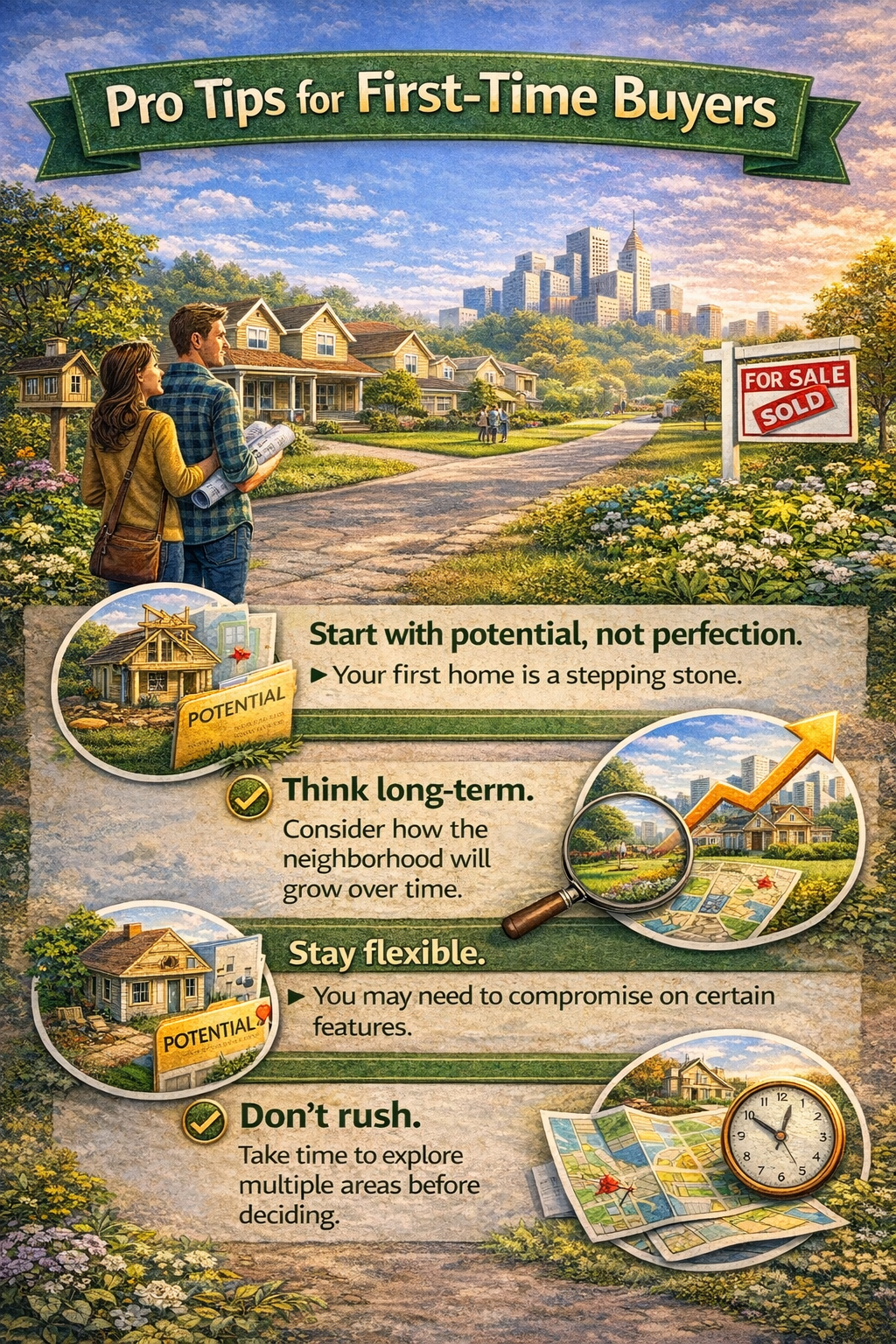
Visual Guide: What to Look For in a Neighborhood
Imagine this checklist as your “neighborhood scorecard”:
🟢 Affordable price range
🟢 Safe and well-maintained surroundings
🟢 Access to schools, shops, and transport
🟢 Signs of growth (construction, new businesses)
🟢 Strong community vibe
The more boxes you check, the stronger your investment.
Final Thoughts: Your First Home Starts with the Right Neighborhood
Buying your first home is a big milestone—and choosing the right neighborhood is one of the most important decisions you’ll make. It’s not just about where you live today, but where you’ll grow tomorrow.
By focusing on affordability, community, and future potential, you can find a neighborhood that supports both your lifestyle and your financial goals.
As you begin your journey, remember: the perfect home doesn’t exist—but the right neighborhood can make any house feel perfect.
Ready to Find Your First Home?
Start your property search today at HomeOnward or email tresshomes@gmail.com for personalized guidance and expert advice.
Your future home—and neighborhood—is waiting. 🏡