What if your home had another “room” you could enjoy without adding a single square foot to the floor plan?
Your backyard, patio, deck, or balcony can be much more than a place for a grill and a few outdoor chairs. With thoughtful design, an outdoor area can become a comfortable extension of your living space—a place to relax with your morning coffee, host friends for dinner, or enjoy a quiet evening after a long day.
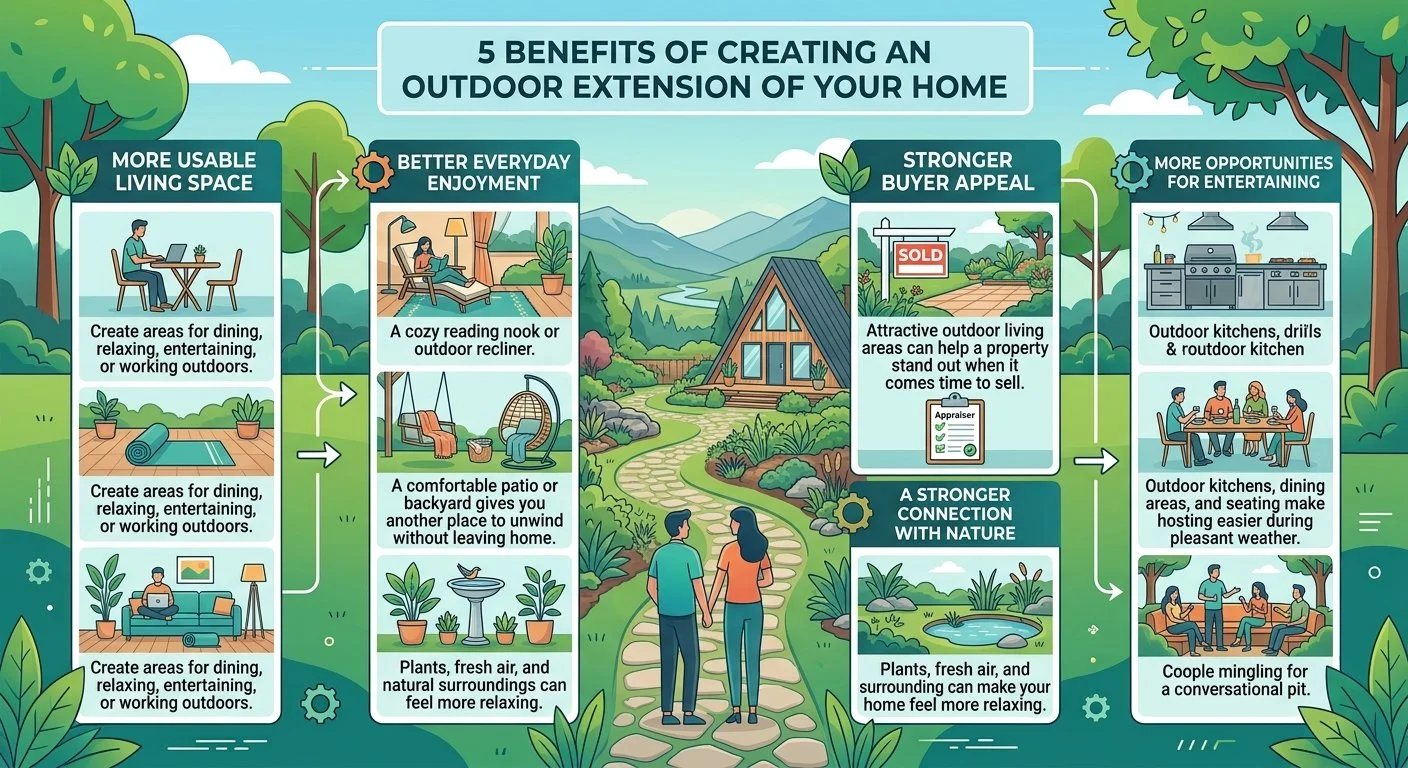
As homeowners increasingly look for ways to make the most of their properties, creating a functional outdoor living space can also add everyday enjoyment and potentially increase a home’s appeal to future buyers.
Why Outdoor Living Spaces Matter
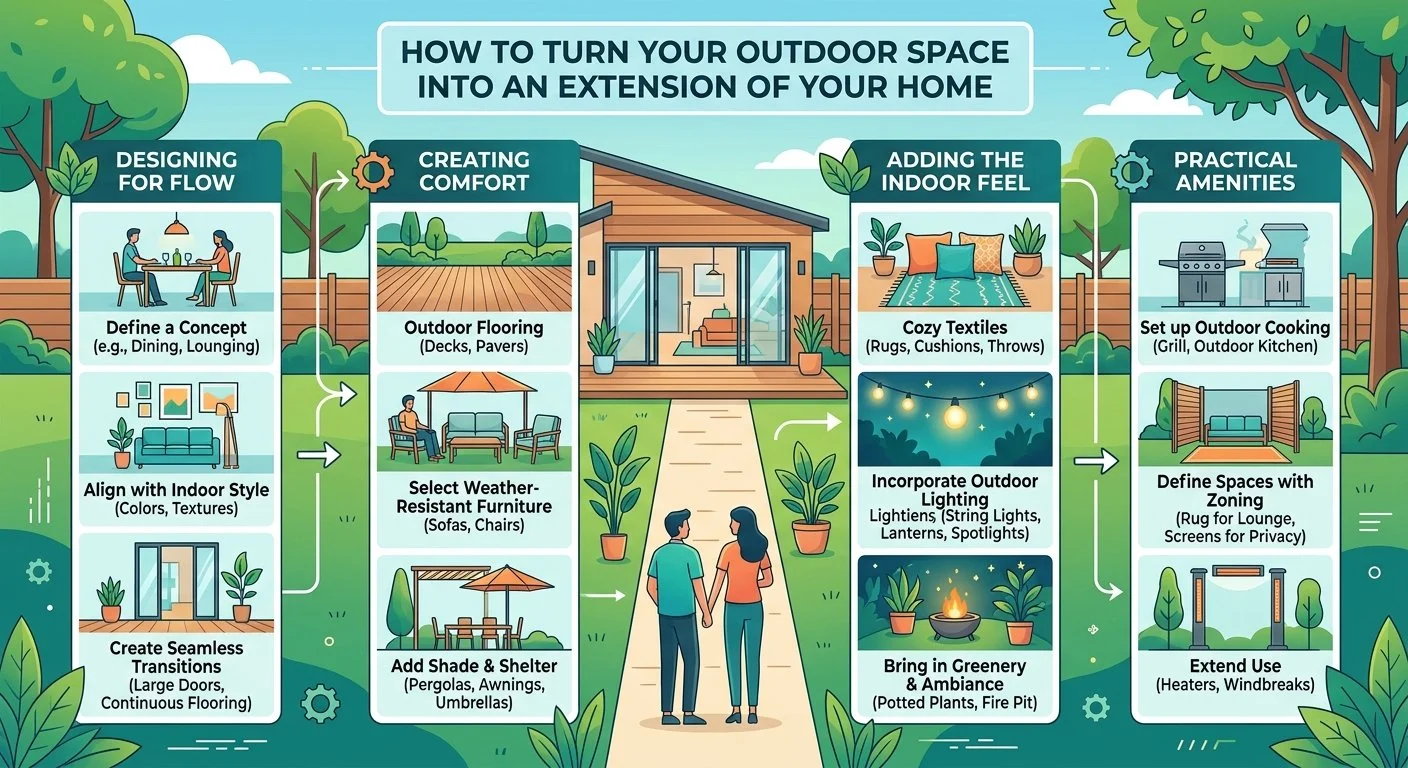
Think of your outdoor space as an extra room without four walls. The right furniture, lighting, landscaping, and layout can create a natural transition between your indoor and outdoor areas.
“People want their homes to work harder for them, and outdoor spaces can provide that extra flexibility,” says Peter Klein, Team Leader of Tress Homes. “A well-designed backyard isn’t just attractive—it can become a meaningful part of how a family uses and enjoys their home.”
Whether you're preparing to sell or simply want to enjoy your property more, an inviting outdoor area can make a noticeable difference.
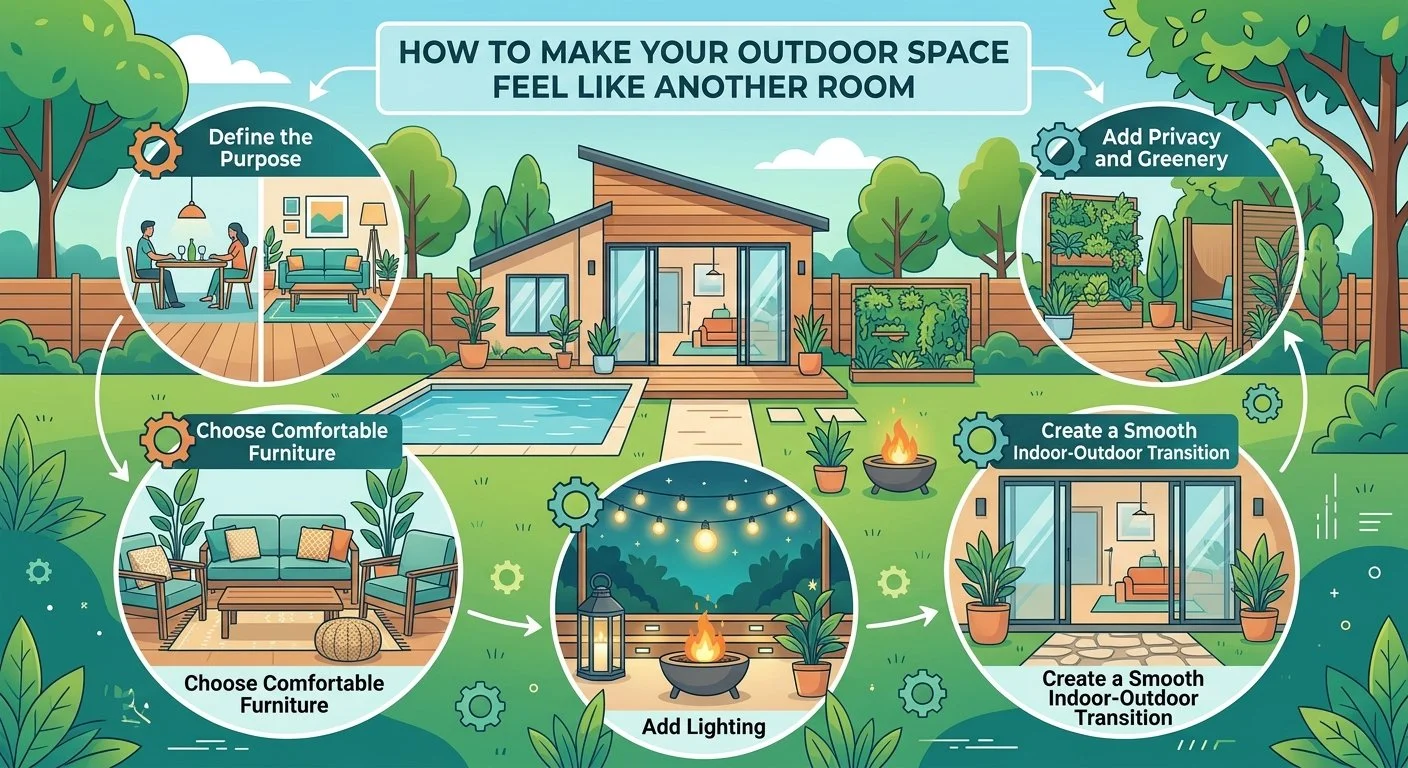
1. Define the Purpose
Do you want an outdoor dining room? A cozy lounge? A play area for children? Maybe you want a combination.
Choose the primary purpose first, then arrange the space around it.
2. Choose Comfortable Furniture
Treat outdoor furniture like you would indoor furniture. Look for comfortable seating, durable materials, and pieces that fit the size of your space.
A small patio doesn't need a large sectional. A couple of comfortable chairs and a compact table may work better.
3. Add Lighting
Outdoor lighting can completely change the atmosphere after sunset. Consider string lights, lanterns, pathway lights, or subtle fixtures around seating and dining areas.
Good lighting also helps make the space feel connected to your home.
4. Create a Smooth Indoor-Outdoor Transition
Use complementary colors, materials, and design elements. For example, if your interior features warm neutral tones, carry similar shades into your outdoor cushions, rugs, or accessories.
Large windows or glass doors can also visually connect the two areas.
5. Add Privacy and Greenery
Plants, planters, hedges, pergolas, and privacy screens can make an outdoor area feel more comfortable and secluded.
You don't need a professionally landscaped yard. A few strategically placed plants can make a surprisingly big difference.
Outdoor Space Checklist
☑ Define how you want to use the space
☑ Choose appropriately sized furniture
☑ Add comfortable seating
☑ Install outdoor lighting
☑ Incorporate plants or landscaping
☑ Create privacy where needed
☑ Coordinate outdoor décor with your home's interior
☑ Keep maintenance and weather conditions in mind
Don't Let Common Challenges Stop You
Not every outdoor space is large, flat, or perfectly private. That's okay.
Limited space? Focus on multifunctional furniture and vertical gardening.
Too much sun? Add an umbrella, shade sail, pergola, or covered seating area.
Worried about maintenance? Choose durable furniture and low-maintenance plants.
Working with a small budget? Start with the basics—comfortable seating, lighting, and a few decorative touches. You can improve the space over time.
Make Your Home Work Beyond Its Walls
A great outdoor living space isn't about creating the fanciest backyard on the block. It's about making your property more functional, comfortable, and enjoyable.
Whether you're improving your current home or searching for a property with the right outdoor potential, knowing what to look for can help you make a smarter real estate decision.
Ready to find a home where indoor and outdoor living come together? Visit Home Onward or email tresshomes@gmail.com to connect with Tress Homes and get personalized support with your home search.