

Buying or selling a home is one of the biggest financial decisions you may ever make. So, why try to handle every detail yourself?
With online listings, home-value calculators, digital paperwork, and countless real estate videos just a click away, it can seem like working without a real estate agent will save time and money. But while technology can put information at your fingertips, it does not replace the experience, local knowledge, negotiation skills, and guidance of a professional.
Whether you are buying your first home, selling a longtime property, or moving to a new area, having the right real estate agent can make the process feel less like navigating a maze and more like following a clear map.
Why More Homebuyers and Sellers Are Looking for Professional Guidance
Today’s real estate market can change quickly. Mortgage rates, home prices, inventory, buyer demand, and neighborhood trends can all influence a transaction.
Going it alone means you are responsible for keeping track of these moving pieces while also managing your everyday life. A real estate agent acts as your guide, helping you understand what matters, what to expect, and where potential problems may arise.
Think of an agent as more than someone who opens doors and schedules showings. A good agent is part researcher, negotiator, problem-solver, and advocate.
As Peter Klein, Team Leader of Tress Homes, puts it, “Real estate is not just about finding a property or putting a home on the market. It’s about understanding the details, anticipating challenges, and helping clients make confident decisions.”

1. You Get Local Market Knowledge
Online real estate websites can show you homes for sale, recent sales, and estimated property values. But numbers alone do not always tell the full story.
An experienced real estate agent understands the local market on a deeper level. They may know which neighborhoods are becoming more competitive, which features buyers are prioritizing, and how similar properties are actually performing.
For sellers, this can help with pricing a home competitively without leaving money on the table. For buyers, it can help identify opportunities and avoid paying more than a property is reasonably worth.
Why it matters: Local knowledge can turn a large amount of information into useful, practical advice.
2. You Have a Stronger Negotiator on Your Side
Negotiating a home sale can be uncomfortable, especially when emotions are involved.
Imagine selling your home and receiving an offer that is lower than expected. It is easy to react emotionally. An experienced agent can step back, evaluate the offer objectively, and help you decide how to respond.
The same applies to buyers. Negotiations may involve more than the purchase price. Closing costs, inspection repairs, contingencies, closing dates, and other terms can all affect the overall deal.
A real estate agent helps you look at the entire picture rather than focusing on one number.
3. You Save Time and Reduce the Stress
Real estate transactions involve many steps. There are property searches, showings, offers, inspections, appraisals, disclosures, paperwork, deadlines, and communication between multiple parties.
Trying to coordinate everything yourself can quickly become a second job.
An agent can help organize the process and keep important details moving forward. Instead of spending hours researching every question or contacting everyone involved, you have someone who can help coordinate the next step.
Think of it like having a project manager for your move. You still make the important decisions, but you do not have to manage every moving part alone.
4. You Gain Access to Professional Connections
Real estate agents often work with a network of professionals involved in buying and selling homes.
Depending on your needs, an agent may be able to recommend reputable:
Mortgage lenders
Home inspectors
Appraisers
Contractors
Attorneys
Moving companies
Staging professionals
Other local service providers
These connections can be especially helpful when you are unfamiliar with the area or buying or selling a home for the first time.
5. You Have an Advocate When Problems Come Up
Even a well-planned transaction can encounter unexpected issues.
An inspection may uncover a repair concern. An appraisal may come in differently than expected. A buyer may request additional concessions, or a closing date may need to change.
Going alone means you are the person responsible for figuring out what happens next.
A knowledgeable real estate professional can help you understand your options and communicate with the other parties involved. They cannot eliminate every problem, but they can help you respond to problems with a plan instead of panic.
But Isn’t Going Without an Agent Cheaper?
This is one of the most common questions—and it is a fair one.
Some buyers and sellers consider handling a transaction themselves because they believe it will reduce costs. However, the lowest upfront expense does not always mean the lowest overall cost.
For example, a seller who struggles to price a property correctly may attract fewer qualified buyers or leave potential money on the table. A buyer who does not know what to negotiate may overlook opportunities to improve the overall terms of a deal.
There is also the value of your time. If you spend evenings researching comparable properties, answering inquiries, arranging showings, reviewing documents, and coordinating inspections, what is that time worth to you?
How to Get the Most From Your Real Estate Agent
Choosing an agent is important, but choosing the right agent is even more important.
Before working together, ask questions such as:
How familiar are you with my local market?
How will you communicate with me?
What is your strategy for my specific goals?
How will you help me understand offers and negotiations?
What should I expect throughout the transaction?
Can you explain anything I do not understand?
Look for someone who listens rather than simply tells you what to do. You should feel comfortable asking questions, discussing concerns, and saying when something does not make sense.
A strong agent-client relationship should feel like a partnership.
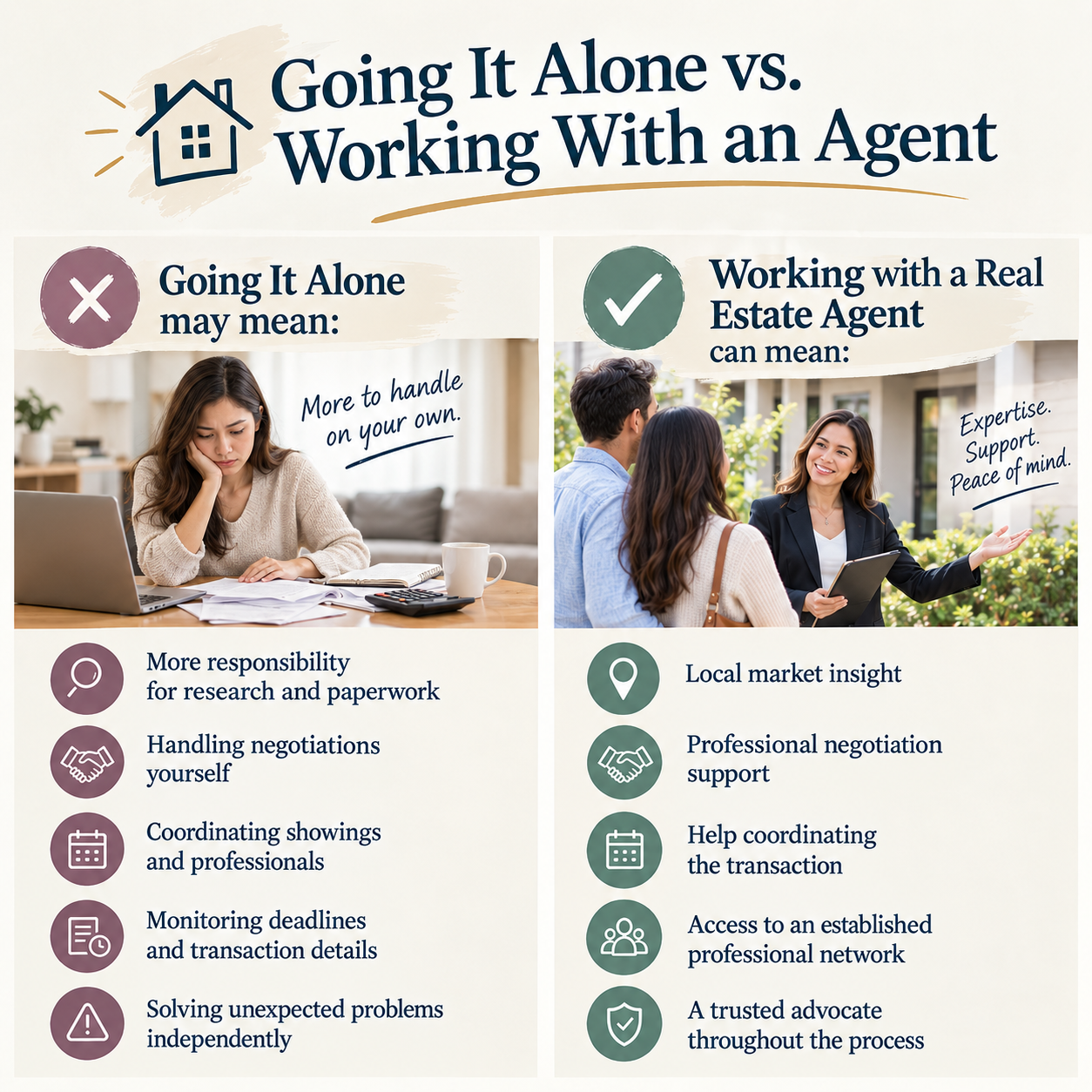
The right choice depends on your experience, available time, comfort level, and goals. But for many buyers and sellers, professional guidance can provide value well beyond simply finding a property or listing a home.
The Bottom Line: You Don’t Have to Navigate Real Estate Alone
Buying or selling a home is a major decision, and there is nothing wrong with wanting to understand every part of the process yourself. In fact, an informed client is a better client.
But you do not have to choose between being informed and having professional help.
A knowledgeable real estate agent can give you local insight, help you negotiate, save you valuable time, connect you with trusted professionals, and provide guidance when unexpected challenges appear.
In a process filled with important decisions, having someone experienced in your corner can make a meaningful difference.
Ready to make your next move? Start your property search at HomeOnward or email tresshomes@gmail.com with your questions. Whether you are buying, selling, or simply exploring your options, the right guidance can help you move forward with greater confidence.