

Buying a home is exciting, especially when your offer has been accepted and closing day is finally within reach. You might already be imagining where the furniture will go, how you will decorate the living room, or what your first weekend in your new home will look like. But before you get the keys, there is one important thing to remember: the final steps of buying a home are just as important as finding the right one.
Even after your offer is accepted, your mortgage lender will continue reviewing your finances, documents, and overall financial situation. A seemingly small decision, such as opening a new credit card or making a large purchase, could create unexpected delays or even put your mortgage approval at risk.
To help protect your investment and keep your home purchase on track, here are five things buyers should avoid doing before closing.
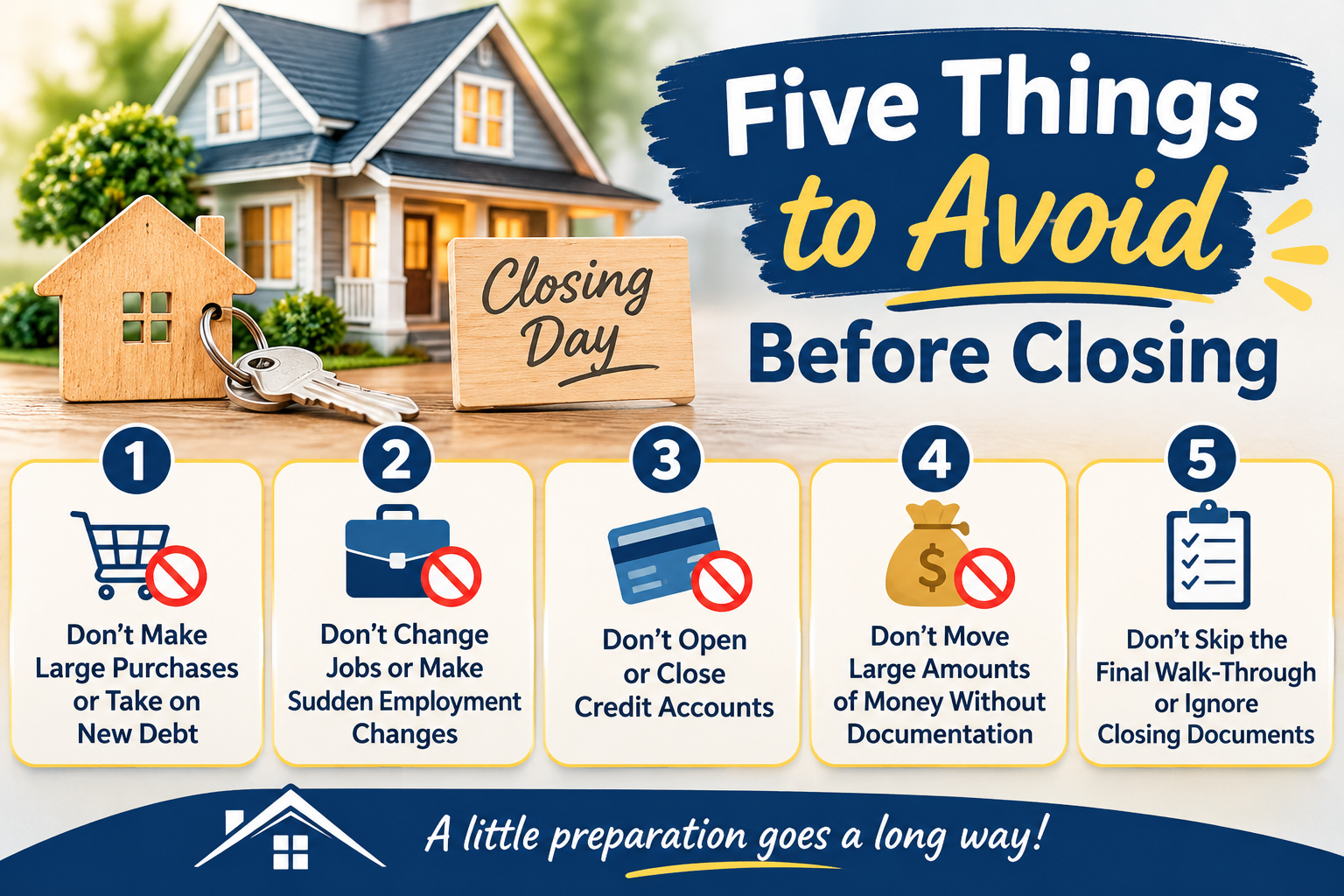
1. Don't Make Large Purchases or Take on New Debt
Getting approved for a mortgage does not mean it is time to start shopping for new furniture, appliances, or a vehicle. Large purchases made with credit can increase your debt and affect your financial profile.
For example, financing a new car or purchasing expensive furniture on a credit card could change your debt-to-income ratio. Your lender may need to review your finances again, potentially affecting your final mortgage approval.
What to do instead:
Postpone major purchases until after closing.
Avoid financing new appliances or furniture.
Keep your credit card balances manageable.
Stick to your existing monthly budget.
2. Don't Change Jobs or Make Sudden Employment Changes
A new job opportunity may sound exciting, but changing employers right before closing can complicate your mortgage approval. Lenders generally want to confirm that you have stable and reliable income.
Even if your new position offers a higher salary, switching jobs, becoming self-employed, or moving from a salaried position to commission-based work may require additional documentation.
What to do instead:
Avoid unnecessary employment changes before closing.
Inform your lender immediately if a job change is unavoidable.
Keep copies of recent pay stubs and employment documents.
Ask your lender how a change could affect your approval.
3. Don't Open or Close Credit Accounts
Thinking about applying for a new credit card to earn rewards or closing an unused account? It may be better to wait.
Opening a new account can trigger a hard credit inquiry and potentially lower your credit score. Closing an existing account may also affect your available credit and credit history.
These changes can create unnecessary complications while your lender is completing the final mortgage review.
What to do instead:
Avoid applying for new credit cards or loans.
Don't close existing credit accounts without consulting your lender.
Continue making payments on time.
Check with your lender before making significant financial changes.
4. Don't Move Large Amounts of Money Without Documentation
Your lender will want to understand where the money for your down payment and closing costs comes from. Large deposits, cash transfers, or unexplained withdrawals can raise questions during the final verification process.
For example, if a family member gives you money to help with your down payment, your lender may require a gift letter and supporting documentation.
What to do instead:
Keep your money in the accounts already reviewed by your lender.
Avoid unnecessary transfers between bank accounts.
Keep records of large deposits and withdrawals.
Ask your lender about the proper documentation for financial gifts.
5. Don't Skip the Final Walk-Through or Ignore Closing Documents
As closing day approaches, it is easy to become distracted by packing, scheduling movers, and preparing for your new home. However, two important steps should never be overlooked: reviewing your closing documents and completing your final walk-through.
The final walk-through gives you an opportunity to confirm that the property is in the agreed-upon condition and that any negotiated repairs have been completed.
Meanwhile, reviewing your closing disclosure helps you understand your final loan terms, monthly payment, and closing costs.
What to do instead:
Schedule your final walk-through before closing.
Check that agreed-upon repairs have been completed.
Confirm that included appliances and fixtures remain in the home.
Review your closing disclosure and ask about unfamiliar charges.
Bring the required identification and closing funds in the approved form.
Before signing the final paperwork, take a moment to review these important reminders:
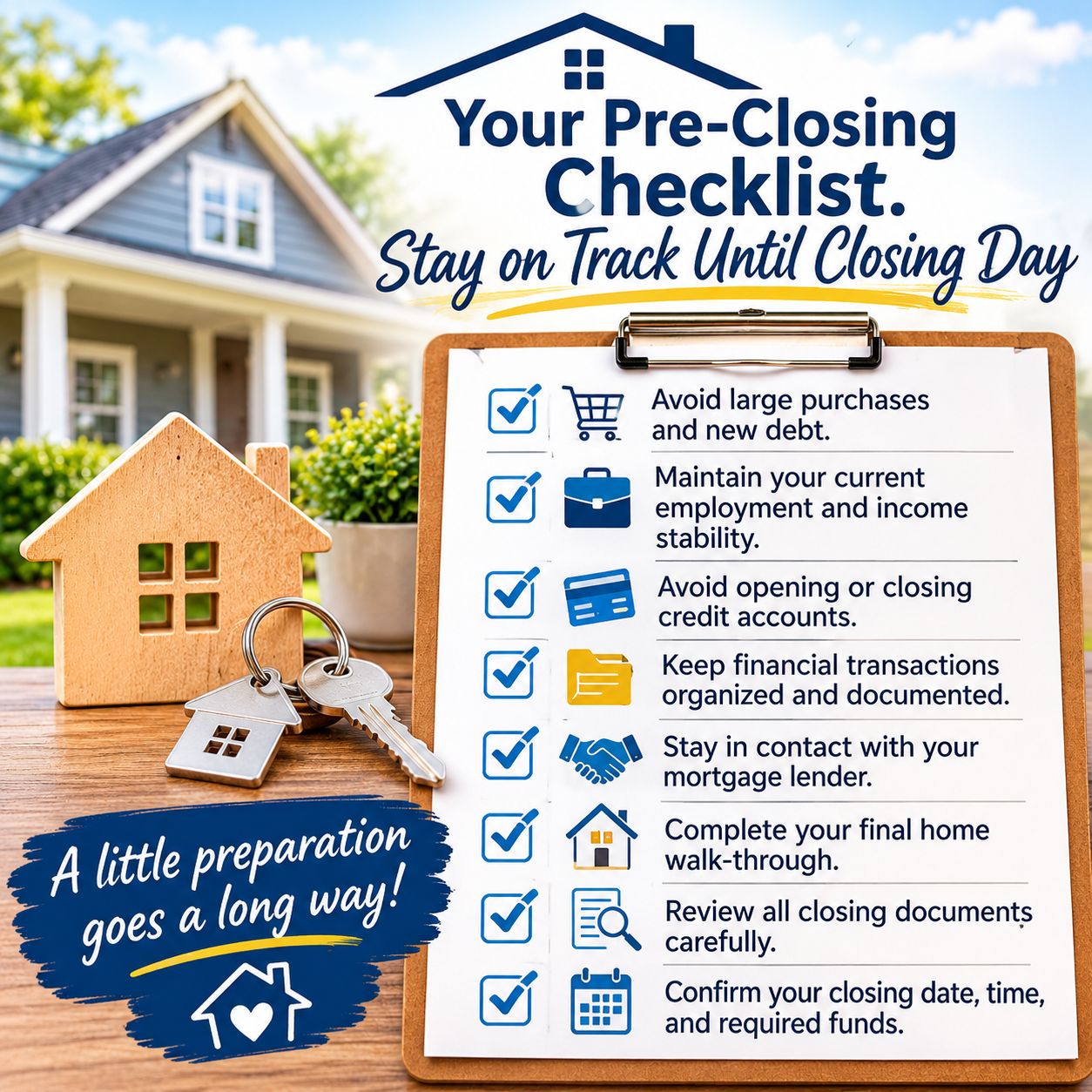
Remember: When in doubt, ask your lender or real estate agent before making a major financial decision. A quick conversation can help prevent unnecessary surprises.
Make Your Final Steps Toward Homeownership Count
Reaching closing day is a major milestone, but getting there requires patience and careful planning. Avoiding unnecessary debt, maintaining financial stability, keeping your accounts organized, and reviewing important documents can help make the final stage of your home purchase smoother.
As Peter Klein, Team Leader of Tress Homes, emphasizes, having the right guidance throughout the homebuying process can make a meaningful difference. Staying informed and communicating with your real estate professional can help you navigate each step with greater confidence.
Whether you are purchasing your first home or moving into your next one, you don't have to figure everything out alone.
Ready to take the next step toward homeownership? Visit Home Onward to explore your options, or email tresshomes@gmail.com for personalized support. The right preparation today can help bring you one step closer to unlocking the door to your new home!