
Moving to a new city or state can feel like turning the page to an entirely new chapter. There’s excitement about a new home, new surroundings, and new opportunities—but there’s also a long list of details to manage.
How do you find the right home when you’re miles away? When should you sell your current house? How do you choose a neighborhood you haven’t visited? And how can you make sure moving day doesn’t become a logistical nightmare?
The good news is that a long-distance move doesn’t have to feel overwhelming. With the right preparation, reliable professionals, and a clear plan, you can turn a complicated move into a series of manageable steps.
“A long-distance move is much easier when you plan the transition—not just the destination. Knowing what you need before you start looking can save you time, money, and unnecessary stress.” — Peter Klein, Team Leader, Tress Homes

1. Start Planning Earlier Than You Think
A local move can sometimes come together quickly. A long-distance move usually needs more breathing room.
Start by creating a moving timeline that works backward from your desired move-in date. Give yourself time to research your destination, prepare your current home, arrange transportation, organize belongings, and handle the paperwork associated with buying or selling a property.
A simple timeline might include:
2–3 months ahead: Research your new area and establish your housing budget.
6–8 weeks ahead: Begin decluttering and get estimates from moving companies.
4–6 weeks ahead: Finalize your home search and make arrangements for utilities and other services.
2–3 weeks ahead: Confirm your moving plans and begin packing less frequently used items.
Final week: Pack essentials, confirm appointments, and keep important documents easily accessible.
Think of your move like a road trip. You wouldn’t start driving across the country without knowing your route, where you’ll stop, and what you need along the way.
2. Research Your New Area Before You Move
When you're moving long-distance, choosing a home isn't just about the house itself. The surrounding community matters, too.
Before making a decision, research factors such as:
Commute times and transportation options
Nearby schools and childcare
Grocery stores, restaurants, and shopping
Parks and recreational opportunities
Local property taxes and housing costs
Neighborhood characteristics
Access to healthcare and other services
Online research can give you a helpful starting point, but it shouldn't be your only source of information.
A knowledgeable local real estate agent can help you understand what photos and listings can't always show—such as how different neighborhoods compare, what areas fit your lifestyle, and what buyers should know about the local market.
3. Make Your Long-Distance Home Search More Efficient
Seeing dozens of properties in person isn't always practical when you're several hours—or states—away.
That's where technology can help.
Ask your real estate agent about virtual tours, video walkthroughs, digital documents, and live video calls. You can often narrow down your choices before making an in-person trip.
Create a list of your must-haves and nice-to-haves before you begin looking.
For example:
Must-haves:
Specific number of bedrooms
Maximum budget
Preferred commute
Certain school or neighborhood requirements
Nice-to-haves:
Updated kitchen
Finished basement
Large backyard
Extra garage space
This simple distinction can keep you focused when an attractive listing threatens to distract you from your priorities.
4. Don't Forget the Financial Side of Moving
Long-distance moves can involve more expenses than simply hiring a moving truck.
Depending on your situation, your budget may need to account for:
Moving and transportation costs
Temporary housing
Storage
Travel expenses
Closing costs
Inspection fees
Home repairs or improvements
Utility deposits and setup fees
Insurance changes
Unexpected expenses
Build a little breathing room into your budget. Moving rarely goes exactly according to plan, and having a financial cushion can make unexpected costs much easier to handle.
If you're purchasing a home, getting your financing organized early can also help you understand your price range before you begin seriously shopping.
5. Coordinate the Sale of Your Current Home
If you're selling your existing property while buying another home, timing becomes especially important.
You may need to coordinate your listing, showings, closing date, travel plans, temporary housing, and move-out date—all while preparing for your new home.
This is one area where having an experienced real estate professional can make a significant difference.
“The goal isn't simply to get from one house to another. It's to create a transition that works for your finances, your timeline, and your family.” — Peter Klein, Team Leader, Tress Homes
Talk with your agent early about your preferred timeline. Depending on your circumstances, strategies such as negotiating flexible closing dates, arranging temporary housing, or coordinating possession dates may help make the transition smoother.
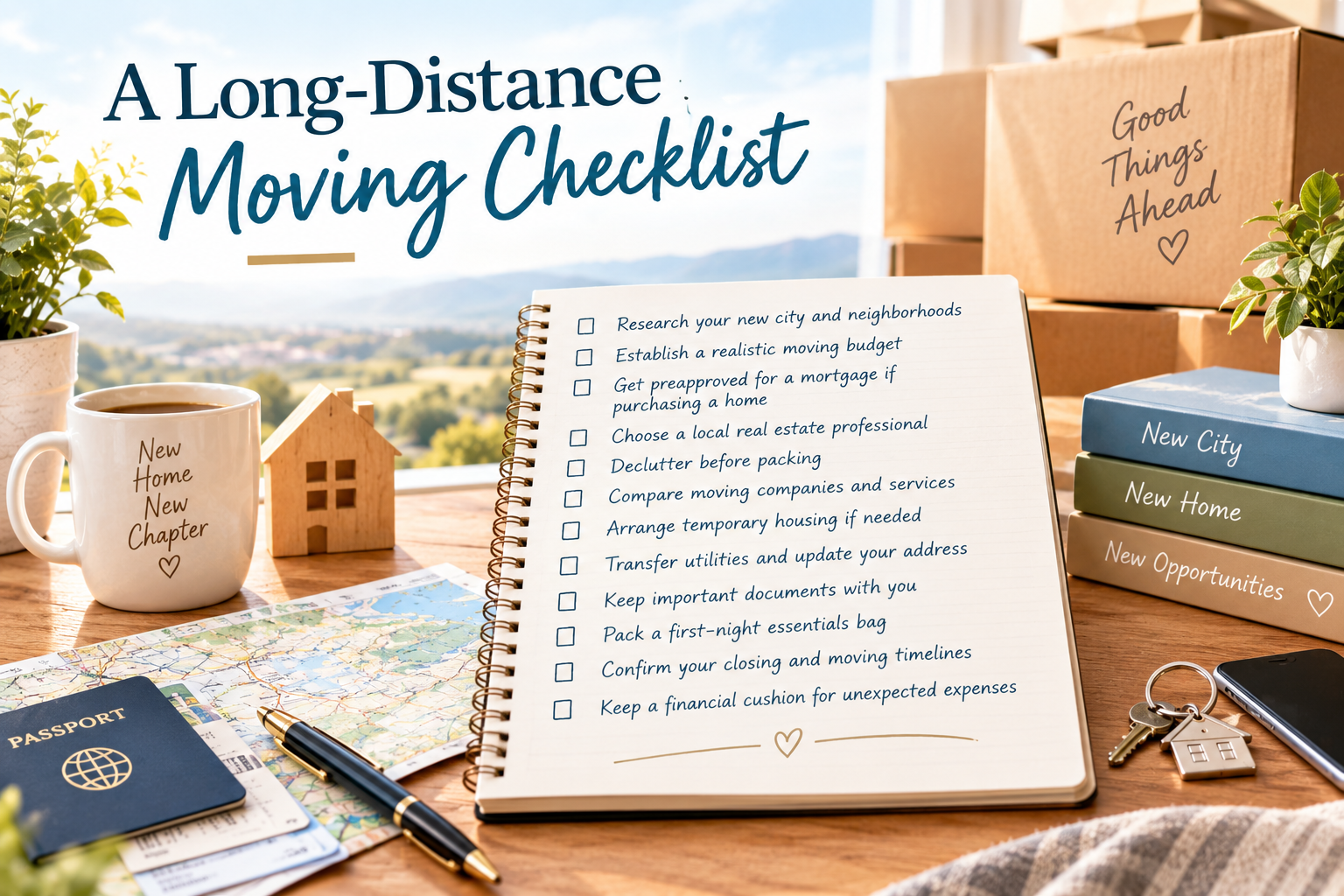
Before moving day arrives, take a moment to make sure you've covered the basics:
What If You Can't Visit Your New Area Often?
That's a common concern with long-distance relocation.
You don't necessarily need to make multiple trips to your new city. Your real estate agent can help you narrow down properties, arrange virtual tours, provide neighborhood information, and coordinate the process from a distance.
When possible, try to schedule an in-person visit after you've narrowed your search. A focused trip can be much more productive than trying to see every available property.
And remember: you're not just buying a house—you're choosing where your next chapter will take place.
Make Your Move About More Than Moving Boxes
A long-distance move comes with plenty of moving parts, but preparation can make the process feel much less intimidating.
Start early. Know your budget. Research your destination. Separate your must-haves from your nice-to-haves. Use technology when distance makes traditional home shopping difficult. Most importantly, surround yourself with professionals who understand both your current situation and your destination market.
The right plan can turn a cross-country move from a stressful leap into a well-planned journey.
Ready to start exploring your next home? Visit HomeOnward.com to explore available properties, or contact Tress Homes at tresshomes@gmail.com for guidance with your long-distance move.
Your next home may be miles away—but with the right preparation, getting there can feel a lot closer.


