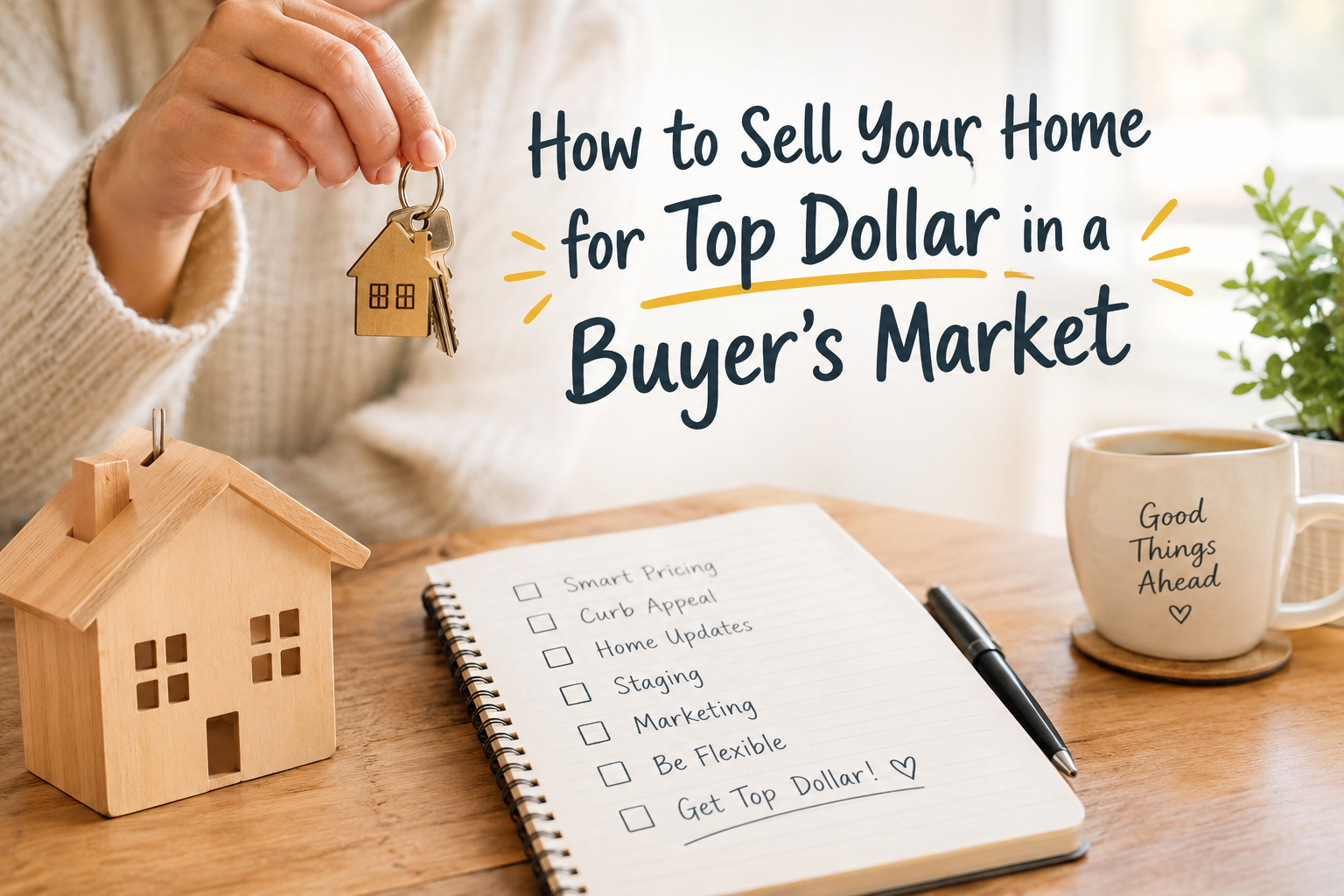
What if the key to selling your home for top dollar isn’t waiting for the market to improve, but knowing how to make your property stand out right now?
Selling a home in a buyer’s market can feel like trying to get noticed in a crowded room. When buyers have plenty of properties to choose from, they can take their time, compare prices, and negotiate for better deals. For homeowners, that means simply putting a property on the market and hoping for the best may not be enough.
The good news? You can still attract serious buyers and achieve a strong sale price with the right approach. From setting a competitive asking price to improving your home’s presentation, a few smart decisions can make a meaningful difference. Here’s how to sell your home for top dollar in a buyer’s market while avoiding common mistakes that can cost you time and money.
What Is a Buyer’s Market, and Why Does It Matter?
A buyer’s market occurs when there are more homes available for sale than there are active buyers. With more options, buyers often have greater negotiating power and may be less willing to compromise on price, condition, or features.
For sellers, this can mean longer listing periods, fewer offers, and increased pressure to make a property appealing. Homes that are overpriced or poorly presented may sit on the market while similar properties attract attention.
However, not every home faces the same competition. Location, property condition, local demand, and recent comparable sales all influence how a home performs.
Understanding these factors helps you build a selling strategy around what buyers are actually looking for, rather than relying on what worked in a stronger market.
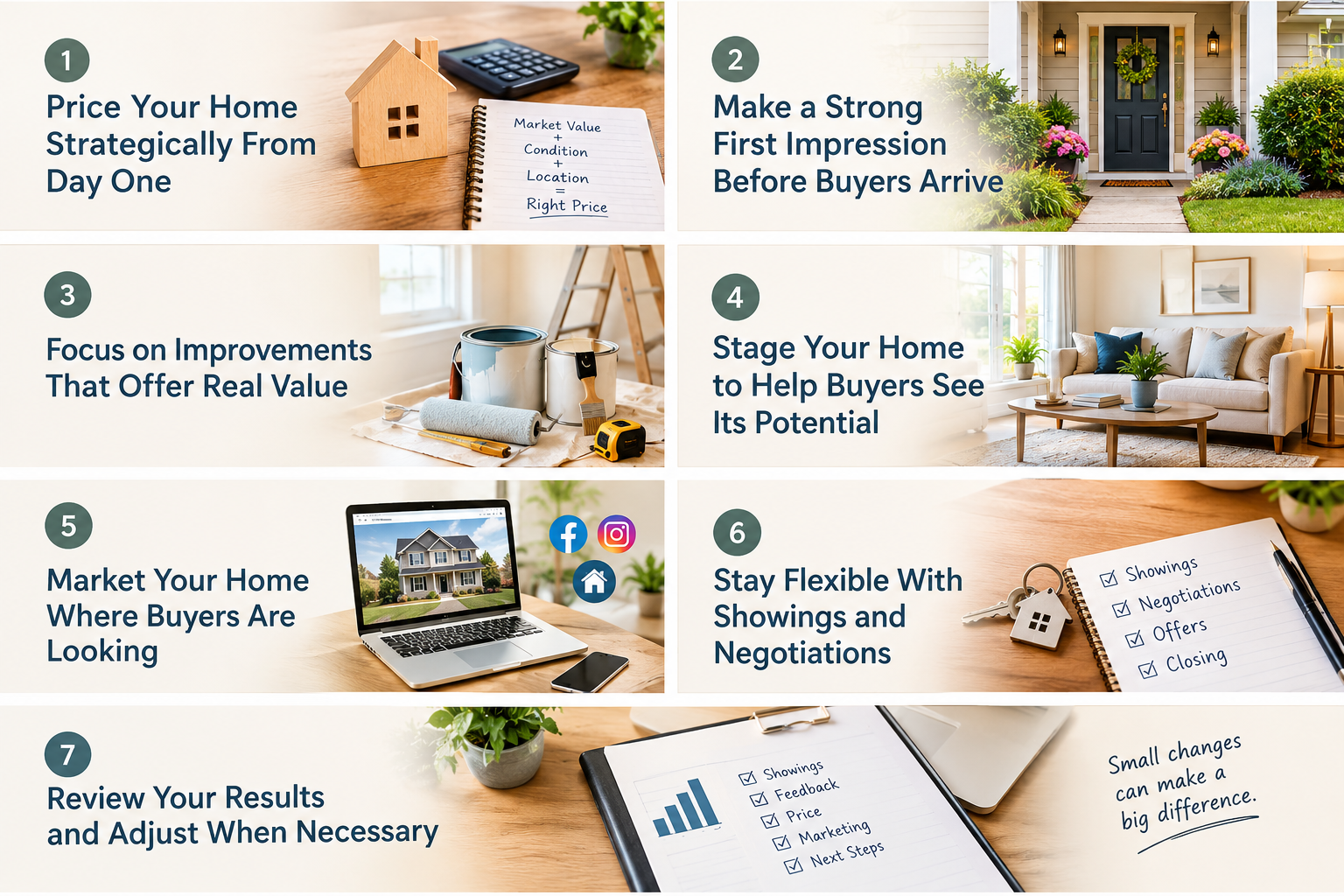
1. Price Your Home Strategically From Day One
One of the biggest mistakes sellers make is setting an asking price based on personal attachment, renovation costs, or what a neighbor received several months ago.
Although it is natural to want the highest possible return, buyers usually compare several homes before deciding which ones deserve a closer look. If your property is priced significantly above comparable listings, buyers may skip it altogether.
Think of your asking price as the invitation that gets buyers through the door. If it feels unrealistic, they may never discover what makes your home special.
How to price your home competitively:
Review recent sales of similar homes in your neighborhood.
Compare your property with active listings buyers are considering today.
Consider differences in size, condition, location, and upgrades.
Discuss a pricing strategy with a knowledgeable local real estate agent.
Monitor buyer feedback and showing activity after your home launches.
A competitive price does not automatically mean accepting less than your home is worth. It means positioning the property to attract qualified buyers and encourage serious offers.
2. Make a Strong First Impression Before Buyers Arrive
Buyers often begin judging a property before they step inside. Overgrown landscaping, peeling paint, a cluttered entryway, or a neglected front door can make them wonder whether the rest of the home has been maintained.
Fortunately, improving curb appeal does not always require an expensive renovation.
Simple updates, such as trimming shrubs, mowing the lawn, adding fresh mulch, cleaning windows, and refreshing the front entrance, can help your property look cared for and inviting.
Inside, focus on cleanliness, natural light, and a comfortable atmosphere. Remove unnecessary furniture, organize countertops, and keep personal items to a minimum.
The goal is to help buyers picture themselves living there. A clean, welcoming home gives them fewer distractions and more reasons to imagine a future in the space.
3. Focus on Improvements That Offer Real Value
When trying to sell for top dollar, it can be tempting to renovate everything. But expensive upgrades do not always translate into a higher sale price.
Instead, prioritize improvements that address visible problems or make the home more appealing to a broad range of buyers.
Consider these practical updates:
Fresh paint: Neutral colors can make rooms feel brighter and more spacious.
Minor repairs: Fix dripping faucets, loose handles, damaged trim, and squeaky doors.
Kitchen and bathroom refreshes: Clean grout, update outdated hardware, and replace worn fixtures where practical.
Lighting improvements: Replace burned-out bulbs and use consistent, inviting lighting.
Deep cleaning: Pay attention to floors, windows, appliances, and areas buyers may inspect closely.
Before spending thousands of dollars, ask your real estate agent which improvements are most likely to matter in your local market.
Remember, the goal is not to create a perfect home. It is to remove the obstacles that might make buyers hesitate.
4. Stage Your Home to Help Buyers See Its Potential
Home staging helps buyers understand how rooms can function and what makes the property attractive. In a buyer’s market, thoughtful presentation can help your listing compete with similar homes.
You do not necessarily need professional staging to make a difference.
Start by arranging furniture to improve movement through each room. Make smaller spaces feel open, create a clear purpose for flexible rooms, and remove items that make the home feel crowded.
For example, a spare bedroom filled with storage boxes may look like a space with limited potential. A simple desk, comfortable chair, and organized shelving can help buyers imagine it as a home office or guest room.
Professional-quality listing photos are equally important. Since many buyers begin their search online, clear, well-lit images can encourage them to schedule a showing.
If your budget allows, consider professional photography and a virtual tour to make your listing more engaging.
5. Market Your Home Where Buyers Are Looking
Even a beautiful home needs effective marketing. In a competitive market, relying on a basic listing and a few photographs may limit your exposure.
A well-planned marketing strategy should showcase your property's strongest features and reach buyers through multiple channels.
Your marketing plan may include:
High-quality listing photographs and a compelling property description.
Online exposure through real estate websites.
Social media posts highlighting distinctive features.
Open houses and private showings.
Virtual tours when appropriate.
Clear information about nearby amenities, commuting options, outdoor spaces, or other relevant advantages.
Be specific about what makes your home appealing. Rather than simply describing a kitchen as beautiful, highlight practical features such as generous counter space, updated appliances, or an open layout that makes entertaining easier.
The more clearly buyers understand the home's benefits, the easier it becomes for them to see its value.
6. Stay Flexible With Showings and Negotiations
Selling in a buyer’s market sometimes requires more patience and flexibility than sellers expect.
If buyers have many homes to tour, limited showing availability can make your property less convenient to visit. Whenever possible, offer reasonable showing times, keep the home ready for visitors, and respond promptly to requests.
You should also prepare for negotiations. Buyers may request repairs, closing-cost assistance, or a lower purchase price.
Before offers arrive, decide which terms matter most to you. For instance, a slightly lower offer from a financially qualified buyer with a flexible closing date might be more attractive than a higher offer with uncertain financing or demanding conditions.
Evaluate the complete offer, not just the headline price. Your agent can help you compare financing, contingencies, proposed timelines, and other terms.
Flexibility does not mean agreeing to every request. It means knowing where you can compromise without sacrificing your priorities.
7. Review Your Results and Adjust When Necessary
If your home is receiving few showings, buyers may not be finding the price or online presentation compelling. If showings are frequent but offers are missing, the issue could involve condition, layout, price, or competition.
Instead of waiting indefinitely, review the available feedback with your agent.
Ask these questions:
Are comparable homes selling faster or at different prices?
Are buyers consistently mentioning the same concern?
Is the listing attracting enough online views and in-person showings?
Would improved photographs, better staging, or a price adjustment help?
Making thoughtful adjustments early can prevent your home from becoming stale in the market. A listing that has been available for a long time may prompt buyers to wonder whether something is wrong, even when the property itself is perfectly sound.
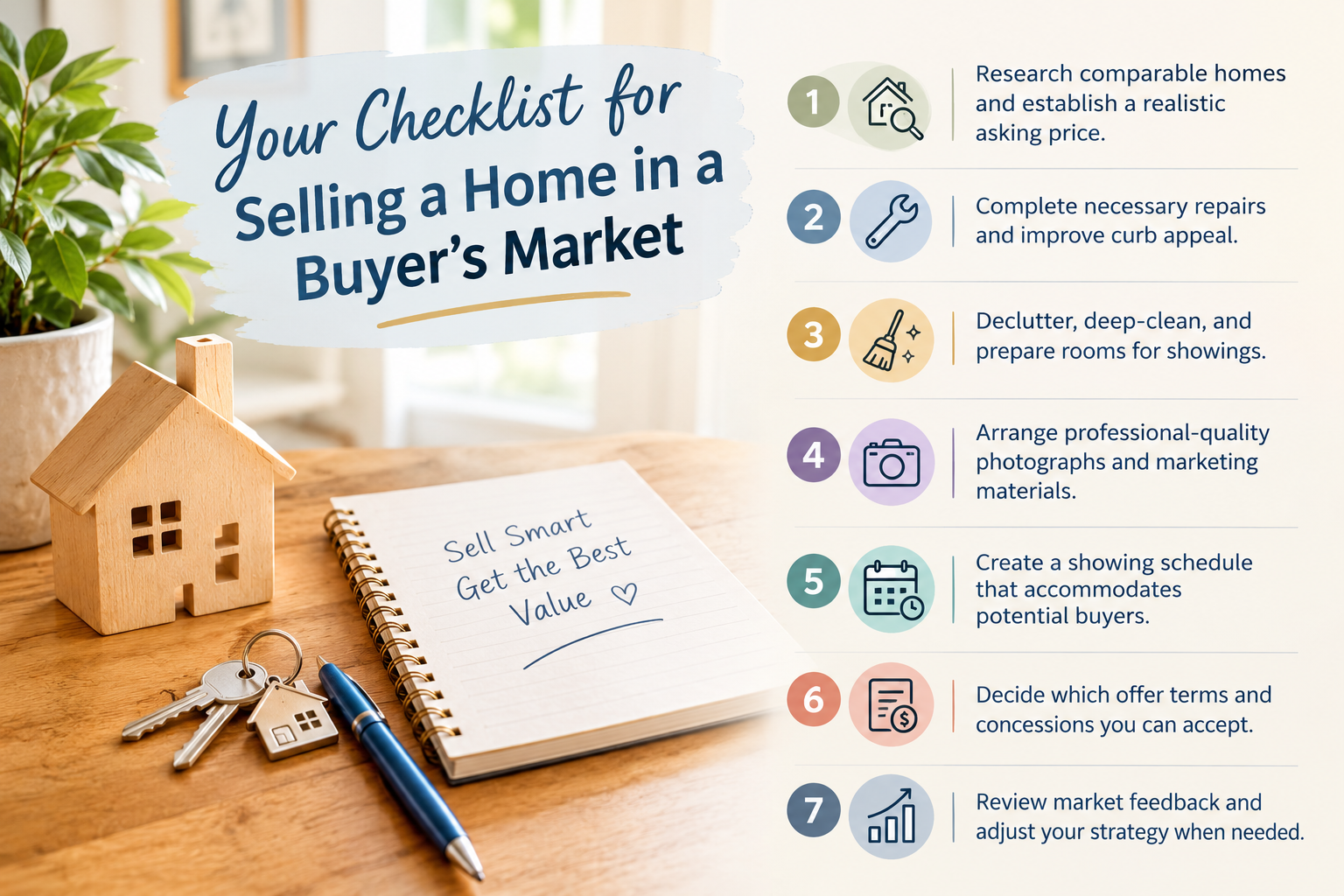
Before listing your property, make sure you have covered these essentials:
Final Thoughts: A Smart Strategy Can Make the Difference
Selling your home for top dollar in a buyer’s market requires more than good timing. It takes thoughtful pricing, appealing presentation, targeted marketing, and a willingness to respond to changing buyer expectations.
By understanding your competition, investing in improvements that matter, and preparing for negotiations, you can put your property in a stronger position to attract serious buyers.
You do not have to navigate the process alone. The right real estate guidance can help you make informed decisions, avoid costly missteps, and develop a selling strategy that reflects your goals and local market conditions.
Ready to take the next step in your real estate journey? Start your property search at Home Onward or email tresshomes@gmail.com with your questions or for more information. Whether you are preparing to sell or exploring your next home, Tress Homes is here to help you move forward with confidence.