

Moving into a new home should feel exciting. But somewhere between packing the first box and figuring out how to move the couch through the front door, that excitement can quickly turn into stress.
How do you know which moving company you can trust with your belongings, your schedule, and your hard-earned money?
Choosing the right movers is an important part of a successful move. Whether you are buying your first home, selling and relocating, or moving across town, the moving company you choose can make the difference between a smooth transition and a frustrating experience.
Think of your movers as the bridge between your old home and your new one. You want that bridge to be sturdy, reliable, and built to get you where you need to go.
Why Choosing the Right Moving Company Matters
A moving company does more than transport boxes. Professional movers may handle furniture, appliances, fragile belongings, and other items that are difficult or expensive to replace.
The right company can help you:
Save time: Experienced movers can often complete heavy lifting and transportation more efficiently.
Reduce stress: Having help with the physical work lets you focus on other parts of your move.
Protect your belongings: Professional handling can reduce the risk of damage during loading, transportation, and unloading.
Stay organized: A dependable moving company can help you work around your closing date, packing schedule, and new-home plans.
Avoid unexpected problems: Understanding costs and services upfront can help prevent unpleasant surprises.
As Peter Klein, Team Leader at Tress Homes, puts it:
“Moving cross-country doesn’t have to be overwhelming. With the right game plan—and the right team—you can turn stress into success.”
That same idea applies to choosing your movers. A little planning before moving day can save you a lot of headaches later.
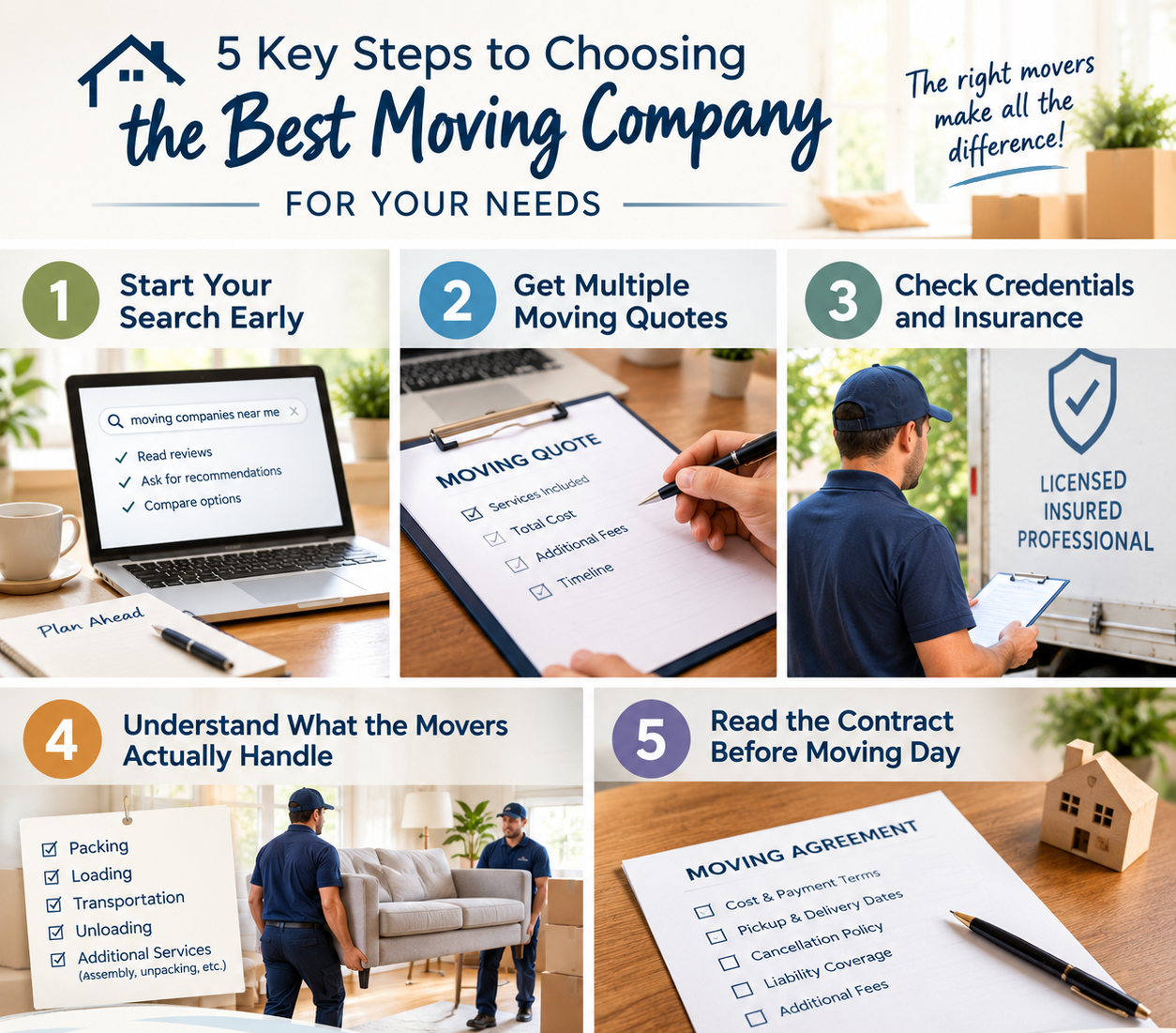
1. Start Your Search Early
One of the biggest mistakes people make is waiting until the last minute to hire a moving company.
Moving dates can fill quickly, especially during weekends, summer months, and other busy periods. Start researching movers as soon as you know your approximate moving date.
Ask friends, family members, coworkers, or your real estate agent if they have recommendations. Online reviews can also help you identify patterns in customer experiences.
Don't automatically choose the company with the highest rating or the lowest price. Look at what previous customers actually say about communication, punctuality, professionalism, and handling of belongings.
2. Get Multiple Moving Quotes
Don't settle for the first estimate you receive.
Contact several moving companies and ask for detailed quotes. Make sure you are comparing similar services.
Ask:
Is the estimate binding or subject to change?
What services are included?
Are packing materials included?
Are there additional charges for stairs or long carries?
Is furniture disassembly and reassembly included?
Are there travel or fuel fees?
What happens if the move takes longer than expected?
A quote that looks inexpensive at first may become much more expensive after additional fees are added.
Pro tip: Ask the moving company to explain anything you don't understand before signing an agreement. If the pricing feels confusing, that's a reason to slow down—not speed up.
3. Check Credentials and Insurance
Your belongings may represent years of memories and thousands of dollars in value. Before hiring a moving company, make sure you understand who you are hiring and what protection is available if something goes wrong.
For interstate moves, look for the company's U.S. Department of Transportation registration and verify the information provided. You should also ask about the company's insurance or valuation coverage and understand what it does—and does not—cover.
For local moves, requirements can vary by state, so check the applicable state rules as well.
A professional moving company should be comfortable answering reasonable questions about its credentials, policies, and coverage.
4. Understand What the Movers Actually Handle
Not every moving company offers the same services.
Some companies only load, transport, and unload your belongings. Others offer full-service moving, including packing, unpacking, furniture assembly, and specialty-item handling.
Before booking, make a list of what you need help with.
For example:
Basic move: Loading + transportation + unloading
More assistance: Packing + loading + transportation + unloading
Full-service move: Packing + moving + unpacking + additional setup
Knowing what you want ahead of time makes it easier to compare companies and avoid paying for services you don't need.
5. Read the Contract Before Moving Day
Moving day is not the time to discover that a service you expected isn't included.
Read your agreement carefully before signing. Pay particular attention to the estimated cost, pickup and delivery dates, cancellation policies, liability coverage, and additional fees.
Keep copies of your paperwork, receipts, inventory lists, and correspondence with the moving company.
If something is unclear, ask.
Remember: A trustworthy moving company should want you to understand the agreement—not rush you through it.
What About the Cheapest Moving Company?
It's tempting to choose the lowest quote, especially when you're already dealing with closing costs, deposits, repairs, or other moving expenses.
But the cheapest option isn't always the best value.
An unusually low estimate could leave you dealing with unexpected fees or inadequate service. Instead of asking only, “Who is cheapest?”, ask:
“Which company offers the best combination of price, reliability, services, and protection?”
That's a much better question to ask when your belongings are on the line.
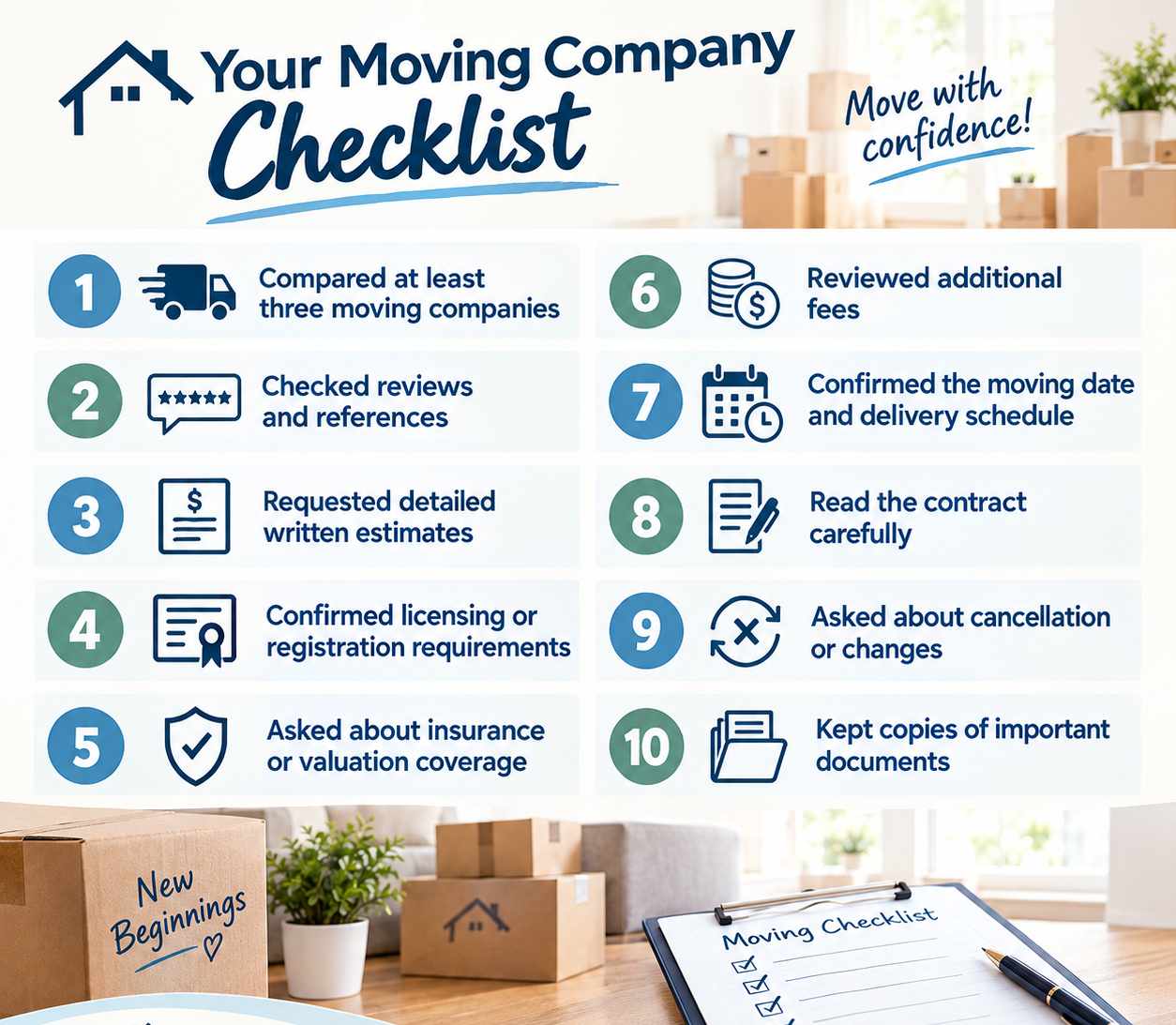
Before making your final decision, make sure you have:
Make Moving Day Part of Your Home-Buying Plan
Buying or selling a home involves dozens of moving pieces—literally and figuratively. From inspections and financing to closing and moving day, each step affects the next.
That's why it helps to think beyond the house itself. The right home is only part of a successful move. Having dependable professionals supporting you along the way can make the transition much easier.
Choosing a moving company doesn't have to be another source of stress. Start early, compare your options, ask questions, and make sure you understand exactly what you're paying for.
As Peter Klein of Tress Homes reminds clients, the right game plan can turn a stressful move into a successful new beginning.
Ready to take the next step toward your next home? Explore available properties at HomeOnward.com, or contact Tress Homes at tresshomes@gmail.com for guidance and more information.
Your next chapter may be just a move away.