

Would you pay more for a home just to be in the “right” school zone? For many buyers, the answer is a confident yes—and it’s shaping real estate markets more than ever.
Whether you have kids, plan to in the future, or simply want a smart investment, the quality of nearby schools plays a major role in home prices. In today’s competitive housing market, homes in top school districts often sell faster and at higher prices. But why does this happen—and what does it mean for you as a buyer or seller?
Let’s break it down in a way that’s simple, practical, and useful for your next move.
Why Schools Have Such a Big Impact on Home Prices
Think of a home like a package deal—you’re not just buying walls and a roof, you’re buying into a lifestyle, a community, and opportunities.
Top-performing schools signal:
Strong community involvement
Higher property demand
Better long-term investment potential
As Peter Klein, Team Leader of Tress Homes, explains:
“Homes near highly rated schools consistently hold their value better. Even buyers without children recognize the long-term resale advantage.”
Here are the biggest reasons why school zones can drive property prices:

Higher Demand = Higher Prices
Homes in sought-after school districts attract more buyers, often leading to bidding wars.
Stronger Resale Value
Even if you don’t have school-aged children, future buyers likely will—making your home easier to sell later.
Faster Sales
Properties in top school zones typically spend less time on the market.
Community Appeal
Great schools often mean safer neighborhoods, better amenities, and active communities.
While buying in a top school district has clear advantages, it’s not always the perfect fit for everyone.
Here are a few things to consider:

The key is finding the right balance between your budget and long-term goals.
How to Choose the Right Home Based on Schools
If schools are a priority, here’s a simple step-by-step checklist to guide your decision:
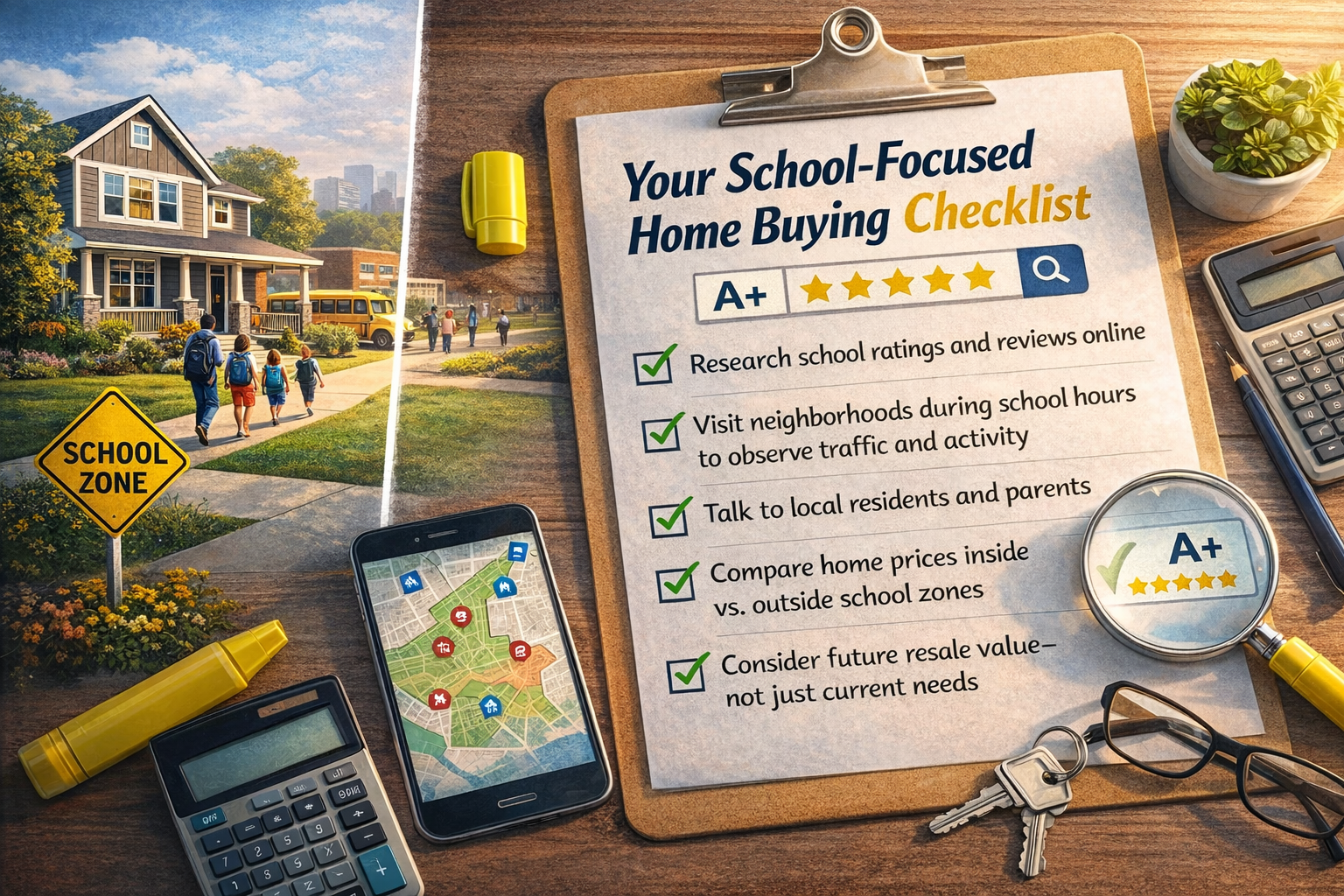
Pro Tip: Even being just outside a top-rated school boundary can significantly lower home prices—while still keeping you close to desirable amenities.
Real-Life Example: The “Two Streets Away” Effect
Imagine two similar homes—same size, same design—but one is inside a top-rated school zone and the other is just two streets away.
The difference?
The one inside the school district could cost thousands more.
It’s like paying for front-row seats versus general admission—you’re still at the same event, but the perceived value changes everything.
Visual Idea to Enhance This Section
Map comparing home prices by school zones
Bar chart showing price differences between high- and low-rated districts
Infographic: “What Makes a School District Valuable?”
Final Thoughts: It’s More Than Just a Home—It’s a Strategy
Buying a home near a great school isn’t just about education—it’s about making a smart financial move.
Whether you’re a first-time buyer, growing family, or investor, understanding how schools impact property values can help you make a more confident and informed decision.
As Peter Klein puts it:
“The right location doesn’t just meet your needs today—it protects your investment for tomorrow.”
Ready to Find the Right Home in the Right School District?
Let’s make your next move a smart one.
👉 Visit HomeOnward to explore available homes
📩 Or email tresshomes@gmail.com for personalized guidance and expert support
Your ideal home—and the perfect neighborhood—might be closer than you think.