
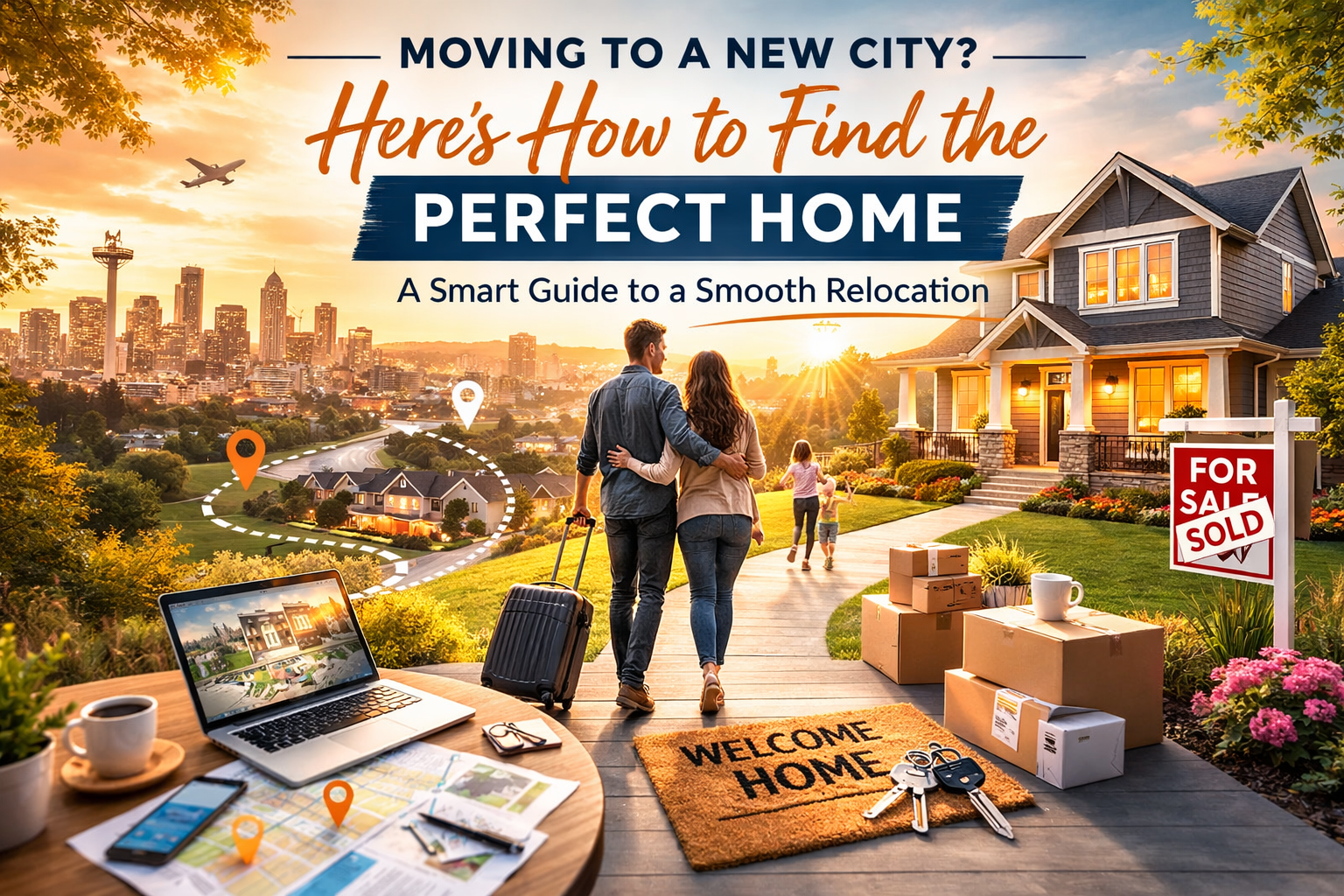
Have you ever packed up your life into boxes and wondered, “What if I choose the wrong neighborhood?”
Moving to a new city is exciting — a fresh chapter, new opportunities, and a chance to reinvent your routine. But it can also feel overwhelming. Without local knowledge, buying a home can seem like navigating unfamiliar streets without GPS.
The good news? With the right strategy and guidance, finding the perfect home in a new city doesn’t have to be stressful. It can actually be empowering.
In this guide, we’ll break down practical steps, insider tips, and expert insights to help you confidently relocate and find a home that truly fits your lifestyle.
Why Relocating Is Different From a Typical Move
Buying a home where you already live is one thing. Relocating is entirely different.
When you move to a new city, you’re not just buying a house — you’re choosing:
A community
A commute
A school district
A lifestyle
You’re making decisions about grocery stores you’ve never visited and neighborhoods you’ve only seen online. That’s why having a clear plan is essential.
Peter Klein, Team Leader of Tress Homes, often says:
“When you move to a new city, you’re not just investing in property — you’re investing in your daily life. The right home should support how you live, work, and grow.”

Step 1: Define Your Lifestyle Before You Define Your Budget
Most buyers start with price. While budget matters, your lifestyle should lead the conversation.
Ask yourself:
Do I want an urban, walkable neighborhood or a quiet suburban feel?
How important is commute time?
Do I need top-rated schools?
Am I looking for community amenities like parks, trails, or dining?
Think of your home like a pair of shoes. It might look great online, but if it doesn’t fit your lifestyle, you’ll feel it every day.
Key Benefits of Clarifying Your Priorities:
You narrow down neighborhoods faster.
You avoid buyer’s remorse.
You make confident, value-driven decisions.
You focus on long-term satisfaction instead of short-term excitement.
Step 2: Research Neighborhoods Like a Local
When relocating, neighborhood research is everything.
Here’s how to do it effectively:
✔ Explore Online — Strategically
Use tools to compare:
Crime statistics
School ratings
Property taxes
Market trends
Look at “days on market” and median home prices to understand competition and pricing patterns.
✔ Visit at Different Times
If possible, visit neighborhoods:
During rush hour
On weekends
At night
You’ll get a real feel for traffic, noise levels, and community activity.
✔ Talk to a Local Expert
A knowledgeable real estate agent provides insights you won’t find on Google.
As Peter Klein shares:
“Online data gives you numbers. A local agent gives you context. And context is what protects your investment.”
Step 3: Get Pre-Approved Before You Start Touring
In competitive markets, pre-approval isn’t optional — it’s essential.
Getting pre-approved:
Shows sellers you’re serious.
Clarifies your true price range.
Speeds up the offer process.
Strengthens your negotiating power.
Relocating buyers often underestimate how quickly homes move in popular cities. Being financially prepared gives you an edge.
Step 4: Consider Future Resale Value
Even if you plan to stay long-term, think ahead.
A smart relocation purchase considers:
School district stability
Local job growth
Infrastructure development
Neighborhood appreciation trends
Buying in a growing area can build equity faster. It’s like planting a tree — the sooner you plant it in the right soil, the stronger it grows.
Common Concerns (And How to Solve Them)
“What if I can’t visit in person?”
Virtual tours, live video walkthroughs, and detailed inspection reports make remote buying easier than ever. Work with an agent who provides thorough updates and honest feedback.
“What if I don’t know the market?”
That’s exactly why local expertise matters. Market knowledge helps you:
Avoid overpaying
Identify hidden gems
Spot red flags early
“What if I regret my decision?”
This fear is natural. The solution? Slow down your decision-making process. Create a checklist and evaluate each home against your must-haves instead of relying on emotion alone.
Use this simple step-by-step guide:
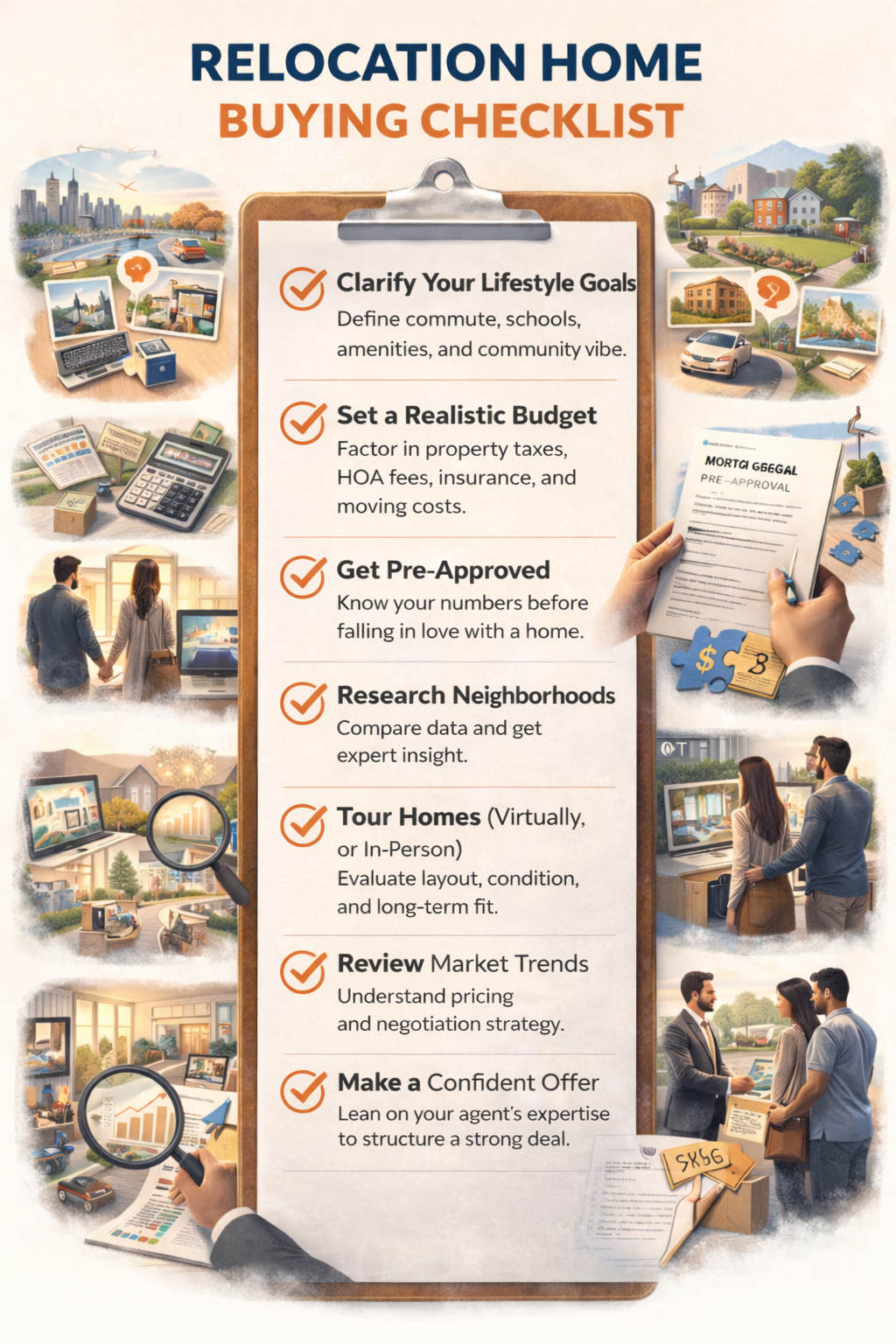
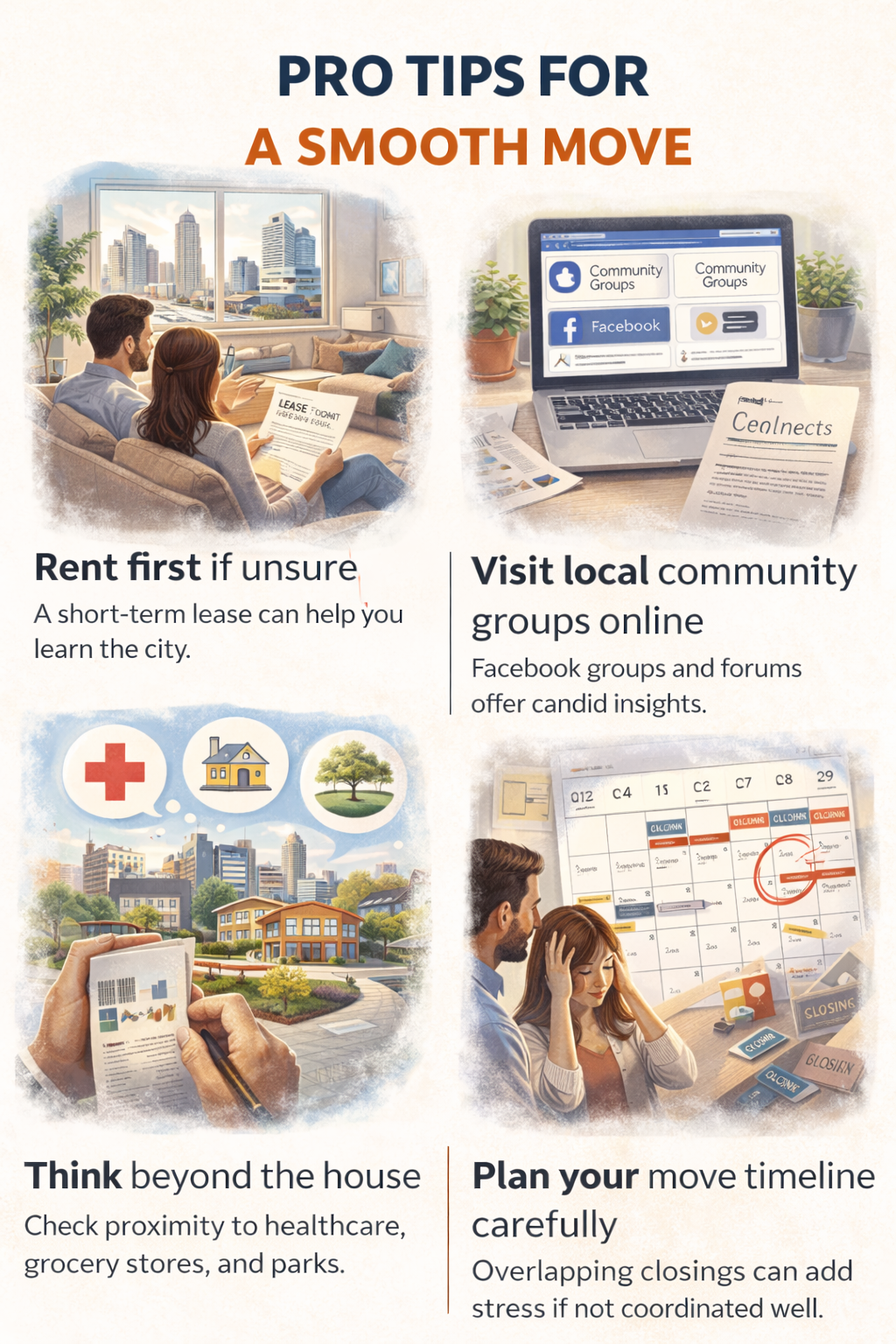
Peter Klein adds:
“The smoothest relocations happen when buyers treat the process like a project plan — not a guessing game.”
Final Thoughts: Turning a New City Into Home
Relocating isn’t just about square footage or granite countertops. It’s about building a life in a place that feels right.
With clear priorities, strong financial preparation, neighborhood research, and the guidance of an experienced local agent, you can move forward with confidence instead of uncertainty.
Remember: the perfect home isn’t just the one that checks the most boxes — it’s the one that fits your daily rhythm and future goals.
If you're planning a move and want expert guidance tailored to your situation, explore available properties at HomeOnward.com or reach out directly at tresshomes@gmail.com.
A new city means new beginnings. Let’s make sure you find the home that makes it feel just right.