

Moving to a new home is an exciting milestone, but for children, it can also feel like stepping into a completely different world. They may be leaving behind familiar friends, favorite playgrounds, teachers, and routines that make them feel safe.
If you're planning a family move, one question is just as important as finding the perfect home: How can you help your kids feel excited instead of anxious about moving?
The good news is that with thoughtful planning, honest communication, and a little creativity, you can turn a potentially stressful experience into an adventure your family will remember for all the right reasons. Here's how to prepare your children for a successful move while making the transition easier for everyone involved.
Why Preparing Kids for a Move Matters
Children often experience change differently than adults. While parents may focus on mortgage rates, moving schedules, and packing boxes, kids are thinking about something entirely different:
Will I make new friends?
What will my new school be like?
Will I still see my grandparents?
What if I don't like our new house?
Addressing these concerns early helps children feel included instead of overwhelmed. When kids understand what's happening, they're more likely to adapt confidently to their new surroundings.
As Peter Klein, Team Leader of Tress Homes, often says:
"A successful move isn't just about finding the right house—it's about helping every member of the family feel at home from day one."
That mindset can make all the difference during your relocation journey.

1. Talk About the Move Early
Imagine reading only the final chapter of a book—you'd feel confused and disconnected. Children can feel the same way if they're told about a move at the last minute.
Instead, begin discussing the move as soon as your plans become more certain.
During your conversations:
Explain why your family is moving.
Answer questions honestly using age-appropriate language.
Encourage your children to express both excitement and worries.
Reassure them that it's normal to have mixed emotions.
Open communication builds trust and helps children feel like valued participants rather than passengers on the journey.
2. Let Kids Be Part of the Process
Giving children small responsibilities can transform uncertainty into excitement.
Consider involving them by:
Choosing paint colors for their new bedroom.
Helping pack their favorite toys.
Decorating moving boxes with drawings or stickers.
Exploring photos of the new neighborhood together.
When children contribute, the move begins to feel like something they're helping create instead of something happening to them.
3. Keep Familiar Routines Whenever Possible
Even during major life changes, familiar routines provide comfort and stability.
Try to maintain:
Regular bedtimes
Family meals
Storytime or movie nights
Weekend traditions
Favorite snacks and activities
Think of routines as the anchor that keeps your family steady while everything else is changing.
4. Turn the New Home Into an Adventure
Children often respond better to excitement than uncertainty.
Help build anticipation by:
Looking at maps of your new community.
Visiting nearby parks, restaurants, or attractions if possible.
Researching local sports teams or extracurricular activities.
Planning a "first family adventure" after moving in.
Instead of focusing on what they're leaving behind, children begin looking forward to new experiences waiting ahead.
Common Concerns Parents Have
Even with careful planning, many parents wonder if they're doing enough to help their children adjust.
Here are a few common concerns—and practical ways to address them.
"My child doesn't want to leave friends."
Help them exchange phone numbers, schedule video calls, and remind them that friendships can continue even across distances. If possible, plan one last fun gathering before moving day.
"My child seems anxious."
Listen without immediately trying to solve every problem. Sometimes children simply need to know their feelings are understood. Encourage them to ask questions and reassure them that adjusting takes time.
"Everything feels chaotic."
Moving day can be overwhelming. Prepare a "comfort kit" with favorite toys, books, snacks, blankets, and games to help children feel secure throughout the transition.
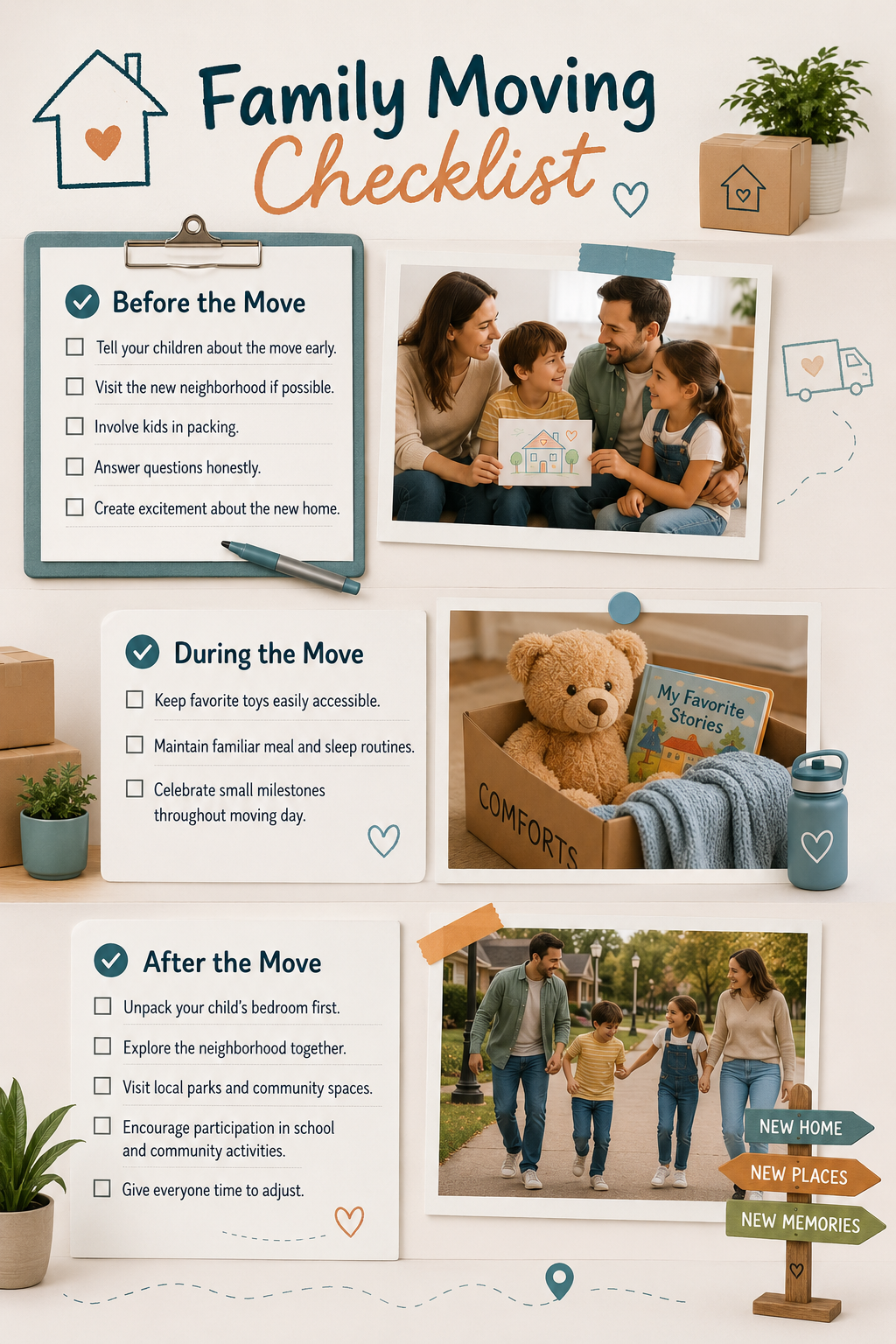
Use this simple checklist to help prepare your children for moving day.
A New House Becomes a Home Together
Every family experiences moving differently, but one thing remains true: children take many of their emotional cues from their parents.
Approach the move with patience, positivity, and understanding, and your children are far more likely to embrace the journey alongside you.
Like planting a young tree, a move may temporarily shake the roots—but with care, encouragement, and time, those roots grow even stronger in new soil.
As Peter Klein reminds families:
"The best moves aren't measured by how quickly the boxes are unpacked—they're measured by how comfortably your family settles into a new chapter."
Whether you're relocating across town or across the country, preparing your kids emotionally is just as important as organizing the moving truck.
If you're searching for the perfect family-friendly home, explore available properties at HomeOnward.com. Have questions about buying or selling a home? Reach out to tresshomes@gmail.com for personalized guidance. The right support can help make your next move a positive experience for every member of your family.