
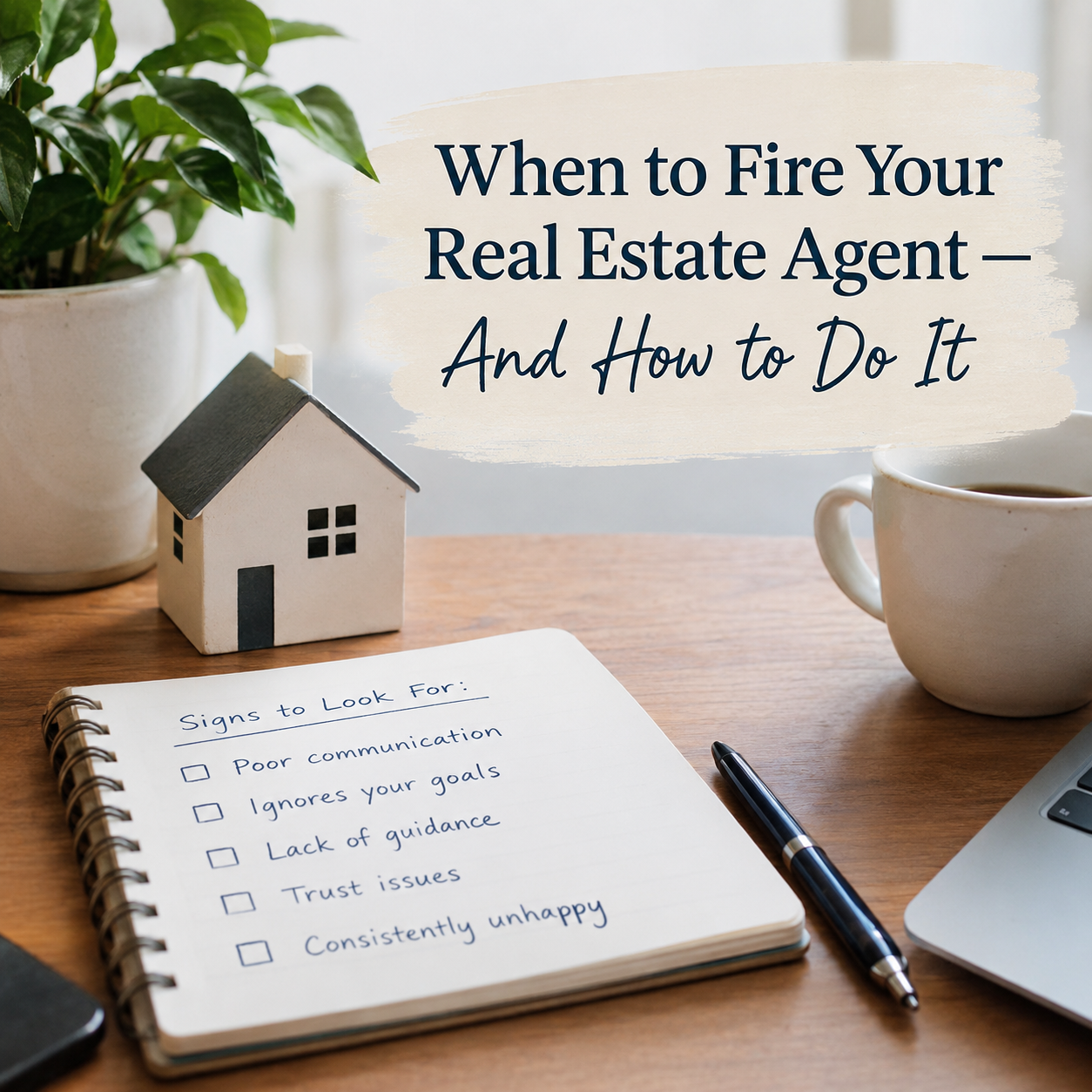
Buying or selling a home is a major financial decision. So, what happens when the person you hired to guide you through the process starts feeling more like an obstacle than a partner?
It can be uncomfortable to consider firing your real estate agent. You may worry about hurting someone’s feelings, losing time, or getting stuck in a contract. But if communication has broken down, expectations aren’t being met, or you no longer trust your agent to represent your interests, it may be time to reassess the relationship.
Think of your real estate agent like a guide on a long road trip. You hired them because they know the route, can help you avoid unnecessary detours, and should keep you informed along the way. If you constantly feel lost, ignored, or unsure of where you’re going, it’s reasonable to ask whether you have the right guide.
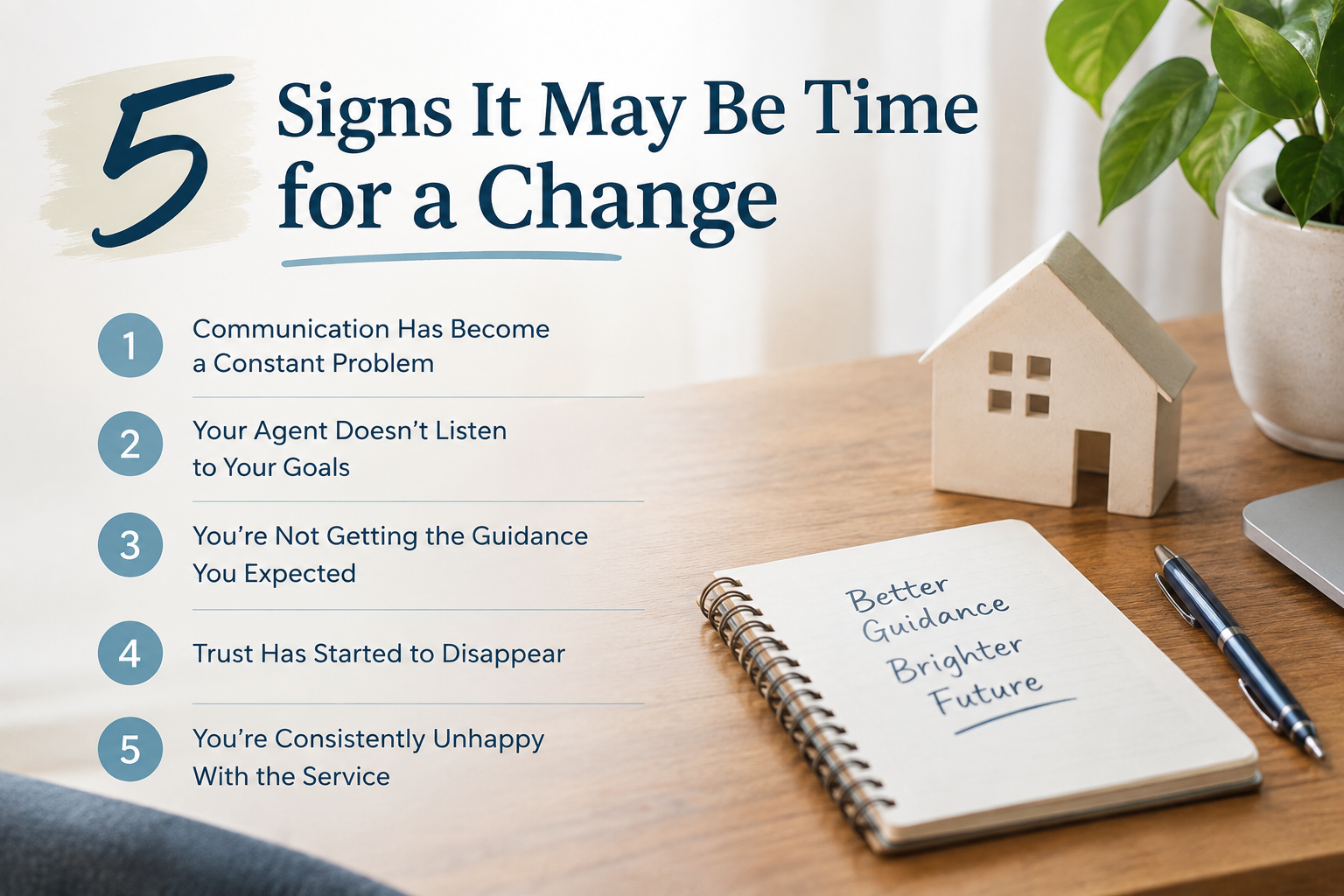
Not every frustrating experience means you should immediately end your relationship with your real estate agent. Real estate transactions can be complicated, and delays sometimes happen.
However, these warning signs deserve attention:
1. Communication Has Become a Constant Problem
Your agent doesn't need to respond instantly to every text or email, but you should generally know what is happening with your transaction.
If calls repeatedly go unanswered, important updates arrive late, or you constantly have to chase your agent for information, communication may have become a serious problem.
Tip: Before making a change, clearly explain your communication expectations. A simple conversation may resolve the issue.
2. Your Agent Doesn't Listen to Your Goals
Whether you're buying your first home or selling a property you've owned for years, your priorities matter.
If you've repeatedly explained your budget, preferred neighborhoods, timing, or must-have features and your agent continues to ignore them, that's a red flag.
A good agent should help you understand your options—not make you feel pressured into decisions that don't fit your needs.
3. You're Not Getting the Guidance You Expected
You don't necessarily need an agent who tells you exactly what to do. You do need someone who can explain your options and help you understand the potential consequences of different choices.
For example, sellers may need guidance about pricing, showings, offers, and negotiations. Buyers may need help understanding inspections, financing timelines, contingencies, and the local market.
When you're left wondering, “What happens next?” after every major step, it may be time to reevaluate.
4. Trust Has Started to Disappear
Trust is one of the most important parts of any real estate relationship.
If you feel that your agent is withholding information, pushing you toward decisions that don't make sense for you, or failing to represent your interests, don't ignore that feeling.
Real estate involves significant amounts of money. You should feel comfortable asking questions and discussing concerns openly.
5. You're Consistently Unhappy With the Service
One bad showing, missed call, or disappointing offer doesn't necessarily mean you have a bad agent.
Look at the overall pattern.
Are problems happening repeatedly? Have you raised your concerns without seeing meaningful improvement? Do you feel more stressed because of the relationship rather than supported by it?
If the answer is yes, a change may deserve consideration.
Here's an important step many people overlook: review your listing agreement or buyer representation agreement before ending the relationship.
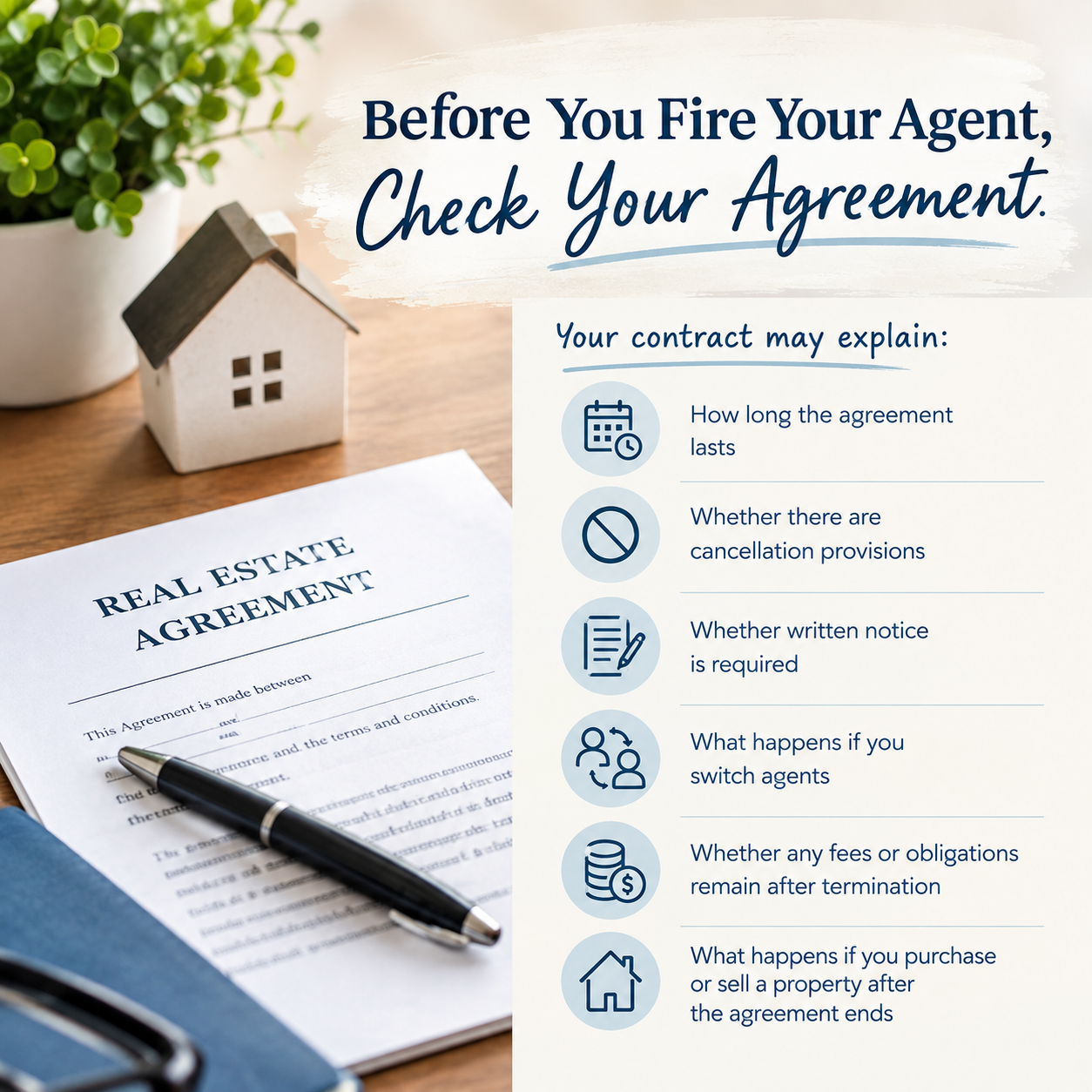
The exact rules can vary depending on your agreement and location.
If you're unsure about your obligations, consider asking your agent for clarification or seeking independent legal advice before taking action.
Try a Conversation First
Sometimes the best solution isn't firing your agent—it's resetting expectations.
Before ending the relationship, consider having a direct conversation:
“I want to make sure we're on the same page. Here's what I need from you going forward…”
Be specific. Instead of saying, “You're not communicating enough,” explain what would help: regular updates, faster responses during negotiations, or a weekly check-in.
Peter Klein, Team Leader of Tress Homes, emphasizes the importance of communication and trust throughout the real estate process. A strong agent-client relationship should give clients confidence that they understand what is happening and why.
If you've decided that ending the relationship is the right step, keep the process professional.
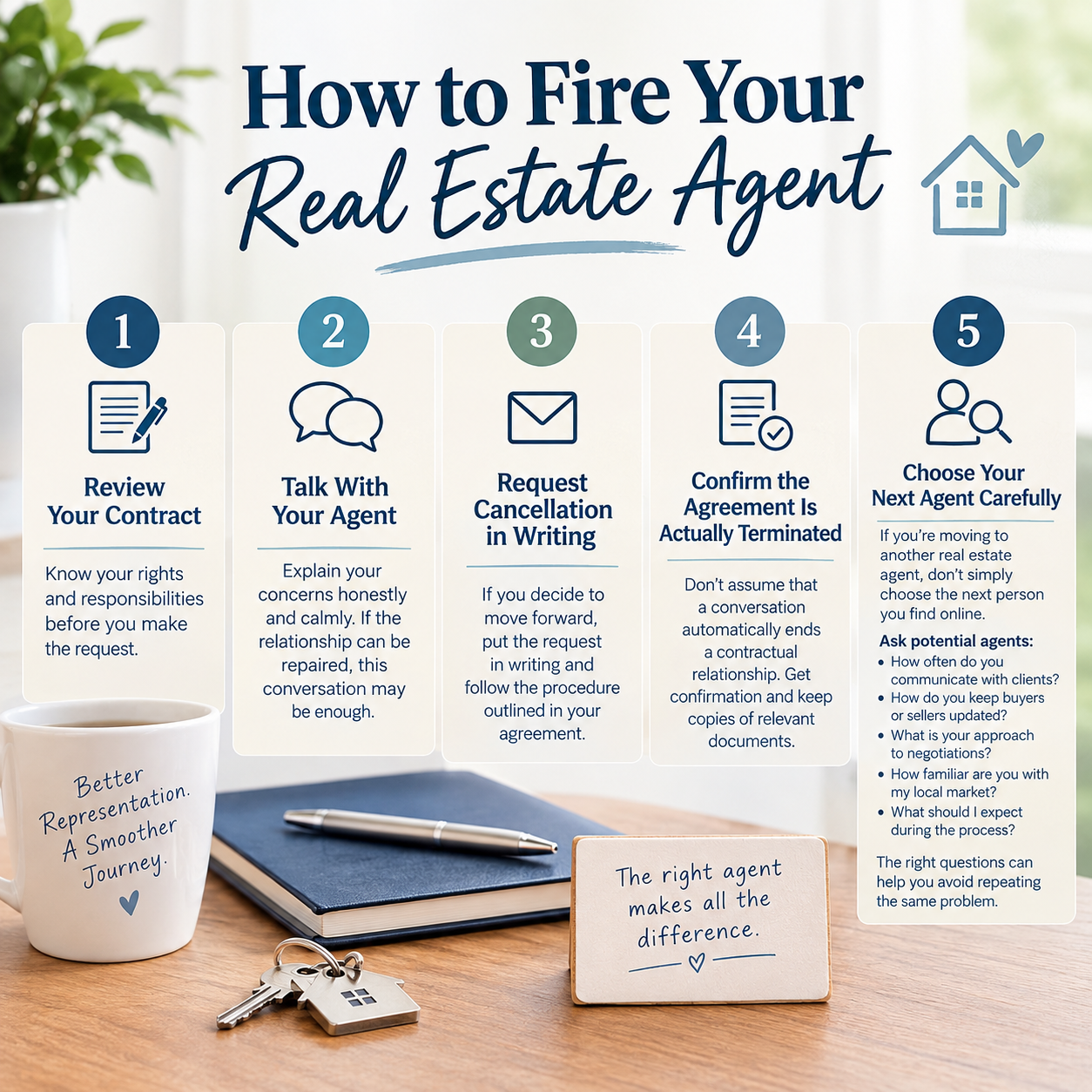
Remember: Changing Agents Isn't About Winning or Losing
Ending a real estate relationship doesn't have to become a dramatic confrontation.
Sometimes circumstances change. Your needs may change. The agent-client relationship simply may not be the right fit.
The goal isn't to find someone to blame. The goal is to make sure you have the support, communication, and guidance you need during one of the biggest financial decisions you'll make.
The Bottom Line
A real estate agent should be more than someone who unlocks doors or puts a listing online. They should be a resource, communicator, negotiator, and trusted partner throughout the process.
If communication has broken down, your goals aren't being heard, or trust has disappeared, take a step back and evaluate your options. Start with an honest conversation, review your agreement, and understand your responsibilities before making a change.
And when you're ready to start looking for your next home, explore available properties at HomeOnward.com. You can also contact Tress Homes at tresshomes@gmail.com for guidance and more information.
Your home journey is too important to navigate alone. Make sure you have the right guide by your side.